Summer Scares Resources

Click here to immediately access the Summer Scares Resource page so that you can add some professionally vetted horror titles into your reading suggestions and fiction collections for all age levels.

Sunday, October 30, 2011

31 Days of Horror: Day 30-- What I'm Reading: Zone One

 
As promised, I read the most talked about zombie novel of the moment, Zone One by Colson Whitehead.   I liked Zone One much more than I anticipated I would, it is not a horror novel.


While Zone One is set in a very real feeling post-apocalyptic world, fear of the zombies is not the key motivator here.  This is a novel about trying to reclaim civilization. It is an interior novel; one that takes place mostly in our hero's, Mark Spitz, head. The moments of pure pleasure in reading this novel come from his observations about how the world has changed, and from Whitehead's amazingly realistic and chilling descriptions of the landscape in his created world.

I will be frank, over the year, I have never been as impressed with Whitehead's writing as the critics have been.  However, there are some absolutely beautiful and haunting passages here.  I did step back to re-read a few.  I also loved how detailed his setting is.  Not only do we have detailed descriptions about the Zone One operations and how they are run (a mix of army and civilian), but we have the unseen provisional government in Buffalo becoming its own character. Additions like giving the reconstruction a theme song (one which we cannot hear because of the medium, but which still somehow permeates our reading of the novel) and calling those who remain "pheenies" (short for the American Phoenix, how we will rise again) add authenticity to the setting. 

Our specific "pheenie" and guide through which we get a first person view of this wasteland is Mark Spitz (not his real name).  The story is set up like a suspense novel with a compressed time frame, in this case 3 days. Throughout the course of these three days, we see Mark and his team of "sweepers" cleaning out and buildings in lower Manhattan in Zone One, the only zombie cleared zone on the island.  Mark tells us what is going on now, but there are many flashbacks to how he got from the old world, through the end times.  He also look forward to more cleared out zones and the rebirth of this great city.

I don't want to give any more details about Mark or the setting away, because as the story it unfolded , I was enthralled.  You are going to have to trust Whitehead though.  The beginning is a bit bumpy, like most post-apocalyptic stories.  You have to just keep reading and trust that Whitehead will fill in the details.  But for me this was part of the joy of reading this novel.  I loved the details AND how Whitehead chose to reveal them.  It added satire and suspense.  Mark is also a great vehicle to tell this story because the only thing he excels at is being average.


Whitehead, a New Yorker, obviously knows his setting.  The haunting descriptions of a desolate New York drew me in.  In particular, I loved the scenes in the subway tunnels, and found them especially chilling. Anyone who has spent any time NYC will be moved by this novel.  I especially felt a kinship here because like Mark, I grew up in the suburbs of NYC and visited often, but with the eyes of an outsider still.

I also enjoyed the new type of zombie Whitehead has added to the pantheon.  He has created "straggler" zombies.  These are zombies who rather than reanimating and compulsively searching out fresh human meat, merely roam back to place of meaning from their past and stay there. For example, the psychologist who goes into the office after turning into a zombie, sits in his chair, and waits for the patient who will never arrive.  These zombies are much like the remaining humans with their different forms of PASD (post-apocalyptic stress disorder) who are straggling through what is left of life on earth.

The final thing I liked about Zone One was its ending.  As you read the book, Whitehead clearly foreshadows (really broadcasts) how this reclamation experiment is going to end, yet as you read, you continue to hold out hope.  Ash is raining down, the zombies are literally knocking on the door, Spitz keeps telling us each place he has found refuge post-apocalypse has only been a short respite until it is destroyed and he must run again, and the book is set in only a three day period with things going from so-so, to bad, to worse.  Yet we hope.

The fact that I had any hope while reading this book is a huge testament to Whitehead's writing.  Look, I read a lot of dark books, where bad things happen, and everyone ends up dead, yet I was rooting for the pheenies.  This is not to say that I was disappointed with the ending.  I loved it even more because of what a great job Whitehead did, but many readers who are flocking to this title because it is the "hot" book right now, may be disappointed.  In fact, on Amazon, the book is not getting good customer reviews.  Much of this is due to the fact that it is not scary enough for horror fans and it is too dark for mainstream literary fiction readers. But in the right reader's hand, Zone One is a gem.

I cannot stress enough, this book does not have rosy things to say about the future.  The zombies are merely Whitehead's vehicle for commenting about the path humanity is on.  And it is a path he does not see leading somewhere good, but even worse, he seems to be saying destruction is inevitable.  This is a bleak book.  But it is also a satisfying look into the human condition, what remains of society when there is very little left, and the hope to be found in the "average" citizen.

Three Words That Describe This Book: bleak, post-apocalyptic, thought provoking

Readalikes: If you liked The Passage by Justin Cronin, chances are you will enjoy Zone One.  The Passage is definitely a notch above Zone One, but that is because of the level of detail Cronin has built in to the story.  Click here to read my full review of The Passage which includes more readalike options.  You can also click here to read Cronin's review of Zone One.

Other post-apocalyptic stories I would suggest here are: The Walking Dead series, I Am Legend by Richard Matheson and Swan Song by Robert McCammon (a hidden gem that should be on the shelf at your library).

Monster Island is part of David Wellington's zombie apocalypse trilogy that is set on the island of Manhattan just like Zone One.  Monster Island is much less literary and much more scary than Zone One, but it is a great option for readers who really enjoyed the NYC setting and want to see a similar story line from a different angle.

I also found Wastelands: Stories of he Apocalypse, a well reviewed, 2008 collection with with stories by Stephen King, Orson Scott Card, Octavia Butler, and George RR Martin.  The collection is great because it runs the gamut in terms of tone, from the bleak and hopeless to stories of hope, and presents a broad view of this popular subgenre of science fiction and horror.

The interesting thing about Whitehead's career is that each book he has written is different from the last, so he is a hard author to match with another author who will be the same.  However, that being said, this novel specifically made me think of two other authors who write with a similar tone and mood to Zone One.

First, Doris Lessing writes character driven novels that are bleak and thought provoking, and often have a speculative element.  Try The Memoirs of a Survivor which is set in a post-apocalyptic landscape.

Chuck Palahniuk is the master of bleak novels which probe the inner turmoil of the human condition.  He uses anti-heroes (like Spitz) and everything he writes is a satire of something we take for granted.  He uses the same wry humor found in Zone One too.  Fight Club is a good starting point.

Saturday, October 29, 2011

31 Days of Horror: Day 29-- Gearing Up for Halloween

In these last days before Halloween, there is much going on. Everywhere you turn, people are talking about horror this and the most frightening that.

This morning, I had a driveway moment listening to Scott Simon interview William Peter Blatty about his masterpiece, The Exorcist, still one of the scariest books ever written (and the movie is great too).

This novel always makes me think of one of my favorite horror novel related stories ever.  Back in my early days at the BPL, a young woman named Gina worked at circulation.  Gina loved reading horror novels, but only read them while at work so that she was never alone while reading them.  One slow Saturday while Gina, myself, and a young man names Scott were working, Gina was getting freaked out enough by the novel that she put it in a drawer, locked the drawer, and went to take a break to calm down.

While she was gone, Scott and I worked together to take the book out of the drawer and move it to another drawer.  When Gina went to read the book again, see opened the drawer and the book....was gone!  She screamed, but then calmed down when she found the book 1 drawer over.  She simply thought she had misremembered which drawer held the book.

Scott and I continued this game for a few days, with Gina getting more frightened and agitated each time.  By the time she had finished the book and had figured out what we were doing, I asked her if she was mad at us.

"No," she told me, "that made reading the book so much better."  Gina loved to be frightened to her limits by reading horror novels, but adding a real life freaky element made it even better.  She was experiencing the story of a possessed child and was reading it from what appeared to be a possessed book.

This always reminds me of why people read horror tales.  We like to feel that fear.  The more the better.  But we also know it is not real.

Back to gearing up for the 31st.  Personally, I spent the end of this past week being interviewed or preparing for interviews.  So on Monday, look for me trying to convince Chicago Tribune columnist Barbara Brotman to read a horror novel, and listen to me live on Wisconsin Public Radio taking your calls about horror (you can use the link to stream it live).  I will provide links to all of my appearances on Monday.

Tonight, I am attending out annual haunted block party and carving a pumpkin.  And tomorrow, I will be working the RA desk at the BPL and posting my review of Zone One.

We are in the homestretch now.

Friday, October 28, 2011

31 Days of Horror: Day 28--Witches

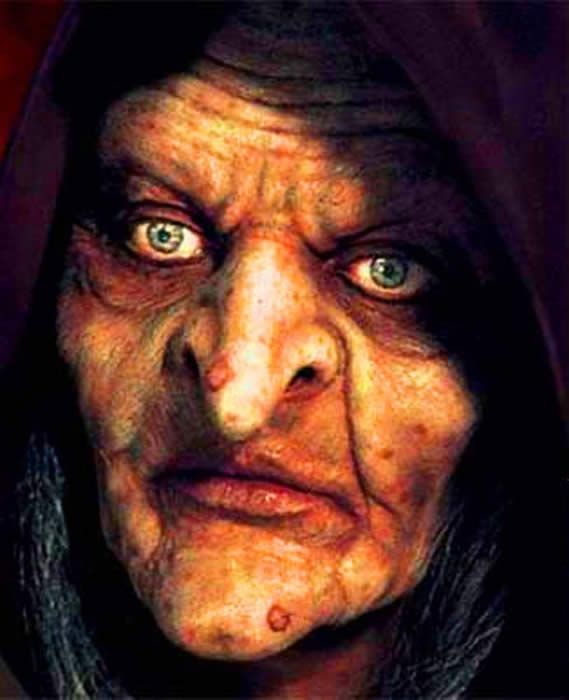
A person who practices occult arts may go by many names, but the most common is simply, “witch." Across cultures and over the course of recorded human history, there have always been people who claim to be able to harness magic both to help their community and sometimes to hinder it.  There are black-robed, stoop–shouldered hags coexisting with New Age Herbalists, Celtic druids and fairy-tale Disney depictions of both good and bad sorcerers.  Shakespeare’s tempestuous witch sisters mesh with our memories of The Crucible and The Blair Witch Project, and even the British wizard-in-training, Harry Potter.  More often than not, the witch and his or her powers have been associated with negative images.  They use charms, potions, and curses. Some are mischievous and bring ill fortune to others, and they belong to covens that hold services under cover of darkness to discuss their magic and pay homage to their master, the Devil.  Despite this diversity, the one uniform distinction of all witches is the element of magic.  All have some sort of magical or mystical ability to manipulate the forces of nature.

The witch story is still a big part of the horror genre today.  It is one with which I am less familiar however.  For the new book, I did a lot of research into why readers crave these specific stories.  Since I am not a big fan myself, this was one of the more rewarding experiences I had while working on the book.

Recently, I also received a communication from my alma matter about a course being offered this semester entitled, "Witches: Myth and Reality."  The interest in witches is high among the general public.

So as not to ignore this popular subgenre of horror stories during this celebration of 31 Days of Horror, I would like to offer a few of my new found favorite witch tales:

Campbell, Ramsey. The Darkest Part of the Woods.

In this moody story of a haunted English wood, a family is torn apart by its connection to the forest. The history of the wood is linked to an alchemist who lived in the forest and tried to summon an evil spirit. With a nod to The Blair Witch Project, a new generation of the family tries not to go mad discovering the wood’s secrets. This is a modern story of inescapable horror grounded in classical roots.


Everson, John. Sacrifice.
Ariana is a witch who is devoted to conjuring a race of evil spirits known as the Curbine. A group of reluctant heroes is in a race to stop Ariana from destroying the world. This is a sexy, violent, and terrifying novel with frenetic pacing that stands as a solid example of the best of today’s horror. You could also try Covenant (2004) and Siren (2010) for more witch inspired horror.
Kenyon, Nate. Bloodstone.
Ex-con Billy and the prostitute he kidnapped are plagued by evil dreams as they pull into White Falls, Maine. Within the town, a young boy Jed is entranced by a 300 year-old, magical amulet. Thrown together by the influence of the cursed necklace, the characters engage in an epic showdown between good and evil. This is a character driven novel, obviously influenced by Stephen King, with a consciously building pace and a surprising twist. Bloodstone was the debut novel by one of today’s best horror voices.


Laymon, Richard. Dark Mountain.
Two families go on a camping trip to a mountainous forest. What should be a peaceful and restful vacation turns horrifying as they encounter a witch who places a curse on the families. After returning home, the families find the curse is all too real, and a few of them must return to try to overturn it. In pure Laymon form, this is a terrifying and bloody story of a frighteningly realistic witch bent on destruction. Think twice before reading this novel before your next camping trip.
 
Piccirilli, Tom. A Choir of Ill Children.
Thomas is a descendant of his backwoods, swamp town’s founders. He is also the guardian of his conjoined triplet brothers, who share a brain and act as an oracle. When an outsider comes to town, dark secrets are revealed, a coven of witches are upset, and an odd preacher begins speaking in tongues. Thomas must take control and find out the truth. This is a creepy novel, filled with rich and macabre characters, written in a conscious Southern Gothic style.

Thursday, October 27, 2011

31 Days of Horror: Day 27-- What I'm Reading: What Fears Become

I have been a fan of The Horror Zine for some time now.  Editor Jeani Rector and her crew work hard to provide a quality monthly literary journal with fiction, poetry, and artwork from morbidly creative people.  When she contacted me about reviewing their first print collection, What Fears Become, I jumped at the chance.

In general, I love horror story collections, especially when they are like What Fears Become and compile a wide range of scary stories.  I find collection to be a great way to take the current pulse of the genre.  In this case, the collection also features poetry and artwork.  This range of appeal made me also go out and purchase a copy for the Berwyn Library.  We have many readers who will greatly appreciate having access to this collection.

Specifically, this collection is a good read for horror fans for a few other reasons:

  1. Big name, award winning authors have contributed to The Horror Zine and allowed their work to be included here.  There are stories by horror greats Graham Masterton, Ramsey Campbell, Joe Lansdale,  and Elizabeth Massie.  Even science fiction legend Piers Anthony has a story here.  But for me, the most surprising of this bunch was "Dogleg" by Bentley Little.  I have grown tired of Little in the last few years and was worried that his best work was behind him.  However, "Dogleg" was an amazing, psychological story that was both haunting and terrifying.
  2. There are very good stories which take an original twist on what are can easily become a tired theme in the wrong hands.  "Mall Walkers" by Chris Reed (zombies), "3AM" by James Marlow (ghosts out for revenge) and "Losing Judy" by Andy Mee (haunted woods) were some of my favorite stories in the collection
  3. Stories that will stay with you long after you finish them.  "Adelle's Night" by David Grinn is just perfect in this sense.  It is terrifyingly realistic even though it is completely implausible; for me personally this is the best combination in my favorite horror tales.
  4. A new voice that impressed me was Canadian Jagjiwan Sohal whose first "stab" at horror fiction was "Wandering Daniel."  This story is set in a post-apocalyptic world, and our protagonist is a vampire.  But, he did not become a vampire in the apocalypse; he was one before.  This story is a great beginning, but I would not say it is even close to the best story in the bunch.  However, I was so intrigued by the set up and his descriptions of the created world that I am craving more.  I hope Sohal considers trying to put Daniel into a novel.  I would read it.
  5. Some were just plain fun.  "The House at the End of Smith Street" by Stephen M. Dare is similar to The Ruins by Scott Smith (a personal all time favorite), only this time, instead of a killer plant, we have a killer carpet.  Not the most original story in the bunch, it it was a fun, satirical, and plenty scary.
  6. I appreciated that Rector kept her own two stories until the collection's final pages.  They are solid enough to be included, but I am glad she gave everyone else their chance to shine.
  7. Finally as I have already said, the range of the type of horror here is huge.  There are stories for fans of the bloody, supernatural, psychological, creepy, or thriller.  If you have a favorite way to feel the fear, this collection probably has a story for you.
There were a few stories I did not care for, but much of that was a personal taste issue.  For example, I did not like "The Chamber" by David Landrum mostly because of its ancient time period setting.  But others will enjoy it for exactly the reason I disliked it.  The point is that there is enough here for everyone, and since it is a collection, you could skip your least favorite tales and still have plenty to read.

A note on the poetry, of which there is quite a bit.  Not being a big poetry fan, I do not feel qualified to comment on it.  On the other hand, as a RA librarian, I have quite a few patrons (and a staff member) who are active readers of dark poetry.  I will get this collection into their hands very soon.


Three Words That Describe This Book: unsettling, original voices, wide horror appeal

Readalikes:  For readalikes, I would like to offer some of my personal favorite collections which like, What Fears Become, span a wide range of horror appeal factors.  What you will not find suggested here are collections of for example, all zombie stories or all vampire tales.  I do include the best of those more specific collections under their appropriate headings in my new book.

And this is just the tip of the iceberg,  Feel free to  leave a comment with your favorite horror story collection.

Wednesday, October 26, 2011

31 Days of Horror: Day 26-- Horror Links Roundup #2

Today I have a list of all of the things I have been saving to post about, but it seems time is running out.  So here they are gathered with comments:

Tuesday, October 25, 2011

31 Days of Horror: Day 25-- Classic Horror TV At Your Library

Today I welcome my colleague, Annabelle Mortensen of the Skokie Public Library.  When I asked Annabelle to contribute to this haunted celebration, she picked the topic of Horror TV.  Today, she shares an annotated list of the best classic horror television series that you can get with just your library card.

To see what else Annabelle is up to click here.  And here she is...

With The Walking Dead scoring record ratings and American Horror Story gracing the cover of Entertainment Weekly, horror TV is edging back into the mainstream. I say “back” because there once was a time when spine-tingling series regularly terrorized the airwaves. These programs aren’t just frightfully good in their own right, but they also were key influences for the top horror writers and filmmakers of today. Fortunately the classics listed below are all available on DVD, ready to be discovered by a whole new generation unafraid of the dark.

The Twilight Zone (1959-1964)
Rod Serling’s brainchild was a heady mix of horror, sf, fantasy, drama and social commentary. Amazingly, this anthology series received only middling ratings when it first aired, but it quickly became a pop-culture touchstone. Some of the scares are psychological (“Stopover in a Quiet Town,” where a young couple can’t escape a deserted neighborhood), while others will haunt you for decades (the talking doll who menaces Telly Savalas in “Living Doll” … eek!).

Thriller (1960-1962)
Steven King once called this anthology “the best horror series put on TV.” Hosted by and occasionally starring horror icon Boris Karloff, it boasted guest roles by a who’s-who of future TV stars, including Mary Tyler Moore, William Shatner, Elizabeth Montgomery, Leslie Nielsen, and more. The effects are cheesy, but the show’s macabre sensibility—with thrills that are suggestive, not graphic—still holds up.


Dark Shadows (1966-1971)
Dark Shadows falls into the realm of Not Quite Horror, but given its forthcoming silver screen adaptation by Tim Burton and Johnny Depp, this gothic soap opera is well worth revisiting. The show, like most soaps, centered around love triangles and family secrets, except that those secrets often involved curses, ghosts, werewolves, witches and more. The star of the show was 150-year-old vampire Barnabas Collins (the peerless Jonathan Frid), a conscience-ridden bloodsucker who moves in with relatives who are unaware of his supernatural nature.

Rod Serling’s Night Gallery (1970-1973)
Serling returned to television with this horror anthology that ran for three seasons on NBC. Conflicts between NBC and Serling lead to a falling out (the network went as far as rejecting some of his scripts), but the series nonetheless has some memorable frights, such as “The Caterpillar,” about a bug that crawls into … Well, I’d actually rather not think about it. Just watch the episode on Hulu … if you dare.

Kolchak: The Night Stalker (1974-1975)
This comic horror series starred Darren McGavin as a Chicago reporter who crossed paths with all manner of zombies, vampires and werewolves, except his boss would never believe his weird tales. McGavin played things straight, but the show’s overall tone was hip and ironic (if irony had actually existed in the 1970s). A big cult hit, the show’s monster-of-the-week premise would become the primary inspiration for The X-Files

Monday, October 24, 2011

31 Days of Horror: Day 24.1-- AMC Fear Fest

I forgot to mention AMC's Fear Fest which is running on the cable channel right now.  They also have some exclusive web content you can check out here.

This wasn't worth an entire day's post, but I did want to let people know.  Many are aware of the specials running, but you might not have thought to go to the website for some great interviews, articles, and essays.