Summer Scares Resources

Click here to immediately access the Summer Scares Resource page so that you can add some professionally vetted horror titles into your reading suggestions and fiction collections for all age levels.
Showing posts with label essay. Show all posts

Friday, April 4, 2025

COVER REVEAL: Why I Love Horror Edited by Me with an Excerpt from Grady Hendrix

Book Cover-- a mottled gray and white background with a tall and long black figure with claw like hands. It is black and ominous with a tiny head, Not too scary, just ominous. on its left, it is holding the hand of a small black human figure who is leading it confidently. Overlaid is the title- WHY I LOVE HORROR (1 word per row). The letters are in a dark gray but the letters that overlap with the monster are in red. In the top right corner it says "Edited by Becky Siegel Spratford" And down in the bottom right in the space just above where the monster and figure are holding hands it says "Essays on Horror Literature."
Pre-Order now

Today CrimeReads has the cover reveal of my upcoming book. Out 9/23/25.

Click below to read the excerpt. I picked Hendrix's essay for the excerpt because it is right in the middle of the book and it is one of the best in the book. It leaves you on a cliff hanger and let me tell you, the rest of the essay is totally worth it. Early readers agree. I have received MANY comments as they finish this essay.

You can pre-order WHY I LOVE HORROR anywhere books are sold. Here is the Bookshop.org link. Digital ARCs will be available at Library Journal's Day of Dialog on 4/17 where Alma Katsu and I will be there to discuss her essay and her upcoming book FIEND and soon on NetGalley and Edelweiss. Paper ARCs will be at StokerCon and ALA Annual.

Thank you to CrimeReads for hosting the cover reveal.

Here is the link.


Tuesday, October 26, 2021

31 Days of Horror: Day 26- Tor Nightfire's Blog: A Go To Horror Resource

Yesterday, I asked Emily Hughes to visit the blog and share her "Why I Love Horror" story. Not only did I want her to share her love of the genre with all of you, but also, I thought it would serve as a good introduction to the human behind the fantastic coverage of the genre that she is responsible for-- The  Tor Nightfire Blog.

This blog is my favorite Horror Resource right now. You can see all of my preferred resources on this permanent page on the blog in the right gutter, but this is the top one, hands down and it is run by Hughes.

Why is it my favorite? Well, a couple of reasons:

  1. Hughes keeps a list of the publishing schedule for all Horror, titles-- YA to adult, big and small presses, everything. She has a master list for the entire year and reminds you at the beginning of each month what is coming that month. Click here for the 2021 list. And Hughes told me I am allowed to tell everyone that the 2022 master list will be debuting on November 15th. Also note, this is not a static list. Hughes is constantly updating it. Let her help you do your Horror collection development, I already do. And let's be real, if it is good enough for me, it is definitely perfect for you too.
  2. There is a stable of regular contributors who right reviews and create annotated reading lists on various themes and trends that are emerging. There is something new and useful every single day.
  3. Hughes publishes essays by writers from across the Horror landscape on this blog. Often they have a new book coming and they are writing a piece that supports their new work, sharing stories, research, or insight. 
  4. Like it's partner blog for Science Fiction and Fantasy, Tor.com, Nightfire does not only write about their authors on this blog. In fact, the site goes out of its way to cover the entirety of the genre, including movies, TV shows, and games.

I saved hyping the Tor Nightfire blog as a resource for the end of the month because I want you to remember it is there all year long to help you. 

Look, I can talk until I am blue in the face about how many of your readers enjoy Horror and how you shouldn't ignore them the other 11 months of the year. But some of you will never listen to me.

However, it is hard to argue with money. And Tor Nightfire is a division of Macmillan-- one of the big 5 publishers. And they have put money behind a 100% Horror line of physical titles as well as paying Hughes to run a blog to promote the entire genre. They have also given her a budget to pay contributors to write content for her. This is not something a publisher pays for if there is not money in it. Think about that.

As we wind down October, follow the money. And that money leads to Horror and it goes right though Tor Nightfire's Blog. 

Let Hughes and her team do the works for you and use this resource to help your patrons, build your collection, and promote titles all year long. 

Monday, October 25, 2021

31 Days of Horror: Day 25: Why I Love Horror by Emily Hughes

I am pretty sure some of you had wondered once of twice during the month why I hadn't posted about Tor Nightfire at all. Well that is because I had planned to save mentioning this publisher and their amazing blog until the end of the month so that I could promote this blog as your best resource to stay up to date in the genre all the year through.

Tomorrow I will have a post all about using the Tor Nightfire blog as a resource, but first, I wanted to give a day to the amazing human who oversees that resource, Emily Hughes, and give her a chance to tell us why she loves Horror. For Hughes, it is all about how she feels the fear, and she explains it in a way that you, the reader, can feel it too. 

Take it away Emily.

💀💀💀💀💀💀💀💀💀💀

Why I Love Horror

by Emily Hughes


My therapist tells me from time to time that I really need to get out of my head. 


It’s a little jarring, maybe, to hear the person who’s supposed to help you better understand your own psyche to tell you to take a break from it, but he’s not wrong. I’m an inveterate overthinker, an anxious little rabbit with a deep-seated suspicion that I can avert catastrophe by just thinking hard enough about all the terrible things that might happen. It hasn’t worked thus far (or, I don’t know, maybe it has - I’m still here, after all), but habit is a powerful thing.


What he’s actually asking me to do is move my consciousness out of the grey pudding in my skull and into my body, paying attention to where certain feelings and experiences manifest. He’ll tell me to track where in the body I feel anxiety, anger, fear. If you’ve ever taken a yoga class, it’s not dissimilar to the body scan meditation many teachers will guide you through in savasana at the end of the session (that savasana translates to “corpse pose” is neither here nor there, though I like the resonance). 

But I find it much more difficult to follow this exercise when I’m on my own, with no chaperone to talk me through it. My brain is too loud; my thoughts and worries drown out whatever it is my body is trying to tell me. I can’t manage to send my awareness to my stomach or shoulders when my mind is doing its gerbil-on-a-squeaky-wheel routine. That’s where horror comes in.


Horror is a genre that’s geared more at the body than the brain - because we experience fear physically, in the nervous system. Think of the words we use to describe something frightening: visceral, hair-raising, heart-pounding, spine-tingling, gut-wrenching, bone-chilling. It’s a sort of emotional synesthesia - input in the mind becomes output in the corporeal form. And if there’s a better mindfulness exercise than being well and truly scared shitless, I’ve yet to find it.


Horror forces me to feel, to pay close attention to how my body is processing what I’m reading or watching. The way the muscles in my back tense, starting at the base of the spine and rippling upwards. Eyebrows creeping up my forehead, shoulders bunching around my ears, goosebumps radiating outward along my arms and legs. Reading a scene of body horror, I might reflexively protect that same part of my own body. Watching a slasher movie where the killer is in the house, I’ll turn my body towards the darkened doorway, on my guard. When I’m frightened, I’m not thinking about my to-do list, or the birthday card I need to send, or whether a loved one is still mad at me over a years-old fight. I am fully in the moment, and fully in my body.


When I think of the reading experiences most formative to me as a horror lover, I can feel the echoes of those physical sensations in the memories themselves. I think of 10-year-old Emily in her bedroom, glued to a John Bellairs book, drawn in first by the eerie Edward Gorey illustration on the jacket and enticed to stay by the occult mysteries within, back pressed to my bedroom wall for protection. 24 years old, reading the gut-wrenching subway tunnel scene in Colson Whitehead’s Zone One while riding the 4 train home from work, glancing suspiciously at my fellow commuters, stomach clenched tight. 26 and working in sales at a publishing house when an editor who’d heard I liked “the weird shit” asked me to read her newest acquisition - Josh Malerman’s Bird Box - which I did in one breathless afternoon in my cubicle, disregarding the work I needed to do, wanting to whip my head around at every sound from a nearby office but finding myself too scared to do so. (I woke up with a sore neck the next day.) 32 and bent double on the couch at 2am as I devoured The Twisted Ones by T. Kingfisher in a single sitting, terrified to look out the darkened window on the off-chance something might be looking back.


When I’m especially stressed, I have nightmares about zombies (and, occasionally, ex-boyfriends - but I repeat myself). The physical sensation of fear I have in those dreams lingers upon waking - or, rather, it slides seamlessly into the physical sensation of stress, of responsibilities bearing down on me, of uncompleted tasks shambling along behind me, slow but inevitable. It’s an oft-repeated truth among horror lovers that “rehearsing” fear responses in a highly controlled fictional setting helps us work through the things that really bother us, mentally and emotionally - Stephen Graham Jones wrote about this for the New York Times just last week - and that’s absolutely been true for me. (A couple dozen viewings of Jaws will do wonders for a kid with a paralyzing fear of sharks.) 


The physical aspect of all this, though, is underappreciated. The parts of the brain activated by fear are the amygdala, the hippocampus, and the pre-frontal cortex, but that’s only part of the picture - the amygdala triggers physical responses ranging from pupil dilation to increased blood flow to heightened senses. It’s a full-body affair. And in a controlled setting, the pre-frontal cortex and the hippocampus mitigate the experience, telling you you’re not in any immediate physical danger. Knowing that, I, at least, can focus on the feeling, can be in my body right here, right now. 


The body keeps the score, yes, but it also keeps the scare. 


______________________

Emily Hughes wants to talk to you about scary books. As the site editor for TorNightfire.com, she's dedicated to bringing the good word about horror to the masses. You can find her writing at Tor.com, Electric Lit, Thrillist, and Brooklyn Magazine. Formerly the editor of Unbound Worlds, she now writes an occasional newsletter about horror fiction and tweets bad puns @emilyhughes.

Wednesday, January 17, 2018

Four New Titles Added to the Horror Reviews Index

In the January 2018 issue of IndiePicks magazine I had the following reviews:


They are also archived in the Horror Reviews Index.

Friday, April 4, 2014

Stephen King's Carrie Turns 40

In my book, I argue that the current age of horror fiction began with the publication of Carrie by Stephen King.  Everything before Carrie is "classic," while everything after is modern.  It really was THAT important.

Well, this week Carrie, a novel that changed horror, heck changed American fiction writing, forever, turns 40.  This was King's first novel, and as I also argue in my book, no matter how you feel about King and his work, it would be very hard to dispute the fact that no other American author has had as great of an impact on the American fiction landscape over that time period.  And, I would go so far as to say he is America's greatest living storyteller.

Anyway, in honor of the 40th Anniversary of the publication of Carrie, the Guardian UK ran a series of articles and essays:

  • Click here for Stephen King's "How I Wrote Carrie" essay
  • Click here for "How Carrie changed Stephen King's Life and Began A Generation of Horror"
  • Click here for the Carrie at 40 Quiz
Happy 40th Birthday Carrie!

Friday, June 7, 2013

Why Is Lovecraft So Popular Today?

I found this article from the Guardian UK (which by the way, has the best book coverage of any paper, imo) about the surging popularity of Lovecraft.  It is entitled, "HP Lovecraft: The Writer Out of Time":
"He had one of the bleakest worldviews ever committed to paper, was racist – and could be a terrible writer. So why is HP Lovecraft more popular than ever?"
Click through to read more.


Thursday, November 8, 2012

The Demise of Horror...NOT

While I am still catching up on everything else I ignored in my life in October, I saw this intersting commentary by Rose Fox, the SF/FSY/H editor at PW.  She is commenting on a piece in the Guardian. 

Click through to join the conversation.

Coming here next week...the return of reviews.

Wednesday, September 12, 2012

What College Kids Can Learn From the Zombie Wars

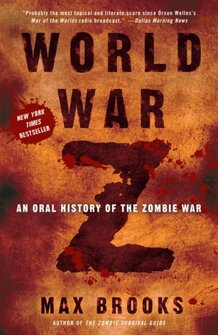
It appears that college classes are reading World War Z by Max Brooks to "to facilitate conversations about globalization, ethics and mortality."

How do I know this?  Click here to listen to Brooks and a Freshman from St. Edwards University talk about it on NPR.

This is further proof of what I always say about the popularity of zombie novels.  While they are set in a fantastical world where the dead rise and begin to hunt down the living, these novels are more about the people and times in which they are written.  So The Walking Dead in all its formats is about modern America, how we choose to live, how we allow ourselves to be governed, and what the consequences of this is as much as it is about out running a zombie.  Click here to read my post which goes into this issue in greater detail.

And click through to listen to hear more the conversation between an author of one of the best zombie books ever and a reader.

Wednesday, August 1, 2012

Marketing Horror All the Year Through

As part of Monster Librarian's Monster Movie Month, I wrote a guest post for them about how to use the popularity of horror movies and TV shows to market your horror book collection to a wider range of readers.

Here is the link to my guest post.  It also includes a link to their review of my book.  For you lazy people, the full text is also copied below.

Marketing Horror All the Year Through
By Becky Spratford

One of the biggest questions I get from my fellow librarians is how they can best market their horror offerings throughout the year.  Of course it is easy to get patrons to notice horror in October.  Every other marketer in the world is priming the public for all things scary, so when people walk in the library, they are horror hungry zombies, looking for their next meal.  We have to do little more than place the horror books within their line of sight, and patrons snatch up the books by the handful.

Ah, but the rest of the year we do not have the entirety of mass media working for us; we have to try just a little bit harder. But as daunting a task as it may seem, marketing horror to your patrons during the other 11 months of the year, is not as difficult as you might think. I have 2 easy ways you can seamlessly incorporate horror into your general work marketing books at your library.

First, let’s talk about traditional library displays.  Most of you out there probably put up a big horror display in October.  But why aren’t you doing it other times of the year?  The most common answer is that you think your patrons aren’t thinking about horror outside of October.  But in the last few years this is not necessarily true.

Let’s take the first 6 months of 2012 as an example.  In April, we saw the release of The Cabin in the Woods, a terrific and popular haunted house movie.  In May, there was the Johnny Depp vampire soap opera Dark Shadows and in June, the king of mash-ups, Seth Grahame-Smith helped to bring his bloody, smart, and amusing novel, Abraham Lincoln Vampire Hunter to the screen.  Each of those movie releases had their own marketing campaigns that resulted in buzz about them among the general public.  For each, a small display could have easily been created.

You begin by putting up a graphic of the movie poster on regular 8 ½  by 11 paper (just do a Google image search for the movie) next to a handful of books.  Then you grab some books that are connected with the movie.  So for Cabin in the Woods, you could pull out some haunted house books, vampire books for Dark Shadows, and some comic horror novels for Abraham Lincoln Vampire Hunter.  Displays do not need special shelving.  Just put books out anyplace where you have space.  For example, at the Berwyn Public Library, we put these small, current event displays up on our desk, on a top shelf that we keep clear to rotate with impromptu displays, and even on small side tables in our seating areas.

These current event displays not only show your patrons that you understand their interests, but they also make a trip to the library easier for them.  Patrons are daunted by the large number of books on our shelves, so anything we can do to pull out good books for them, makes them less intimidated and more willing to browse.  And, displays linked to current media darlings are a sure fire crowd pleaser.

But how do you choose the books?  Here is where I can help.  In my new book and on its companion website, I have a lot of lists that would help you to identify titles that you could highlight.  I am even fine with you using my annotations, as long as you cite where they are from.  In the book I have entire chapters on haunted houses, vampires, and comic horror that include long annotated lists of popular titles available at most public libraries.  On the website, RA for All: Horror, I use tags on each post.  You just need to choose a tag, like vampires, and all of the relevant posts come up.  There are literally hundreds of options at your fingertips.

Another way you can work horror into your displays throughout the year is to simply include a few horror titles in the mix in your larger, more planned displays.  For example, we have done displays featuring coming-of-age stories at our library.  Since this is such a popular theme in novels, on the display we included books from every genre.  There was literary fiction, science fiction, fantasy, suspense, and horror, just to name a few.  As I argue in my new book, a coming-of-age theme is huge in all horror.  In most horror novels, the protagonist has to overcome his own shortcomings, face his inner demons, and grow up before he can defeat the physical monster in front of him.  So what horror books can be included on a “Coming-of-Age” display? Any you want.

What about a display on gardening? I have lots of “plants of terror” titles to suggest to you in  my book or on the blog, but here are two of my favorites– The Ruins by Scott Smith and The Caretaker of Lorne Field by Dave Zeltersman.

This plan works with just about any theme.  If you just make an effort to incorporate horror into all of your displays, I am sure you will find a tale of terror to fit most displays.  The moral here is to consciously mix all genres into your displays.  You will have more fun, and you will make a wider range of patrons happier.

My second tip for marketing horror all year also plays off of the media.  I mentioned a marketing strategy for one-time movie releases, but what about the excitement we are seeing for popular horror television series throughout the year?  Again, let’s stick with just the first 6 months of 2012 and talk about two of the most popular series on television, period– AMC’s The Walking Dead and HBO’s True Blood (okay, technically True Blood is paranormal, not pure horror, but trust me, I will address that in a moment).

The Walking Dead ran on TV in the winter and spring, while True Blood is currently running this summer.  For each series I took a different marketing approach at the library.  For The Walking Dead, I focused on a web campaign of all things zombie.  On my blog, I ran many Walking Dead inspired posts and worked hard to incorporate book suggestions in these posts.  I did this throughout the run of the show, culminating with a display of zombie books in the library during the week leading up to the finale.

True Blood was a little more difficult, since its fans are mostly those who like paranormal stories.  In paranormal, the main thrust of the story is NOT to invoke fear, as it is in horror.  The scares come, but they are not the overall point of the work.  As a result, some horror fans do not like paranormal and vice versa.  But, that doesn’t mean NO horror fans like True Blood.  To address the wide range of appeal in the TV series and the book series, a few years ago, I created this list of Sookie Stackhouse read alikes broken up by appeal.  I considered all of the reasons you may like the series and included plenty of horror options on the list.  This list is available online and in the library and is one of most popular lists.

I hope I have inspired you to consider marketing horror throughout the year.  The popularity of horror TV series and movies today proves horror’s staying power.  And if huge production companies think it is okay to push horror during the other 11 months of the year, why shouldn’t you?  We have way less to lose than they do.

And don’t be scared of helping your horror patrons.  They are not monsters, they just like to read about them.

Wednesday, June 13, 2012

Guest Post from Damnation Books Author Kathryn Meyer Griffith

Today, I am, featuring a guest post from paranormal author Kathryn Meyer Griffith.  From her official bio:
Since childhood I’ve always been an artist and worked as a graphic designer in the corporate world and for newspapers for twenty-three years before I quit to write full time. I began writing novels at 21, over forty years ago now, and have had fourteen (nine romantic horror, one historical romance, one romantic suspense, one romantic time travel and two murder mysteries) previous novels and eight short stories published from Zebra Books, Leisure Books, Avalon Books, The Wild Rose Press, Damnation Books and Eternal Press.

What is so interesting about her perspective is that she has been writing and publishing for a long time; long enough that her books are being re-released to a new generation of fans.  In this guest post, Kathryn Meyer Griffith gives the back story to her first novels.

This is not only a great post for any aspiring writers, but also for readers who enjoy learning about how authors create.

At the end of the post, you can find more links to order her books or keep up with what's new for Kathryn Meyer Griffith.

Why I Wrote Evil Stalks the Night
…and also The Heart of the Rose
Buy at Damnation Books (in E-book and print)


Evil Stalks the Night-Revised Author’s Edition is special to me for many reasons. It was my first published novel in 1984 and as it comes out again on June 1, 2012, rereleased from Damnation Books for the first time in nearly thirty years, it’ll bring my over forty year writing career full circle. With its publication all fourteen, and one novella, of my old books will be out again for the first time in decades. Sure, it’s been a grueling, tedious two-and- a-half year job rewriting and editing these new versions but I’m thrilled it’s over. I have my babies reborn and out in the world again…and all in e books for the first time ever. Now, perfectionist that I am, I can finally move forward and write new stories. 


I’ll start at the very beginning because, though Evil Stalks the Night was my first published novel, it wasn’t my first written one. 


That first book was The Heart of the Rose. I began writing it after my only child, James, was born in late 1971. I was staying home with him, no longer going to college, not yet working full time, and was bored out of my skin. I read an historical romance one day I believed was horrible and thought I can do better than that!
 

So I got out my borrowed typewriter with the keys that stuck, my bottles of White-Out, carbon paper for copies, and started clicking away. I’d tentatively called that first book King’s Witch because it was about a 15th century healer who was falsely believed to be a witch but who was loved by Edward the Fourth. At the library, no computers or Internet back then, I did tedious research into that time in English history: the War of the Roses, the poverty, the civil and political strife between the Red (Lancasters) and White Rose (Yorks); the infamous Earl of Warwick and Edward the Fourth.  Edward’s brother Richard the Third.  A real saga. Well, all that was big back then. I was way out of my league, though. Didn’t know what the heck I was doing. I just wrote page after page, emotions high believing I could create a whole book. So naïve of me. Reading that old version now (a 1985 Leisure Books paperback) I have to laugh. Ironically, like that historical novel I’d thought in 1971 was so bad, it was pretty awful. That archaic language I’d used–all the rage back in the 80’s–sounds so stilted now. Yikes! Yet people, mainly women, had loved it.


And so my writing career began. Over 40 years ago now. Oh my goodness, where has the time gone? Flown away like some wild bird. It took me 12 years to get that first book published as I got sidetracked with a divorce, raising a son, getting a real job and finding the true love of my life and marrying him. Life, as it always seemed to do and still does, got in the way. The manuscript was tossed into a drawer and forgotten for a time.


Then years later I rediscovered it and decided to rewrite it; try again. I bundled up the revised pile of printed copy pages, tucked it into an empty copy paper box and took it to the Post Office. Plastered it with stamps. I sent it everywhere The Writer’s Market of that year said I could. And waited. Months and months and months. In those days it could take up to a year or more to sell a novel, shipping it here and there to publishers, in between revising and rewriting to please any editor that’d make suggestions or comments on how it could be better. Snail mail took forever, too, and was expensive. But eventually, as you shall see, it sold.

Now to Evil Stalks the Night.

In the meantime, as I waited for the mail, I’d written another book. Kind of a fictionalized look back at my childhood in a large (6 brothers and sisters) poor but loving family in the 1950’s and 60’s. I started sending that one out as well. Then one day an editor suggested that since my writing had such a spooky ambiance to it anyway, why didn’t I just turn the story into a horror novel…like Stephen King was doing? Ordinary people under supernatural circumstances. A book like that would sell easily, she said.  


Hmmm. Well, it was worth a try, so I added something scary in the woods in the main character’s childhood past that she had to return to and face in her adult life, using some of my childhood and my young adult life–my heartbreaking divorce, raising my young son alone, my new love–as hers. It was more of a romantic horror when I’d finished, than a horror novel. I retitled it Evil Stalks the Night and began sending it out. That editor was right, it sold quickly to a mass market paperback publisher called Towers Publishing.


But right in the middle of editing Towers went bankrupt and was bought out by another publisher! What terrible luck, I remember brooding. The book was lost somewhere in the stacks of unedited slush in a company undergoing massive changes as the new publisher took over. I had a contract, didn’t know what to do and didn’t know how to break it. Heaven knows, I couldn’t afford a lawyer. My life with a new husband, my son and my minimum-wage assistant billing job was one step above poverty at times. In those days, too, I was so clueless how to deal with the publishing industry.

That was 1983, but luckily that take-over publisher was Leisure Books, now also known as Dorchester Publishing. A publisher that quickly became huge. Talk about karma.


As often as has happened to me over my writing career, though, fate stepped in and the Tower’s editor, before she left, who’d bought my book told one of Leisure’s editors about it and asked her to give it a read. She believed in it that much.


Out of the blue, in 1984, when I’d completely given up on Evil Stalks the Night, Leisure Books sent me a letter offering to buy it! Then, miracle of miracles, my new editor asked if I had any other ideas or books she could look at. I sent her The Heart of the Rose and, liking it, too, she also bought it in 1985; asking me to sex it up some, so they could release it as an historical bodice-ripper (remember those…the sexy knockoffs of Rosemary Rogers and Kathleen Woodiwiss’s provocative novels?).  It wasn’t a lot of money. A thousand dollar advance each and only 4% royalties on the paperbacks. But in those days the publishers had a huge distribution and thousands and thousands of the paperbacks were printed, sent to bookstores and warehoused. So 4% of all those books over the next couple of years did add up. 


Thus my career began. I slowly, and like-pulling-teeth, sold ten more novels and various short stories over the next 25 years–as I was working full time, raising a family and living my hard-scramble life. Some did well, my Leisure and Zebra paperbacks, and some didn’t. Most of them, over the years, eventually went out of print. 


And twenty-seven years later, when publisher Kim Richards Gilchrist at Damnation Books contracted my 13th and 14th novels, BEFORE THE END: A Time of Demons, an apocalyptic end-of-days-novel, and The Woman in Crimson, a vampire book, she asked if I’d like to rerelease (with new covers and rewritten, of course–and all in ebooks for the first time ever) my 7 out-of-print paperbacks, including Evil Stalks the Night–I gave her a resounding yes!
 

Of course, I had to totally rewrite Evil Stalks the Night for the resurrected edition, as well as my other early novels, because I discovered my writing when I was twenty-something had been immature and unpolished; and not having a computer and the Internet had made the original writing so much harder. Also in those days, editors told an author what to change and the writer only saw the manuscript once to final proof it.  There were so many mistakes in those early books. Typos. Grammar. Lost plot and detail threads. In the rewrite I also decided to keep the time frame (1960-1984) the same.  The book’s essence would have lost too much if I’d updated it. 


As I finished the final editing I couldn’t help but reminisce about all the life changes I’ve had since I’d first began writing it so many years ago. Though it was actually published in 1984, I’d started writing it many years before; closer to 1978 or 1979. I’m as old as my Grandmother Fehrt, my mother’s mother and who the grandmother in the story was loosely based on, was back then. While I was first writing it so long ago, I was a young married woman with a small child holding down my first real job and trying to do it all. Now…my Grandmother, mother and father have all passed to the other side. Many other family and friends I’ve left behind, too. I miss them all, especially my mom and dad. It’s strange how revising my old books reminded me of certain times of my life. Some of the memories I hid from and some of them made me laugh or cry. This book, though, is the most autobiographical of all my novels as it contains details of my childhood, my devastating divorce, and what my life was like when I first met my second husband, Russell, who’s turned out to be my true love. We’ve been happily married for thirty-four years and counting. Ah, but how quickly the years have clicked by. Too quickly. I want to reach out, at times, and stop time. I want more. I have so much more life to live and many more stories to write. 


So Evil Stalks the Night-Revised Author’s Edition republished by Damnation Books/Eternal Press will be out again for the first time in nearly thirty years on June 1, 2012, and I hope it’s a better book than it was in 1984. It should be…I’ve had over thirty more years of life and experiences to help make it so.

Written this 1st day of June, 2012 by the author Kathryn Meyer Griffith


***


A writer for over 40 years I’ve had 14 novels, 1 novella and 7 short stories published with Zebra Books, Leisure Books, Avalon Books, the Wild Rose Press, Damnation Books and Eternal Press since 1984. And my romantic end-of-the-world horror novel THE LAST VAMPIRE-Revised Author's Edition was a 2012 EPIC EBOOK AWARDS FINALIST NOMINEE.

My books (all out again from Damnation Books and Eternal Press :  Evil Stalks the Night, The Heart of the Rose, Blood Forge, Vampire Blood, The Last Vampire, Witches, The Nameless One short story, The Calling, Scraps of Paper, All Things Slip Away, Egyptian Heart, Winter's Journey, The Ice Bridge, Don't Look Back, Agnes novella, In This House short story, BEFORE THE END: A Time of Demons, The Woman in Crimson, The Guide to Writing Paranormal Fiction: Volume 1 (I did the Introduction) 
You can keep up with me on my Facebook page, my Author’s Den or my My Space

Thursday, April 19, 2012

The Appeal of Horror: Someone Else's Opinion

I have spent many, many hours of my life writing and lecturing about why people love horror.  Which reminds me, have you ordered a copy of my new book yet?

If you need the refresher course on my opinion, order the book first, and click here second.  But seriously, even if you don't order the book, you can still click here for the summary on my opinion as to why people love horror.

Although I have done a lot of research into this issue and am technically a paid expert on the subject, it is still gratifying to read personal essays by actual readers as to why they love horror.

As I mentioned earlier this month, Criminal Element (a fabulous crime fiction site) has deemed this Undead April.  As part of their special coverage, author Dana Fredsti has this essay entitled, "My First Undead Love: How I Fell for the Horror Genre."

If you love horror read this.  If you don't love horror but work at a library where you help patrons who do, read this.  If you want to know why anyone would love to be scared, read this.  Oh, just read it. Fredsti takes the arguments I make in a vacuum and provides an illustrative example.

Thanks to Fredsti for making me look better.  Hey, maybe it will sell more books...

Friday, November 18, 2011

Contemplating the Gothic Influence of Charles Brockden Brown

<i>Wieland, Or The Transformation: An American Tale</i> by Charles Brockden Brown

This will not be the first time, or the last, that you will hear this from me, but I am a huge proponent for the fact that RA librarians all need to have a better understanding of the history of today's most popular genres.  When it comes to horror I am particularly interested.  I feel that in order to best understand how you are going to help readers with today's horror fiction, you need to understand how the genre has evolved over time.

That is why my new book has a chapter on the history of horror and an annotated list of must read horror classics.

Thankfully, I am not the only one out there tracking down must read horror novels from centuries past.  Back in September, my husband pulled an essay on the forgotten Gothic classic, Wieland by Charles Brockden Brown by Daniel O'Leary from Paste Magazine.

Brown was a Quaker during the early days of America (late 1700s) and, as O'Leary says, he
... is widely regarded as the father of American Gothic fiction, a form that emerged in Europe during the latter half of the 1700s as a dark, generally melodramatic development of late medieval Romance literature. He used genre conventions, but also fashioned significant and unique innovations, repopulating the gloomy Gothic themes with the elements of the relatively young history of America. Many of America’s most beloved authors, including Melville, Hawthorne, Poe, and Fenimore Cooper, considered Brown an important influence.
The essay looks into how this creepy novel is a reflection on the era in which it is written, but the essay also makes a strong argument for the novel's connection to our current American political situation.

There are 3 copies of the book in my library system and it is available as a free ebook from Project Guttenberg, so I will be trying it for myself and will let you all know what I thought.

Read the essay for yourself and see if you want to dive into the haunted past of horror literature.

Monday, November 7, 2011

Ambrose Bierce Gets His Due

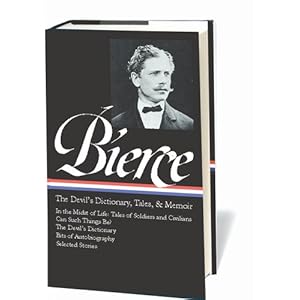
Last weekend the NY Times Book Review ran an essay by Terrence Rafferty entitled Ambrose Bierce: The Man and His Demons.  This essay was an appreciation of the ghost stories Bierce wrote in the 19th Century, but he was also marking the release of the Library of America's new collection of his stories, Ambrose Bierce: The Devil's Dictionary, Tales, and Memoirs.

Bierce is a great writer who has been lost to many modern readers.  I ordered a copy of this new book for the BPL and will be directing a lot of readers to it.

Sunday, October 9, 2011

31 Days of Horror: Day 9-- Zombies Rule Vampires Drool

It is Sunday, but I promised 31 Days of Horror and I will not let you down.  I am working on a longer original content post for tomorrow, but here is a fantastic essay I have been saving to post for months.

 Zombies Rule, Vampires Drool is not as silly as its title.  This is a well argued discussion of the price vampires have had to pay in order to be more "popular" than zombies.  It may also explain why there is now such a strong vampire backlash coupled with a big love for zombies.

This essay should be read by anyone interested in pop culture trends in general.

Saturday, October 1, 2011

31 Days of Horror: Day 1--The Appeal of Horror

Welcome to 31 Days of Horror where I will spend the entire month of October helping you to help your horror readers. This series will cover the world of horror fiction, but with the focus on the librarian perspective of the genre and its readers.

Also, it is important to note from the start how I define horror.  In my forthcoming book, I define horror as "a story in which the author manipulates the readers' emotions by introducing situations in which unexplainable phenomena and unearthly creatures threaten the protagonists and provoke terror in the reader." 

Okay, so enough introduction, let's get this Halloween party started.  I want to kick it all off with an article I wrote for NoveList entitled, "Horror at the Service Desk: How to Help Your Scariest Patrons."

This article is a summary of Chapter 3 of my upcoming book (see the big book just to the right of this post).  It is part of the NoveList RA News.  Although NoveList is a subscription based service, the newsletters are free to all.

In the article I talk about why people love horror and give a few sure bet authors and titles. Here is the introduction:

It seems like everywhere you turn these days, there is another zombie, vampire, or werewolf popping up in books, on television, or at the movies. It is hard for the average person to keep up with the sheer volume of horror-related material available to the public. When you add the haunting Halloween season into the mix, it is easy to see how librarians might be overwhelmed by hordes of readers, shambling in mass to the library, hungry for some tales of terror.
With so many choices, it is actually more difficult for us to help match our horror readers with their next good read. How do you sift through it all, from classics to old favorites and from new stars to paperback-only gems in order to find the correct book for the reader craving a good scare? All you need is a little preparation. By increasing your understanding of why readers are looking for horror and arming yourself with the right questions to ask these patrons, even the most horror-averse librarian can tame the monsters and save the day. In this article, I will break down the appeal of horror, gently leading you down the dark trail of terror, and escort you safely back to the desk fully prepared for the Halloween rush.

Click here to read the entire article and use the link at the bottom to subscribe to future RA News newsletters; some even featuring more articles by me. In fact, I will be in next month's issue writing about how to best serve your 20 and 30 something patrons.

Monday, July 18, 2011

NY Times Article About Horror Movies.

Picture of Linda Blair from
The Exorcist (1973)
from the NY Times Article
Previously, I mentioned the new book, Shock Value by Jason Zinoman.  Well, on Sunday, he also had this essay in The New York Times talking about the academic research being done analyzing the appeal of horror movies.

Much of what is in this essay about horror films translates to the appeal of the book form of horror too.

If you love to be scared by a horror book or movie, read this essay.

I would also like to thank Zinoman's publishing team for executing one of the issues I bring up in my new book--- Horror should not only be discussed in October.  Zinoman's book was published this summer and is getting a lot of press.  Good for him, but more importantly, good for horror as a genre.  He is proving what we at the library already knew-- people like to be scared all year long.

Friday, January 28, 2011

Essay on History of Zombie Lit and Dead Set

John Ottinger III, editor of the wonderful blog that follows SF, Fantasy, and Horror, Grasping for the Wind, contributed this great article entitled, Brains Lite: A Brief and Incomplete History of Zombie Literature, to the award winning Speculative Fiction Fanzine-- Electric Velocipede.


In this essay he gives a brief overview of zombie lit, but also tackles the question of why they are so popular right now.  If you like zombies, give it a read.


Also, while I am talking zombies, in all of The Walking Dead hype this past fall, the zombie miniseries Dead Set, which aired on IFC, got lost in the shuffle.  I recently watched it and would highly recommend you do too. The set up is quite simple.  Zombies begin taking over Britain, and the locked in contestants on a Big Brother type reality show are among the only survivors.


However, a word of warning first.  If you thought The Walking Dead was bleak, stay away.  Dead Set has nary a warm and fuzzy moment.  It is non-stop carnage and satire.  There are plenty of laugh out loud moments, but there are no heroes here, no Rick Grimes to lead the troops.  I loved it, but I also realize that my personal taste is a bit out of the "normal" range.


If nothing else, it had one of my favorite final shots.  Just the final shot is worth watching the entire show.  That and the overweight reality show producer.  He was fabulously obnoxious.


If you like Dead Set, read Brian Keene's Castaways.  Click here for my review.

Friday, November 5, 2010

Where Are All The Great New Horror Books

Blogger Michael Ferrante wrote this interesting essay for io9 entitled, "Where Are All the Great New Horror Books."

From the essay:
Of course there is always the Horror Writers Association purveyor of the fine Bram Stoker awards whose winner and nomination list will most definitely provide some fascinating and noteworthy titles. But many titles aren't the type of horror I'm looking for. For example 2009 First Novel winner Damnable by Harry Schwaeble and 2009 Best Novel nominee Patient Zero by Jonathan Maberry look to fall squarely into the "action-horror" blend that, while certainly entertaining, isn't the type of horror I'm really looking for.
He also goes on to talk about the problem of locating true horror at the bookstore due to the fact that it is interfiled with science fiction and fantasy quite often.  He also mentions the curse and blessing of the small presses. (Click here for more on that issue)

While Ferrante has many good points, I disagree with his overall point that there is not a lot to love in horror today.  I have been spending the last 6 months immersed in horror, and I think it is in a much better state than back in 2002 when I was working on the first edition of the book. I think the appeal range of titles has grown, I think the quality has improved, and I think the accessibility has increased.

Much of this argument will be presented in the new book (which is almost done!). But I will give one major example now.  When I wrote the first book, Stephen King, Dean Koontz, and Anne Rice were still ruling the genre, after almost 30 years of dominance.  Now, while those names are still very popular, we have two new kings of horror, who are legitimate best sellers in their own right: Joe Hill and Jonathan Maberry.  Both write a range of types of horror also, not just the action-horror Ferrante refers to in his essay.

I think we are entering a new golden age of horror.  Further evidence: Amazon.com listed The Passage as the number 16 best book of 2010. And that is of all books, fiction, and nonfiction!

Anyway, that is just my two cents added on to Ferrante's.  Go back to the original essay and read the comments he got there too.

Tuesday, September 28, 2010

Where Are the Scary Vampires?

This is a question I ask often. Sometimes I feel like I am the only one who misses the scary vampire.

This week, SF Signal posted this essay entitled, Whatever Happened To Scary Vampires?


It is a good rundown of how vampires have changed as characters over time. Worth a read.

Thursday, September 9, 2010

China Mieville, Michael Chabon, and Genre Blending

In The Millions today, Bill Morris has this great essay on China Mieville entitled, "How China Mieville Got Me To Stop Worrying and Love Monsters."

This is a both a love note to Mieville and a discussion on the mixing of genres.  This is an issue that I also feel strongly about. Great reads do not need to be all literary or all genre based. Just because a book has monsters does not make it "lower" than another book.

Morris' essay on Mieville is a great starting point in this discussion. And, if you haven't read Mieville, you should. But if you want to read more, run out to the library and borrow Michael Chabon's Maps and Legends:Reading and Writing on the Borderlands. Specifically, read the first chapter, "Trickster in a Suit of Lights," which contemplates this issue at length. In this chapter, Chabon posits that the best literature is that which is written in between the genres. Works that take a bit from other genres, in his opinion, tend to be the best.

Chabon should know.  He is a master who mixes genres in all of his works and has racked up the awards to prove his worth.