Summer Scares Resources

Click here to immediately access the Summer Scares Resource page so that you can add some professionally vetted horror titles into your reading suggestions and fiction collections for all age levels.

Friday, October 26, 2012

31 Days of Horror: Day 26-- Review of Kin

Yesterday, I had this post by Bram Stoker Award winning author, Kealan Patrick Burke.  Today, as promised here is my review of his latest novel, Kin.

During this Halloween season I have tried to review a range of books, much in the spirit of my Library Journal article, trying to find a book for every type of horror reader.  Today's offering is the darkest, evilest, and bloodiest of the bunch.  And even worse, this is a book without supernatural evil.  The bad guys here are all human. But since this is what I was expecting...it was great!

Kin is about Claire who has been beaten and raped by the members of a family in a middle of nowhere southern rural town.  The story is from Claire's perspective as she is rescued and tries to heal.

Kin is also about her abusers, an entire family of monsters. The story is also from their point of view.  We see the evil they do, we get into their minds, and we are caught up in their story as much as we are in Claire's.

Kin is bloody, gory, and terrifying.  It is a story that grabs you and won't let go.  The advertising says it is like Texas Chainsaw Massacre, but this is not accurate. This story is deeper, more emotionally wrenching, and more nuanced than that.

While there are shocking scenes of violence here, you read Kin to peer deeply into the evil soul of man.  You read this novel for the characters, who are well developed from the sympathetic Claire to the evil villains.

If you want to be unsettled, anxious, frightened, without a supernatural monster in sight, and still be unable to stop turning the pages, Kin is the book for you.

Readalikes: A few authors who write violent but nuanced horror stories came to mind immediately when I was reading Kin.  They are:


Also, the Southern Gothic setting is so intense it takes on the weight of a character here.  Think Deliverance and Winter's Bone meet the late great, wicked mind of Richard Laymon.  In fact, there is something of the rural noir here. I think Kin is a great opportunity for Southern Gothic fans and serial killer readers to unite in a story that will appeal equally to both.

*Full disclosure: Burke sent me a copy of this novel to add to my library's collection for free.

Thursday, October 25, 2012

31 Days of Horror: Day 25-- Guest Post by Kealan Patrick Burke

Less than a week until Halloween. I cannot believe we are almost there.  This means there are only a few authors left to hear from.  Today, I welcome the 2004 Bram Stoker Award winning author of the novella Turtle Boy (currently free), Kealan Patrick Burke.

His new novel Kin is a self published title available in print or ebook.  I will have my review of Kin tomorrow, but I should mention, Kin has already garnered many positive reviews.

Also, for those of you who enjoyed yesterday's post about self-publishing and libraries, click here to see Burke's guest post on Alexandra Sokoloff's blog about how e-publishing saved his career.

So here's Burke talking about why he writes horror.

******************************************************************
NAVIGATING THE DARK: WHY I WRITE HORROR


Upon finishing her copy of KIN, my latest novel, my mother’s verdict was mostly positive. She’s not afraid to tell me the truth about my books, which is why she’s one of my most invaluable first readers. If she hates something, she’ll say so, because she doesn’t believe there’s anything to be gained by sparing my feelings. She knows the world at large has no such obligations. And so, she called to tell me she had very much enjoyed the book, but wondered when I might consider writing something a little less grim, a little less dark.

A variation of this question often pops up in interviews: What attracts you to the dark stuff? Why horror? I once received a rejection letter for a story in which the editor asked if I had something that wouldn’t have their readers reaching for the Prozac. It’s a valid question, and often leads me to ask myself the same thing. Why do I write horror?

The irony of having my own mother pose this question is that if not for her, there’s a good chance I wouldn’t be writing at all, and if I was, it would probably be in some other genre.

A little background, because the motivation for one’s future is most often found in the past: My mother had me reading when I was a zygote. I remember making a fast progression from children’s books to young adult by the time I was eight. I was insatiable, a sponge, soaking up everything and anything with no particular preference for genre. Anything would do. After reading everything I could get my hands on, I hungered for more, and it was this hunger that led me to start sneaking books from the shelves in my mother’s bedroom. I was about eleven and these books are not ones that she would have vetted at the time. The most significant of these was Pet Sematary by Stephen King. After sneaking it out under my sweater, I saved it until bed time and, under the covers with a flashlight, read the entire novel in seven hours. The book scared the hell out of me, but not in any kind of traumatizing way. If anything I was thrilled, and at a time when I was already producing my own first shaky attempts at writing, I knew I had found my genre. I wanted to make people feel the way King’s book, and later Poe and Matheson and Grant, had made me feel. I wanted to give them the creeps, shock them, scare them, and most importantly, draw them fully into the world I had created.

Eventually my mother discovered her missing books and rather than deliver me a tongue-lashing, allowed me to use her library card on the condition that she would read the books first and decide what was suitable and what wasn’t. Even as she said this, she knew censorship was a futile endeavor. I would read them all, and she gradually conceded that it was better to feed this habit than try to impose restrictions on it. After all, it kept me out of trouble.

But of course, being a voracious reader might have explained my desire to write, and the genre in which I read may have informed the tone of my own stories, but there was more to it than that.

For my mother, ditched by my father when I was eight, life was no picnic. In the mid-eighties, well-paying jobs for single mothers who didn’t possess a trade were few and far between. She was a good mother, but poverty, stress and eventually alcohol made a bitter and sometimes violent stranger of
her, and as my brother was too young (and a lot less mouthy, if we’re being honest here), I was the one who got the brunt of it.

My teenage years were fraught with violence and self-hatred. I withdrew into myself and hid in books and my own stories. I was a typical angst-ridden teen, with atypical theories on why. Life from this point took a significantly dark turn, even as my love of the written word increased.

I’ll resist going into any more detail here, but suffice it to say, the stories I write are encoded with fragments of my own dramatic autobiography.

Having grown up around relatives who loved to spin ghost stories they swore were true, and living in a town still surrounded by the ruins of a castle that had been there for hundreds of years, a town that breathed history, it was hard to escape the need to spin tales of my own. My mother instilled in me a love for reading and encouraged my writing, but also a premature awareness that life is sometimes harsh and dangerous, and that even the people you trust can turn on you.

For me, happiness doesn’t need a reason, nor does it require a closer look. It’s just good, and pure, and as a result I don’t find it nearly as interesting to study. If you’re happy, everything’s A-OK and these days I’m happy more often than not. I have enough light to limit the darkness to the shadows where they belong. I love life and all it has to offer, and I have nothing to whine or complain about. Even when I do, I choose not to. Someone else always has it worse.

And this is what I write about: the people who have it worse. I write as an exploration of the darkness in me, in the people I know, and in those I don’t. I write as a psychological exploration of the why? Why do people do the things they do? Why do we hurt each other? Why is the world the way it is?

Darkness is depthless and complicated, and often unconquerable. Getting to the root of it, assuming there is one, is what keeps me writing what I write. Every story is an attempt to understand the sharp edges of the world and the ones that gave me my scars.

Maybe someday my attempts to understand will yield sufficient results and all my questions will be answered. Maybe then I’ll move onto lighter fare. Until then, I’ll keep writing the dark stuff, because the secret to who we are and why we are fascinates and thrills as much as it terrifies.

And I am a student.

- Kealan Patrick Burke

www.kealanpatrickburke.com
https://facebook.com/kealan.burke
Twitter: @kealanburke
Blog: kealanpatrick.wordpress.com

Wednesday, October 24, 2012

31 Days of Horror: Day 24: Self Publishing and Libraries a Guest Post by G.R. Yeates

Self publishing is very hot right now.  It used to be that authors were stigmatized for "vanity publishing," but not anymore.  In today's ebook world, authors like E.L. James have become publishing superstars by striking out on their own, self publishing in electronic format, and then being picked up by major publishers.

Like Romance, Horror is an especially rich market for self publishing.  There is a lot of good self published horror out there.  While it is getting easier for libraries to find reviews of self-published works, the problem for libraries is that it is hard for us to get our hands on it in a way we can circulate it.

I figured I could help to rectify this problem by going right to the source.  G.R. Yeates is a horror author finding success with self publishing.  I asked him to share some insight from the author's side of the issue.  So for today's 31 Days of Horror, I present Yeates and his advice to libraries as they navigate the world of self publishing.

**************************************************************************

Self-publishing and Libraries

First off, I'd like to offer my thanks to Becky for asking me to talk a little about self-publishing and how libraries can work with authors who have chosen to take this route.

The simplest answer to that is contact the author if you are interested in their work. Because we self-publish, your line of communication with us is 100% direct - most of us have our business e-mail address available on our websites at the very least. In terms of what you then want from the author, I have a few suggestions in terms of what we can offer you.

1) We can offer ebooks at low prices compared to Big Publishers. Because of the very competitive royalties rate offered by Amazon (70%), we can afford to price ebooks at between $0.99 and $3.99, for example, which undercuts the prices set by the big publishing houses at the current time. Though I'm sure, as you would be doing a service for us, authors would be open to negotiation and might even be able to offer you free copies from their ebook catalogue. This is up to the individual author as we are all different in terms of how we are currently gaining success through marketing, promotion and distribution but the point is that by dealing with self-published authors directly, you are looking at being able to get a very good deal that will benefit both your library and its patrons.

2) We can offer you ebooks that are Digital Rights Managements (DRM) free - what this means is that once you have purchased our ebook, you are free to convert it to other formats as many times as you like to aid ease of distribution to your patrons. So once you have one copy of the ebook, you would never need to purchase it for the library again.

3) In addition to purchasing our ebooks, you could also talk to us about doing readings and presentations at your library. This could take the form of seasonal events tied to Easter, Christmas and, yes, Halloween. There are self-published writers finding success in genres all the way from Christian Lit to Horror so finding someone appropriate for such an event should not be a difficult task. And throughout the year, events could be organised around particular groups of readers such as those of Romance, Cosy Mysteries and YA. As I have said before, we are easy to contact, open to negotiation on what you want from us and we are also very keen to get our names out there. If you put the call out for self-published authors to appear at your library, local or otherwise, you will get a response.

4) I have been advised that a stumbling block to stocking ebooks is whether they have been reviewed at a trusted source. My honest opinion on this is that it is a tricky one for a library to negotiate because it depends on how you define trusted. Do you go by Kirkus or by Amazon?

I'm sure you are aware that there has been a recent furore over a handful of self-published and traditionally-published authors using paid reviews and leaving purposefully negative reviews against the works of their rivals. My suggestion would be to look at this in terms of supply and demand. I have already addressed the question of supply under Point 1 in this article.

In terms of demand, I would say that how people read is not just changing, it has changed. Speaking from my perspective as a reader, I bought my Kindle to get the odd digital book and to proofread my own work before publishing. Now it is how I read. I rarely buy paper books anymore. This has happened to my habits in just the space of eighteen months and the changes in the publishing industry have kept pace with that. Authors who used to make up the publishing mid-list are moving to self-publishing in numbers and at speed, so the demand is going to quickly grow for self-published ebooks. There are now numerous blogs and websites that support and review self-published writers. I would suggest that these can be used as a means of reviewing potential authors you would like to stock. These websites are just a few that you could be using as initial reference points: Pixel of Ink, World Literary Cafe, Gingernuts of Horror, Digital Book Today & Indies Unlimited.

Beyond that, it is a judgement call on the part of the library but I think it is something that should start being talked about now because, in the very near future, there are going to be many more self-published authors, certainly not less, and the decision-making process regarding which books to stock will need to adapt accordingly.

I think it is in our mutual interests for self-published authors and libraries to work together and support each other. I hope these suggestions are of use to you.

G.R. Yeates
To Purchase The Eyes of the Dead: http://www.amazon.com/dp/B0052BPGTM http://www.gryeates.co.uk

Tuesday, October 23, 2012

31 Days of Horror: Day 23-- Guest Post by Joe McKinney with a 6 Book Giveaway!!

People who follow this blog, know that I think Joe McKinney is great. He was one of the authors I featured prominently in my talk on trends in horror series at the Public Library Association Conference last March and here is a longer version of what I wrote about his latest book in Library Journal:
Speaking of zombies, the shambling undead remain extremely popular and Joe McKinney has successfully parlayed his experience as a police detective and disaster migration specialist into terrifyingly realistic and award winning zombie plague novels.  His newest offering, Mutated, is another winner. Ben has been surviving in a zombie infected world by staying alert and avoiding trouble. When a nasty leader begins to gather the living, Ben decides to trade his solitude for refuge on an abandoned farm. Things are tough, but manageable, until Ben notices that the zombies are getting smarter and faster.  How can this be? Mutated, is filled with realistic details of how the plague spread, convincing dialog, superior characterization, and of course, awesome zombie battle scenes.  This is the perfect read alike for fans of the Walking Dead in all its formats.
I asked McKinney to share with all of us why he writes dark fiction. Not only did he agree to join the 31 Days of Horror celebration, but he also sent me 6 of his books to use for one SUPER SIZED GIVEAWAY! 

If you want in on the chance to win 6 Joe McKinney paperbacks for you or your library email me at zombiegrl75[at]gmail[dot]com by Saturday, October 27, at 5pm central.  I will notify the winner and get your snail mail information to send you the books.

In the mean time, here's McKinney's guest post.

 *****************************************************************

Why I Write the Dark Stuff

By Joe McKinney

In my day job I’m a patrol supervisor for the San Antonio Police Department, working the west side of town. The police officers who make the calls, who make the arrests, who keep the peace in the busiest part of the city, they work for me. I’m the one they call when they have crime scenes that need managing, or when something just doesn’t look right.

What that means is that I get to see a lot of dead bodies. And I mean a lot of them.

Like last week. One of my officers called because he had a decomp (police parlance for a body that’s been rotting in place for a good long while) and he wasn’t sure if it was suicide or homicide. So I showed up to the apartment and there was the dead guy, seated on the floor (or almost on the floor; his butt was about two inches off the carpet). He had a noose around his neck, though you could barely see it because his skin was so bloated and gummy with rot that it had sort of oozed over the rope.

“So, what do you think?” the officer asked.

“Suicide,” I told him.

“But he’s sitting down. Wouldn’t he have rolled over or something when he started to choke? That’s like an instinct or something, isn’t it?”

“No,” I said. “What you’re looking at is an act of will power. If you want to do something bad enough, you’ll see it through.”

He looked from me to the body and shook his head.

“Besides,” I added, “look at all that medication in there in his bathroom. Those drugs are for hepatitis and cancer. He did this because he was hurting pretty bad. And look up there.” I pointed to the ceiling where our dead guy had nailed the rope to the rafter. “He did that because he didn’t want the rope to slip off. And look at where he chose to do this, here in the bedroom, so his relatives coming in the front door wouldn’t have to see him. I bet if you look around here you’ll find a note. Probably in the other room, out of sight of the bedroom.”

The officer nodded.

We both stood there, staring at the body. The apartment didn’t have air conditioning, and it felt like standing inside an oven, even though it was the middle of the night. The smell was really bad.

The officer kind of chuckled and said, “So Sarge, I guess this is one for your next book, huh?”

I offered him a bland smile. Cops develop their gallows humor long before they learn that it’s actually a defense mechanism against the horror of confronting your own mortality, and this officer was one of the young ones. He still had a lot to learn.

“Go look for the note,” I said.

“Yes, sir.”

When he was gone I found myself looking into that suicide’s face and sighing. The suicides always get to me. Something about standing in the presence of someone so desperate to take control of their pain and their emotional devastation that they would resort to this makes me feel numb.

In the other room, the young officer was clumsily knocking around. Something fell over and broke. I almost called out to him to be careful, but held my tongue. You see, my mind had drifted from my day job to my night job. I was thinking about what he’d said about my next book. So many people seem to have that opinion about horror, and about zombie fiction in particular. To them, a book about shambling dead things eating the living must be nothing but gratuitous violence and gore. What else could it be?

Well, I take exception to that.

I started writing because I was scared of the future. My wife and I had just gotten married. Then we had a daughter, and the world suddenly seemed so much more complex. In the wink of an eye, I went from a carefree young cop – a lot like the one in the other room knocking stuff over – to a man with more responsibilities than he could count. I had obligations and commitments coming at me from every angle.

I’d been writing stories for a good long while at that point, starting sometime in my early teens, but never with the intention of doing anything about them. I would write them out on a yellow legal pad, staple the finished pages together, and leave them on the corner of my desk until the next idea came to me.

Never once did it occur to me to do something with what I’d written. I just threw those stories away and forgot them. But then came adulthood, and parenthood, and I found myself groping to put the world in order, to regain some of the control I felt I had lost. I realized that writing could help me with that. I realized that I could focus my anxieties and make something useful of them.

And so I started writing a science fiction novel. It was a big space opera epic, and it was pure trash. Every word of it was awful.

The reason? Well, it wasn’t authentic. It wasn’t me.

The real me, the kid who sat at his desk filling up yellow legal pads rather than going out bike riding with his friends, was a horror junkie. I was crazy for the stuff. Horror was my first literary love, and I figured seeing as love was what drove me to return to writing that I should write what I love. I was feeling like the world was rushing at me from every side, so I wrote a zombie story about characters who had the living dead rushing in at them from every side. That’s when things started to click. That’s when it all made sense.

But it wasn’t just that simple. You see, I sincerely believe that fear is the most authentic, and the most useful, emotion available to the storyteller. It is as vital as love, and indeed, gives love its profundity, for what makes love, and family, and everything we treasure so valuable but the fear that it could all be taken away in the blink of an eye. For me, fear goes far beyond monsters. It is the catalyst for my creative process, and without that creative process, I’m afraid I would wither up inside. I’m not saying I’d end up like that suicide I just told you about if I couldn’t write anymore, nothing that melodramatic, but absence of that creative outlet would be a hole that nothing else could fill.

So that’s why I write the dark stuff.

Joe McKinney
San Antonio, Texas

Monday, October 22, 2012

31 Days of Horror: Days 22-- Guest Post by Brett J. Talley

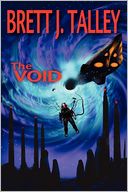
There is no author hotter these days than Brett J. Talley.  Everyone is talking about him.  Heck, even I chose to lead off my Library Journal article with The Void:

Brett J. Talley’s novel The Void harkens back to the science fiction tinged horror of H.P. Lovecraft. Enter a world were people can easily travel through space while sleeping. There is a catch however. Travelers are held hostage to their nightmares while in flight; nightmares customized to their own fears; nightmares that have been know to drive people mad. Six travelers, each with a secret encounter an abandoned aircraft, and bad things begin to happen. But is it a dream, their paranoia, or a monster?  Talley creates a creeping sense of unease from the start of The Void, an anxiety that never lets up, continuously builds, and leaves the reader looking over his or her shoulder while frantically turning the pages to find out how it all ends. 
A few months ago, I contacted Talley to let him know I had included him in my piece for Library Journal and asked him if he would participate in my 31 Days of Horror with a guest post.  I was very interested in his opinion on his seemingly overnight success.  He was very willing.

Below is Brett J. Talley's guest post.  You can visit Talley at http://brettjtalley.com.

**************************************************************

What is it like to be a new writer you ask? I wouldn’t know. This is no new pursuit for me. I’ve been writing for as long as I can remember. When I was in second grade, I learned the true joys of reading for the first time, and naturally, I wanted to make some magic of my own. I set about writing my first novel. It was five pages long and was about vampires—Dracula, of course.

People ask me why I chose horror. I didn’t; horror chose me. I think most people who sit down with a pen and a piece of paper want to do two things—they want to tell a story that entertains, and they want to say something about the human condition. The purest and the deepest human emotion is fear. It comes without prejudice and without ulterior motives. It is at the heart of human action, and overcoming it—or at least learning to deal with it—is the greatest challenge we face. There’s nothing I would rather write about.

I’ve said before and I continue to believe that the greatest stories do not spring, fully formed, from the brains of their authors, like Athena from the head of Zeus. Rather, they grow over time, starting off as but the kernel of an idea, an odd tale whispered around the fireside on moonless nights. But great things have small beginnings, and from that tiny seed spring a thousand different tales. Stories of love and loss, of high adventure and magic. And yes, stories of the blackest horrors and nameless fears. The writer is as a huntsman who stalks the forests of society, capturing those archetypes that rumble through our culture and taming them to his own ends. Those of us in horror just so happen to roam the darkest places of the world. But the truly great story isn’t just horror or just romance or just literary fiction. It draws from many wells.

We are fascinated by overnight success. It’s a funny phenomenon, really, especially since there’s no such thing. We don’t see the years of struggle. We don’t see the disappointments, the rejections, the overwhelming feeling that it’s not worth it. Behind every overnight success are many, many, many nights of failure.

That’s the way I feel about That Which Should Not Be and The Void. For years I was but one of millions of people writing down their thoughts on paper with the dream of seeing them in print one day. It was a dream I never thought would come true. The last year has been a whirlwind. From unpublished author to finalist for the Bram Stoker Award®. It’s a feeling that cannot be described, and I sincerely hope that every writer who has had the spark of inspiration and the dedication to make it into reality gets to experience it one day.

But in truth, it’s not for glory, fame, or wealth that we write. If it was, there would be a lot fewer writers in the world. No, it is something different. It is that quest for the perfect tale, for the story that will transcend all others and touch someone’s heart. That is what I seek, and if you need to find me, I’ll be in the darkest wood, searching for the greatest monsters of them all.

Happy hunting.

Sunday, October 21, 2012

Giveaway Winner

The winner of Wood by Robert Dunbar is Karen T.  Thanks to all for entering.

I have a huge 6 book giveaway by a big name author coming in just a few days.  Stay tuned!

31 Days of Horror: Day 21-- Horror Links Round Up 3

Here is another round of Horror Links from the past 10 days or so.

  • Flavorwire had this "high brow" horror reading list.
  • Flavorwire also had this essay positing why The Walking Dead is so darn popular.  I love when other people besides me talk about why something appeals to readers or viewers. 
  • JournalStone published Parts 2 and 3 of the Hallmarks of Horror.  Part 2 is isolation.  Part 3 is language.  I had previously linked to part 1, location.
  • Check out this zombie preparation infographic.
  • Criminal Element had this report from New York Comic Con's Walking Dead panel.
  • The Evil Dead film is being remade.  io9 had reports here and here.
  • GalleyCat is interviewing horror authors this Halloween season.  Here is their interview with Jonathan Maberry.
  • From io9 here, Anne Rice confirms that Louis and Lestat are a same sex couple, but we all sorta knew that already.
  • Literary costume ideas for Halloween.
  • Finally, Benjamin Kane Ethridge, friend of RA for All: Horror on "The Ten Movies That Should Always Haunt Your TV on Halloween."