Summer Scares Resources

Click here to immediately access the Summer Scares Resource page so that you can add some professionally vetted horror titles into your reading suggestions and fiction collections for all age levels.
Showing posts sorted by relevance for query ruins smith. Sort by date Show all posts

Monday, April 20, 2015

Halfway to Halloween: Reader's Shelf Guest Column

Here is the link to my annual celebration of Halfway to Halloween in Library Journal.

Please consider celebrating at your library. It is a wonderful time to remind people that they loved reading horror in October, so why not try one now?  It is also a great time to start looking at your collections ,replacing classics, ordering award winners, and checking on upcoming titles.

I have copied the full column below too.

Halfway to Horror: Halloween Previews | The Reader’s Shelf, April 15, 2015

Ahh, April, the beginning of spring. Flowers budding, birds returning from their winter sojourn, and…time for monsters, hauntings, and havoc! Why not? Halloween is a mere six months away. Bring the holiday fun by promoting “Halfway to Halloween” with this collection of titles currently lurking in the stacks.
Readers looking for plenty of ambiance to set a horrific tone but without the gore can try Pulitzer Prize winner Jennifer Egan’s The Keep (Anchor. 2007. ISBN 9781400079742. pap. $15.95; ebk. ISBN 9780307386618). This gothic novel follows two estranged cousins who reunite to renovate an Eastern European castle. The combination of their strained relationship and the eerie edifice is atmospheric enough, but then Egan ups the ante with the addition of Ray, a convict in a prison writing program, who is the actual author of the cousins’ journey. The story-within-a-story frame presents an oppressive and anxiety-driven narrative that carries an intensifying sense of dread.
Although quiet and anxious terror can make an impact, there is something to be said for an all-out pulp fiction bloodfest, as long as it is accompanied by solid story­telling. In Castaways(Eraserhead. 2011. ISBN 9781936383931. pap. $11.95; ebk. ISBN 2940014008419), by Brian Keene, the contestants and crew of a Survivor-esque reality television show are caught in a fight for their lives as an indigenous tribe of murderous human monsters populates the island on which their games take place. Isolated even further by a violent storm, the characters are forced to switch from competing for prize money to battling for survival in Keene’s grisly and satirical page-turner.
While Keene is parodying current times, Sarah Pinborough has found inspiration for her disturbing stories hiding out in history. The first book of her “Dr. Thomas Bond” series,Mayhem (Jo Fletcher: Quercus. 2014. ISBN 9781623650865. $24.95; pap. ISBN 9781623658762. $14.99; ebk. ISBN 9781623650872), takes place during the same period as the activities of Jack the Ripper. Pinborough uses the dread of her setting to great advantage in telling an equally ghastly tale of another killer who stalked London, also leaving body parts of women strewn all over the city. This macabre, well-plotted, and gripping mystery offers an unsettling peek into the face of true evil.
Those who would rather look to the future than wallow in the past might turn to Jonathan Maberry’s critically acclaimed and compelling near-future, post–zombie apocalypse YA series beginning with Rot & Ruin (S. & S. Books for Young Readers. 2001. ISBN 9781442402324. $17.99; pap. ISBN 9781442402331. $11.99; ebk. ISBN 9781442402348). Benny lives in a safe zone where the law dictates that every person age 15 and a half must select an occupation in order to contribute to society. Nearing his deadline, Benny accompanies his brother, a bounty hunter, outside the safe zone to see what that job is like. The decision turns Benny’s entire life upside down—not just because he has to combat hordes of ­zombies, but because he is forced to confront his own preconceived notions about the only world he has ever known.
The best horror stories of the last ten years are those in Joe Hill and Gabriel Rodriguez’s graphic novel series “Locke and Key,” which starts with Welcome to Lovecraft (IDW. 2008. ISBN 9781600102370. $24.99; pap. ISBN 9781600103841. $19.99; ebk. ISBN 9781600102370). The Locke children are typical 21st-century kids. Well, except that their father was murdered, their mother is finding solace in alcohol, and a wicked, supernatural being has been trying to destroy their family for generations. The Lockes live in a creepy, secluded historic home filled with hidden keys that do magical and dangerous things. The children collect the keys and learn how to harness their powers, leading to an epic showdown. The series combines a realistic and chilling plot with fantastic characters and art that is both beautiful and scary.
In Scott Smith’s The Ruins (Vintage. 2008. ISBN 9780307390271. pap. $15.95; ebk. ISBN 9780307266040), four American friends vacationing in Cancun, Mexico, meet a German tourist who enlists them in the search for his brother, who went missing on a trip to the Mayan ruins. Despite warnings from the locals, the five climb an ominous hill covered in flowering plants—a hill that ends up holding them captive. Forced into a mortal struggle with a monster, they soon regret their decision to enter the jungle. Smith’s petrifying, original, and gruesome story never lets up and is sure to make readers regard even the most common of houseplants with a touch of fear.
This column was contributed by Becky Spratford, a Readers’ Advisory and Teen Librarian at the Berwyn Public Library, IL. She is the author of The Readers’ Advisory Guide to Horror, 2d ed. (ALA Editions, 2012), and a proud member of the Horror Writers Association. For more horror suggestions from Spratford, visit raforallhorror.blogspot.com
Neal Wyatt compiles LJ’s online feature Wyatt’s World and is the author of The Readers’ Advisory Guide to Nonfiction (ALA Editions, 2007). She is a collection development and readers’ advisory librarian from Virginia. Those interested in contributing to The Reader’s Shelf should contact her directly at Readers_Shelf@comcast.net

Monday, October 31, 2011

31 Days of Horror: Day 31-- Monday Discussion and Lots of Me

Day 31 is not only Halloween, but also, since it is a Monday, I am hosting the Monday Discussion over on RA for All.  Today's question is:  What's Your Favorite Halloween Memory?  You will have to click through to see mine.

Also click here to read what happened when I tried to get Chicago Tribune columnist Barbara Brotman to try reading some horror.

Click here at 10am to listen to me live on the radio talking about horror fiction.

I gave an interview with the Oak Park Patch.  Click here for the full text.  I will also paste it at the end of this post.

All three of this appearances do have some new information about Horror RA. You gotta save the best for last.

Speaking of the end, thank you for joining me on this 31 Day journey.  I am going to take a break for a few days, but I will be back.  Just don't expect any 31 days in a row again until next year.  In the meantime, order a book and use the coupon code at the top of this page for $5 off.

My goal is to post here 2x a week, but of course, that will wax and wane depending on what is going on in the horror world.  You can however, follow this blog via RSS or email feeds to know when something is going on.  Also, I continue to post every weekday on all things RA related over on RA for All.

Have a fun and safe Halloween.

Patch article:

Becky Spratford is a Readers Advisor at theBerwyn Public Library. When she's not running her two popular blogs, RA for All and RA for All: Horror, she is corrupting the minds of students atDominican University’s Graduate School of Library and Information Science.
The La Grange resident is also the author of The Readers’ Advisory Guide to Horror, 2nd edition(ALA, 2012) and is a proud member of the Horror Writers Association
Patch caught up with her for some insight on her favorite literary genre. 
Patch: What was your introduction to horror and what was your reaction to it at the time?Becky Spratford: My dad was (and is) a huge Stephen King fan, so his books were always lying around the house. But my first visceral memory was in the summer at a friend's house watching the first Nightmare on Elm Street movie. I can still remember scenes from the movie. 
The idea that in your dreams you could be stalked and killed by a monster was both scary and intriguing. I spent many a summer night in the 1980s watching more Nightmare on Elm Streets and the Hellraiser films. I could not get enough. I was drawn in, captured, and the genre never let me go. 
Patch: Having spent years watching horror and surrounding yourself in the culture, is there one film or novel that stands out for you as “the best,” or at least a personal favorite?Spratford: The books stay with me more than the films for sure. I have had many favorites over the years, but the book I hand sell to patrons over and over and over again in The Ruins by Scott Smith. Here a group of 20-somethings travel into the jungle to explore some Mayan ruins and end up trapped on a hill by an unlikely monster who always gets its prey. This book changed the way I think about horror novels. 
The entire time I was reading this book, I was trying to figure out how these kids were going to get out of this terrible situation, but when you get to the end (which I will not give away) I was blown away. The answer was so obvious, yet so radical. It changed the entire genre. From The Ruins-on (2006), no character was safe in a horror novel anymore. There no longer has to be a survivor. By the way, do not watch the movie. It is bad and totally different. 
Patch: What is it about horror that turns an everyday librarian and bibliophile into a lover of the spooky and scary?
Spratford: I read so much, both for work and for fun, that dark twists, macabre events and slightly off-kiltered views of reality hold my attention. Dark fiction was always an interest of mine, but when my Library School professor Bill Crowley (still at Dominican) told me that the American Library Association was looking for someone to write the Readers' Advisory Guide to Horror books and he thought I would be perfect, I jumped at the chance. 
I love writing and reading equally, and the chance to combine the two was a dream come true. That was back in 2001 when I co-wrote the first edition. I threw myself into the horror world and spent years studying the genre. I found a calling. By the time I started writing the second edition (back in 2010), I was a member of the Horror Writers Association and an expert in the genre. Horror is looked down upon by many because it preys on our emotions and uses visceral imagery to invoke terror. 
But when you spend the hours I have immersed in it, you really come to appreciate what great writers are out there practicing the horror craft. My goodness, today we all think Edgar Alan Poe was a genius (myself included) but he was simply preying on our emotions and eliciting a fear response in readers. He was writing some of the first American horror stories. 
Patch: Horror comes in many shapes and forms, from the campy (i.e. Friday the 13th) to psychological (i.e. Silence of the Lambs), from the “gore porn” (i.e. Hostel) to the paranormal (i.e. Signs). Do you have a favorite subgenre?
Spratford: I am a sucker for a good zombie story. By far, the post-apocalyptic setting where masses of zombies are shambling toward me is my favorite. Interestingly, I like the full range of zombie stories. From a parody like the film Shaun of the Dead, to the TV show and the graphic novel series,The Walking Dead, to a newer, more thoughtful novel like Isaac Marion's Warm Bodies, I love them all. 
Have you seen the viral video "Zombie in a Penguin Suit" yet? Check it out. When I wrote my book, my editors even noted that the zombies chapter was the best. 
Patch: Is there any sort of element of horror that you try to avoid? For example, I've heard you're not particularly into gratuitous gore.
Spratford: I am OK with blood and guts as long as it serves a purpose. Is it there to ratchet up the fear factor? I really like Brian Keene, who is known in the industry for being an expert at describing the dismemberment of bodies. I do try to avoid horror books with badly drawn characters. No matter what type of book I am reading, I read for character.
I don't have to like the characters, in fact, I love an unreliable narrator, but I need them to be fully fleshed out, nuanced and interesting. Unfortunately, some horror authors rely on stereotypical characters, and add lots of gore so you don't notice that the characters are as thin as the paper they are written on. I try to avoid those.

Thursday, March 12, 2026

#HorrorForLibraries Giveaway: Women in Horror Month Week 2

Today on the giveaway I am celebrating Women's History Month with a giveaways each Thursday this month  of books written by women in Horror. I am focusing on books I did not get a chance to review officially, but are titles I think belong in every public library. Today I have  ARCS of two books that come out in April 2026 for 1 winner. Details below but first, here are the rules on how to enter:

  1. You need to be affiliated with an American Library. My rationale behind that is that I will be encouraging you to read these books and share them with patrons. While many of them are advanced reader copies that you cannot add to your collections, if you get the chance to read them, my hope is that you will consider ordering a copy for your library and give away the ARC away as a prize or pass it on to a fellow staff member.
  2. If you are interested in being included in any giveaway at any time, you must email me at zombiegrl75 [at] gmail [dot] com with the subject line "#HorrorForLibraries." In the body of the email all you have to say is that you want to be entered and the name of your library.
  3. Each entry will be considered for EVERY giveaway. Meaning you enter once, and you are entered until you win. I will randomly draw a winner on Fridays sometime after 5pm central. But only entries received by 5pm each week will be considered for that week. I use Random.org and have a member of my family witness the "draw"based off your number in the Google Sheet.
  4. If you win, you are ineligible to win again for 4 weeks; you will have to re-enter after that time to be considered [I have a list of who has won, when, and what title]. However, if you do not win, you carry over into the next week. There is NO NEED to reenter.
Last week's winner was Angela from OH. Now on to this week's giveaway. 

This week I have ARCS of two books that come out in April 2026 for 1 winner. These are titles I did not have room to review personally, but I am very excited about them and think you should consider adding them to your collections, whether you win or not.

I am listing them in the order they will be coming out.

Book cover for Invasive Species by Ellery Adams. Click on the image to learn more.
First up, Invasive Species by New York Times Bestselling Author Ellery Adams coming April 14th from Hanover Square Press. Description:
“Dark and delectable. I gobbled this book up and enjoyed every last bite.“ —Kirsten Miller, author of The Change and The Women of Wild Hill

The women in Cold Harbor all have something to prove, and they'll have to do it in a world full of monsters.

Something’s not right in Cold Harbor—more so than usual. While this sleepy small town has seen its fair share of monsters in cheating husbands and leering bosses, none are as hungry as Mrs. Smith. The mysterious resident has finally emerged from her crumbling mansion on the hill, mesmerizing the townspeople with her beauty. Her secret? Nine human sacrifices to feed her immortality.

Natalie Scott is more worried about Mrs. Smith blocking her first real estate sale—the one that will take her from stay-at-home mom to working woman extraordinaire. She's eager to prove herself in a world where the social mores of 1980s suburbia reign, where she's expected to keep a magazine-perfect home and raise beautiful children, all while sticking to her husband's budget. Natalie's two best friends are facing their own demons, and Mrs. Smith and her deep, dark woods are an easy scapegoat for everyone's problems.

But Natalie's twelve-year-old daughter, Jill, and her Icelandic housekeeper, Una, can sense something deeper at play. Armed with library books and a whole lot of grit, Jill and Una team up to save the town once and for all. But as the rest of Cold Harbor sinks into anger, fear, and jealousy, they’ll have to confront the What does it really mean to be a monster?

This one is going to be a huge cross over hit with readers who don't think they like Horror. Spoiler alert, they do. Seriously though, this is for fans of Lindy Ryan's Bless Your Heart series (Ryan's latest was in last week's giveaway) and Slayers of Old by Hines which I reviewed for Booklist here.

Plus female sea monsters! So you know you need to add this one to your collections.

Thank you to Hanover Square Press for this ARC which I am giving away to one of you.

Book cover of Hex House by Amy Jane Stewart. Click on the image for more information.
Next up is Hex House by Amy Jane Stewart coming out on April 28th from Titan Books. Description:

A feverishly told, dark and unsettling Scotland-set fairy-tale about a safe haven for women which transforms them into vessels of revenge, perfect for fans of T. Kingfisher, A. G Slatter and Julia Armfield 

ELLY

Elly is running. Pregnant and still in her wedding dress, she flees the cottage that her new husband has rented for their wedding night. Because he’s not what people think he is – and she knows that, one day, he’ll hurt her in a way she can’t fix. Freezing and lost in the dead of night, Elly begins to lose hope.

A woman in the woods alone is never the beginning of the story. It’s usually the end.

So, when a beautiful house appears out of nowhere and a woman beckons her inside, it almost feels too good to be true.

Welcome to Hex a refuge, a home, a sanctuary. A place that can only be found by those who truly need it; a place that promises to teach Elly how to access a power more incredible – and more terrifying – than anything she could have imagined.

SIOBHAN

Four years after Siobhan meets Elly at Hex House, her life is in ruins. Once a promising filmmaker invited to the house to make a documentary with her brother, Theo, she’s given up on her dream after witnessing unspeakable horrors there. Now, she spends her time drinking too much, toying with an older man in increasingly dangerous ways, and trying to get Theo to speak to her again. She ignores the scar on her stomach that never fully heals.

That is, until someone reaches out with news about Hex House that could change everything.

And Siobhan knows, deep down, that she was always destined to return.

I 100% agree with the readalikes of T. Kingfisher, A. G Slatter, and Julia Armfield provided above.

Thank you to Titan Books for this ARC which I am giving away to this week's winner as well.

Two books by Women in Horror for one winner. And this is only week 2 of 4. I have at least 3 more books to giveaway.

You are going to want to enter now because you will be entered going forward. 

Good Luck!

Thursday, October 16, 2014

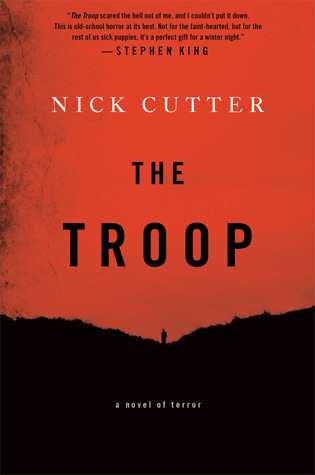
31 Days of Horror-- Day 16: Review of The Troop

Yesterday I reviewed the brilliant Bird Box by Josh Malerman. Well, today’s review makes for an interesting pairing because Nick Cutter’s The Troop has an equal sense of dread and claustrophobia but is on the exact opposite end of the gore spectrum. [Hint-- look at that red cover] I loved both, but I appreciate that for some library patrons this will matter.

Set on an isolated, uninhabited island a few miles of the mainland of the equally isolated Prince Edward Island, Canada, a troop of boy scouts and their leader have their survival excursion interrupted by the appearance of a stranger who is completely consumed both physically and mentally by hunger.  Once “the Hungry Man” enters their world, their fight to survive-- the disease he carries, each other, and those trying to contain the biological incident-- really begins. Featuring a fluidly shifting narration and monsters both of this world and unearthly, the anxiety of The Troop never stops, the panic keeps intensifying, and the gore is bountiful. But there is more than just visceral horror at work here; there is also the desperation of knowing you are trapped, contagious, and doomed.

The story begins with a narration by “The Hungry Man” himself. We then switch to the island where we see things unfold through the eyes of the troop leader and then the boys themselves. In fact this is where the story telling goes from good to GREAT. The boys, their personalities, their places in the troop pecking order, and their backgrounds all come to influence how they manage this horrific situation, how they choose to take charge, and how they treat one and other.

As the anxiety builds and the situation goes from bad to worse to unimaginably horrific, the pov switches become key.

There is also a great side plot here involving the evil scientist who has created the vector which created The Hungry Man. This is a 100% fatal disease that spreads person to person and violently consumes its victim. As readers we are allowed to follow the trial that takes place in the aftermath of the horror that happens on the island. The result is a winning horror combination of a supernatural and human evil that keep the chills and thrills rolling through this extremely fast paced story.

Besides the gore as a limiter, I also need to mention that there are many child characters here, and this story has a high body count. I am sorry to provide a bit of that spoiler, but I think just saying that previous sentence to readers who are unsure if they would like to read this novel is a good idea.

This is pulp horror at it’s best. It is a throwback to the best of the 1980s but with a 21st Century sensibility. [Read during this time of Ebola at your own risk though.]

As a final aside, it is important to note that Nick Cutter is the pseudonym used by acclaimed, Canadian, literary fiction writer Craig Davidson for his horror novels.

Three Words That Describe This Book: gory, intense sense of dread, isolated setting

Readalikes: Obviously Lord of the Flies is in play here. Many readers will see a connection and might want to revisit the classic Golding novel.

The Ruins by Scott Smith and Castaways by Brian Keene are two of my all time favorites. Both share the isolated setting and high gore level. Click on the titles for more details. Hint/small spoiler, all three books share a very high body count, and while The Troop comes close, The Ruins is still the winner in that category.

Two other fantastic horror novelists who go heavy on the gore but don’t sacrifice the storytelling in its wake are Richard Laymon and Jack Ketchum. Laymon in particular was a master of the extremely isolated setting. Cutter has obviously read them and learned from their expertise.

Thursday, October 27, 2011

31 Days of Horror: Day 27-- What I'm Reading: What Fears Become

I have been a fan of The Horror Zine for some time now.  Editor Jeani Rector and her crew work hard to provide a quality monthly literary journal with fiction, poetry, and artwork from morbidly creative people.  When she contacted me about reviewing their first print collection, What Fears Become, I jumped at the chance.

In general, I love horror story collections, especially when they are like What Fears Become and compile a wide range of scary stories.  I find collection to be a great way to take the current pulse of the genre.  In this case, the collection also features poetry and artwork.  This range of appeal made me also go out and purchase a copy for the Berwyn Library.  We have many readers who will greatly appreciate having access to this collection.

Specifically, this collection is a good read for horror fans for a few other reasons:

  1. Big name, award winning authors have contributed to The Horror Zine and allowed their work to be included here.  There are stories by horror greats Graham Masterton, Ramsey Campbell, Joe Lansdale,  and Elizabeth Massie.  Even science fiction legend Piers Anthony has a story here.  But for me, the most surprising of this bunch was "Dogleg" by Bentley Little.  I have grown tired of Little in the last few years and was worried that his best work was behind him.  However, "Dogleg" was an amazing, psychological story that was both haunting and terrifying.
  2. There are very good stories which take an original twist on what are can easily become a tired theme in the wrong hands.  "Mall Walkers" by Chris Reed (zombies), "3AM" by James Marlow (ghosts out for revenge) and "Losing Judy" by Andy Mee (haunted woods) were some of my favorite stories in the collection
  3. Stories that will stay with you long after you finish them.  "Adelle's Night" by David Grinn is just perfect in this sense.  It is terrifyingly realistic even though it is completely implausible; for me personally this is the best combination in my favorite horror tales.
  4. A new voice that impressed me was Canadian Jagjiwan Sohal whose first "stab" at horror fiction was "Wandering Daniel."  This story is set in a post-apocalyptic world, and our protagonist is a vampire.  But, he did not become a vampire in the apocalypse; he was one before.  This story is a great beginning, but I would not say it is even close to the best story in the bunch.  However, I was so intrigued by the set up and his descriptions of the created world that I am craving more.  I hope Sohal considers trying to put Daniel into a novel.  I would read it.
  5. Some were just plain fun.  "The House at the End of Smith Street" by Stephen M. Dare is similar to The Ruins by Scott Smith (a personal all time favorite), only this time, instead of a killer plant, we have a killer carpet.  Not the most original story in the bunch, it it was a fun, satirical, and plenty scary.
  6. I appreciated that Rector kept her own two stories until the collection's final pages.  They are solid enough to be included, but I am glad she gave everyone else their chance to shine.
  7. Finally as I have already said, the range of the type of horror here is huge.  There are stories for fans of the bloody, supernatural, psychological, creepy, or thriller.  If you have a favorite way to feel the fear, this collection probably has a story for you.
There were a few stories I did not care for, but much of that was a personal taste issue.  For example, I did not like "The Chamber" by David Landrum mostly because of its ancient time period setting.  But others will enjoy it for exactly the reason I disliked it.  The point is that there is enough here for everyone, and since it is a collection, you could skip your least favorite tales and still have plenty to read.

A note on the poetry, of which there is quite a bit.  Not being a big poetry fan, I do not feel qualified to comment on it.  On the other hand, as a RA librarian, I have quite a few patrons (and a staff member) who are active readers of dark poetry.  I will get this collection into their hands very soon.


Three Words That Describe This Book: unsettling, original voices, wide horror appeal

Readalikes:  For readalikes, I would like to offer some of my personal favorite collections which like, What Fears Become, span a wide range of horror appeal factors.  What you will not find suggested here are collections of for example, all zombie stories or all vampire tales.  I do include the best of those more specific collections under their appropriate headings in my new book.

And this is just the tip of the iceberg,  Feel free to  leave a comment with your favorite horror story collection.

Friday, October 14, 2016

31 Days of Horror: Day 14-- Guest Post On Cataloging Horror

Cathleen Keyser is a cataloger for NoveList and a huge horror fan.  She asked me if she could write a post to all of you about the HUGE RA implications of cataloging all genre fiction, but especially horror. I took her up on the offer immediately. I am not a cataloguer but I truly appreciate the work they do, and those of us who work the public desks often forget how integral to our work these librarians are.
All library workers who help fiction readers need to read this post. She provides useful tips and you don’t need a subscription to NoveList to reap the benefit here. Cathleen also has an honest affection for horror which comes through in the post.
Click here for Cathleen’s bio page
You can follow her on Twitter @Cathleenkeyser.

***********************************************

Like many other librarians, my first real library job was at a video store. It was a great experience – not only was I in the land of “no late fees,” but it gave me my first taste of RA.  I knew what to recommend to the RomCom devotees, the avant-garde tastemakers, the teenage sleepover parties, the hopeless stoners – you name it, I could list off several titles on the shelf to check out. But the best part was the wealth of horror films at my fingertips. This is where I started learning the finer points of horror – the different storylines, the spectrum of tone, and the variety of characters.
Fast forward to now. I’ve built on that foundation at my current library gig – metadata librarian.  What’s the connection between metadata and readers’ advisory, you ask? The catalog is one of the first place your users go to find books – the metadata there is one of the best resources your patrons can use to find books in your collection, especially when it comes to remote users.  Plus, that metadata can also be used by librarians to provide many in-house, self-directed RA services, like book displays, bookmarks, shelf-talkers, and book lists.  As they say, metadata is a love note to the future – taking the time to catalog now creates access for the future needs of patrons and staff alike. And what better genre to pay a little extra love and attention to than horror?
As a metadata librarian at NoveList, I and my colleagues get to develop our own controlled, user-friendly vocabulary for addressing all aspects of a book – and we pay special attention to genre fiction because we know how important it is to many readers. We create and maintain all kinds of headings from subjects and time periods to setting, writing style, tone, or pace.  Because of the time involved, not everyone can or should do what we do, so our goal is to provide public librarians with the tools to do effective RA.  
Regardless of whether or not you use NoveList, you can use our principles to talk about books. Horror can be just as much a challenge to catalog as it is to suggest to readers – as we saw in Jonathan Janz’s post, many people think of horror as “a mindless, blood-splattered cesspool,” rather than as a genre about humanity’s capability for nobility. Here are some tips and tricks for cataloging horror that can be applied especially when all you’ve got (or got time for) is the book jacket: 
  • Horror can overlap with other genres – add dual genre headings when possible. The Horror Writers Association has the great quote that “the best-selling book of all time, the Bible, could easily be labeled horror, for where else can you find fallen angels, demonic possessions, and an apocalypse absolutely terrifying in its majesty all in one volume?” The term horror can be a deal-breaker for many – which is why many horror novels are marketed as suspense, thriller, fantasy, or even literary fiction. For example, Scott Smith’s The Ruins is often listed as suspense.  While this genre can fit and does broaden the audience for Smith’s great visceral horror tale, not also claiming it as horror can be a disservice. Cataloging it as both horror and suspense will broaden the fan base and attract more readers.
  • Give readers a hint of the type of horror through subject or genre headings.
    Horror is unique in that there aren’t really that many big subgenres like there are in other areas (for example, Romance). Yes, there are many niche genres, but those typically are very small and probably aren’t well represented in a typical library collection. Horror is more of a spectrum.  The best way to think of this is on a “dread to gore” scale. On one end is dread – these are the more atmospheric or creepy tales with little to no gross parts. The uneasiness is generated more with mood rather than blood and guts.  Think classic horror or authors like Shirley Jackson, Lovecraft, and some Stephen King. On the opposite end of the spectrum is gore. These books let it all hang out – guts and all. Some might find these gross, of poor taste, or just too scary while others will love the shock, gruesomeness, or just the fact that these books go over the top.  Think Clive Barker, Poppy Z. Brite, and Nick Cutter. At NoveList, we have tone appeal terms that help us get at these intangible elements.  But there are other ways to get at that mood if you can’t use appeal terms like we do. Try adding complementary genre headings like Ghost stories, Psychological Suspense, or Gothic Fiction for books more on the dread side. Subject headings will also help readers know what they are in for with gore – you know what you’re going to get with headings like Cannibalism, Torture, or Necrophilia, just to name a few. 
  • Describe the mood through location headings.
    Location is also critical when it comes to mood.  It’s the cabin in the woods, the decaying castle, the desolate post-apocalyptic cityscape (or even the IKEA showroom).  All have certain aspects that will play heavily into the storyline and mood, so it can really help readers to add a location heading that gets at that. Think Small towns, Haunted houses, Wilderness areas, or Castles, for example.
  • Yes, Virginia, you can get at tropes through metadata.
    Tropes are a HUGE part of horror, but it can be tricky to get at those with subject headings. There aren’t many qualifiers you can add, so no creepy clowns, wacko religion, or psycho dads. If you’re not familiar with horror, you might not know where to start. A shortcut I recommend is to ask, “what is it about this that is scary?” Is it a person? A place? Most tropes relate back to this concept. I try to add a subject heading that gets at that gut-punch. Think character types (vampires, zombies, etc.) or things (animals, cell phones).  While this won’t let you get at the more specific tropes, it’s a way to get at some. 
While not all of us have the luxury of spending huge amounts of time cataloging, it is becoming more and more important. Putting information in the catalog is a way to direct readers to other materials you have in the collection. It is the conduit for readers to access books, which is why miscataloging or sparse cataloging leads to missed opportunities.  Lisa Schimmer (you might have heard of her) describes cataloging as way to create a path of discovery.  A reader can look at a book they like and follow the trail of headings to find others, a path that then fans out to great recommendations. But in order for that to happen, cataloging has to happen. While it is not as flashy or glamorous as a book group or a library program, it’s a way to help people steer themselves on their own path, and for horror aficionados, a path to find their perfect chainsaw-murder-deserted-castle-Bruce-Campbell-esque bedtime story of their dreams nightmares. 

Monday, February 21, 2011

What I'm Reading: The Caretaker of Lorne Field

The Caretaker of Lorne Field: A NovelThe Caretaker of Lorne Field (here after CoLF) by Dave Zeltserman is one of the most compelling and original horror books I have read in awhile.  Probably, not since I read The Ruins by Scott Smith, have I been sad to finish a horror book. Interestingly, both books deal with a scary plant monster.  Hmmm....I wonder what that says about me.  Well, that's for another time.

Here is the imaginative set-up.  Jack Durkin is the current caretaker of Lorne Field, somewhere in modern day, rural New England.  He is the current in a 300 year line of caretakers.  Durkin works from dawn until dusk every day, from spring until first frost, pulling the weeds that grow in Lorne Field.

But these are not any weeds.  These weeds are monsters, known as Aukowies, a vicious monster, which if not weeded, will grow to its full form, leave the ground, and destroy the world.

The town's residents used to idolize the caretaker and his family.  Their every need was cared for, but new, younger people have taken over the town's government and they are fed up with supporting the caretaker.  They see his work as nothing but a superstition let go too long.  Even Durkin's oldest son, who is supposed to take over for Durkin on the boy's 21st birthday, doesn't believe in the Aukowies.

So that's the premise.  What follows is the story of Durkin's undoing.  It is a slow, painful, sorrowful, and compelling undoing.

The appeal of this book is in that unique plot, but it is also in how Zeltserman tells the story.  Throughout the book we see mostly Durkin's point of view.  When we see the field through his eyes, we are convinced that the Aukowies are there, but at times, we get the point of view of others.  When these others intrude, the reader begins to question our own undying support for and belief in Durkin.  The entire novel, even up to its final paragraph, is a battle for our support.  I still don't know which side to fall on, but I am leaning toward Durkin's.

Zeltserman writes in a personal way.  Durkin's feelings, his hopes and dreams, his belief in what is just and right, and his physical travails are all outlined in great detail.  He writes in a style that allows the reader to join Durkin in his work.  I felt like we became friends while I was reading CoLF.  I wanted to stand up to those who questioned the man and his work.  This is a testament to the author's writing.  Without this close, personal style, the book wouldn't work.  The reader would not care, much like the townsfolk, whether Durkin weeds the field or not.

This is not a long book, but the pace builds slowly with the tension and suspense along for the ride.  Each chapter feels more urgent than the one before, until the last few, when the entire world is spiraling out of control.  In the final court room scene, things have slowed down.  As the final proof of whether Durkin is sane and correct or insane, a murderer, and completely wrong comes, I was holding my breath.  And honestly, you can read the open ending however you want.  Either answer could be right.  I loved that!

I know Zeltserman is a rising star in the crime fiction world, but I truly hope he visits horror again some time soon.


Three Words That Describe This Book: Legend, Real or Not, Tightly Wound.

Readalikes: Besides the aforementioned The Ruins, I would also suggest that readers who like the modern legend part of CoLF, try Terry Windling's excellent editing in the revisionist fairy tale series, or the works of Neil Gaiman, who mines legend in original and dark ways to create some of the best books I have ever read.  Anansi Boys in particular takes the African folktale of the trickster spider and turns it into a compelling story in which the reader is questioning what is real and what isn't, much like in CoLF.

Zeltserman's writing style (tightly wound, intense, building suspense, flawed but lovable protagonist, a pacing that begins at a crawl, but slowly moves toward light speed) all reminded me of Joe Hill.

For other great, subtle horror featuring monsters, I would also suggest Dweller by Jeff Strand (newer title) and Song of Kali by Dan Simmons (backlist option).

Finally, if you liked the movie Black Swan, you will love CoLF.  Both require the reader/viewer to make a choice as to what parts of the story are "real" or not.  Both will also make you squirm throughout their duration...and you will love it!

Steven King would love this book, if he hasn't read it himself already.

Wednesday, August 1, 2012

Marketing Horror All the Year Through

As part of Monster Librarian's Monster Movie Month, I wrote a guest post for them about how to use the popularity of horror movies and TV shows to market your horror book collection to a wider range of readers.

Here is the link to my guest post.  It also includes a link to their review of my book.  For you lazy people, the full text is also copied below.

Marketing Horror All the Year Through
By Becky Spratford

One of the biggest questions I get from my fellow librarians is how they can best market their horror offerings throughout the year.  Of course it is easy to get patrons to notice horror in October.  Every other marketer in the world is priming the public for all things scary, so when people walk in the library, they are horror hungry zombies, looking for their next meal.  We have to do little more than place the horror books within their line of sight, and patrons snatch up the books by the handful.

Ah, but the rest of the year we do not have the entirety of mass media working for us; we have to try just a little bit harder. But as daunting a task as it may seem, marketing horror to your patrons during the other 11 months of the year, is not as difficult as you might think. I have 2 easy ways you can seamlessly incorporate horror into your general work marketing books at your library.

First, let’s talk about traditional library displays.  Most of you out there probably put up a big horror display in October.  But why aren’t you doing it other times of the year?  The most common answer is that you think your patrons aren’t thinking about horror outside of October.  But in the last few years this is not necessarily true.

Let’s take the first 6 months of 2012 as an example.  In April, we saw the release of The Cabin in the Woods, a terrific and popular haunted house movie.  In May, there was the Johnny Depp vampire soap opera Dark Shadows and in June, the king of mash-ups, Seth Grahame-Smith helped to bring his bloody, smart, and amusing novel, Abraham Lincoln Vampire Hunter to the screen.  Each of those movie releases had their own marketing campaigns that resulted in buzz about them among the general public.  For each, a small display could have easily been created.

You begin by putting up a graphic of the movie poster on regular 8 ½  by 11 paper (just do a Google image search for the movie) next to a handful of books.  Then you grab some books that are connected with the movie.  So for Cabin in the Woods, you could pull out some haunted house books, vampire books for Dark Shadows, and some comic horror novels for Abraham Lincoln Vampire Hunter.  Displays do not need special shelving.  Just put books out anyplace where you have space.  For example, at the Berwyn Public Library, we put these small, current event displays up on our desk, on a top shelf that we keep clear to rotate with impromptu displays, and even on small side tables in our seating areas.

These current event displays not only show your patrons that you understand their interests, but they also make a trip to the library easier for them.  Patrons are daunted by the large number of books on our shelves, so anything we can do to pull out good books for them, makes them less intimidated and more willing to browse.  And, displays linked to current media darlings are a sure fire crowd pleaser.

But how do you choose the books?  Here is where I can help.  In my new book and on its companion website, I have a lot of lists that would help you to identify titles that you could highlight.  I am even fine with you using my annotations, as long as you cite where they are from.  In the book I have entire chapters on haunted houses, vampires, and comic horror that include long annotated lists of popular titles available at most public libraries.  On the website, RA for All: Horror, I use tags on each post.  You just need to choose a tag, like vampires, and all of the relevant posts come up.  There are literally hundreds of options at your fingertips.

Another way you can work horror into your displays throughout the year is to simply include a few horror titles in the mix in your larger, more planned displays.  For example, we have done displays featuring coming-of-age stories at our library.  Since this is such a popular theme in novels, on the display we included books from every genre.  There was literary fiction, science fiction, fantasy, suspense, and horror, just to name a few.  As I argue in my new book, a coming-of-age theme is huge in all horror.  In most horror novels, the protagonist has to overcome his own shortcomings, face his inner demons, and grow up before he can defeat the physical monster in front of him.  So what horror books can be included on a “Coming-of-Age” display? Any you want.

What about a display on gardening? I have lots of “plants of terror” titles to suggest to you in  my book or on the blog, but here are two of my favorites– The Ruins by Scott Smith and The Caretaker of Lorne Field by Dave Zeltersman.

This plan works with just about any theme.  If you just make an effort to incorporate horror into all of your displays, I am sure you will find a tale of terror to fit most displays.  The moral here is to consciously mix all genres into your displays.  You will have more fun, and you will make a wider range of patrons happier.

My second tip for marketing horror all year also plays off of the media.  I mentioned a marketing strategy for one-time movie releases, but what about the excitement we are seeing for popular horror television series throughout the year?  Again, let’s stick with just the first 6 months of 2012 and talk about two of the most popular series on television, period– AMC’s The Walking Dead and HBO’s True Blood (okay, technically True Blood is paranormal, not pure horror, but trust me, I will address that in a moment).

The Walking Dead ran on TV in the winter and spring, while True Blood is currently running this summer.  For each series I took a different marketing approach at the library.  For The Walking Dead, I focused on a web campaign of all things zombie.  On my blog, I ran many Walking Dead inspired posts and worked hard to incorporate book suggestions in these posts.  I did this throughout the run of the show, culminating with a display of zombie books in the library during the week leading up to the finale.

True Blood was a little more difficult, since its fans are mostly those who like paranormal stories.  In paranormal, the main thrust of the story is NOT to invoke fear, as it is in horror.  The scares come, but they are not the overall point of the work.  As a result, some horror fans do not like paranormal and vice versa.  But, that doesn’t mean NO horror fans like True Blood.  To address the wide range of appeal in the TV series and the book series, a few years ago, I created this list of Sookie Stackhouse read alikes broken up by appeal.  I considered all of the reasons you may like the series and included plenty of horror options on the list.  This list is available online and in the library and is one of most popular lists.

I hope I have inspired you to consider marketing horror throughout the year.  The popularity of horror TV series and movies today proves horror’s staying power.  And if huge production companies think it is okay to push horror during the other 11 months of the year, why shouldn’t you?  We have way less to lose than they do.

And don’t be scared of helping your horror patrons.  They are not monsters, they just like to read about them.

Friday, March 2, 2012

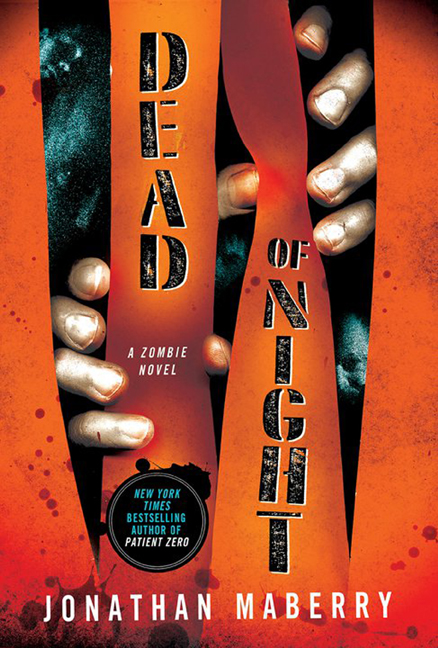
What I'm Reading: Dead of Night

This is a cross post with RA for All


We are 2 days away from Jonathan Maberry's visit to RA for All on his blog tour to promote Dead of Night.  Full disclosure: Maberry's publicist sent me a free copy of this book for review.  But, I also had already purchased a copy for the BPL before receiving my free copy.

In preparation for the interview, which does include specific questions about Dead of Night, here is my review of the book.

Dead of Night is a zombie novel (as the subtitle tells us), but it is different than the bulk of today's zombie novels, even different than Maberry's critically acclaimed YA zombie series which begins with Rot and Ruin (link goes to my review of that novel).  Why?  This can be answered by Maberry himself in Chapter One which reads, in its entirety: "This is how the world ends."

That being said, I should say, this is a horror zombie novel, not a literary fiction one like Zone One, or a humorous one like Breathers, or even a political thriller one like Feed.  Dead of Night  is for horror fans who want to feel the dread and anxiety, who know bad things are going to happen and are turning the pages expecting them.  Remember, as the first line tells us, "This is how the world ends." Do not pick up this book and expect a happy ending.  Personally, I love that, but some readers may not.

But if you are looking for a serious horror treatment of the popular zombie craze that is well written and  great fun to read.  This is the book for you.

While most of today's zombie novels take a critical look at the world as it stands after the zombie apocalypse (click here for numerous reviews of some of the best of these books), Dead of Night is the detailed, action-packed story of how the apocalypse begins.  Here we get a step-by-step account from all sides of how 1 infected person can mean the beginning of the end for human civilization.  There is no "after" picture here.  We get the details of the apocalypse as it begins from every angle, and we are left just as it is about to escalate.

As the novel opens we are in rural Western PA and a storm is quickly approaching (a double whammy of the popular isolated setting for horror).  Local law enforcement are called to a possible break-in at the local funeral home.  The body that was just delivered secretly (and unexpectedly) to that funeral home is of a notorious serial killer, Homer Gibbon.  But before he was executed in prison, Gibbon was given an injection by Dr. Volker containing a formula designed to keep him conscious and awake while his body rots in the grave.  Before he can be buried, Gibbon wakes up.  He is conscious and fully aware, but is also very hungry...

The story is told in what has become Maberry's go-to winning style.  He blends elements of traditional horror -- an unearthly monster, a troubled hero, an atmosphere of extreme unease, an isolated setting, and  a relentless provocation of terror-- with the emerging genre of the supernatural thriller-- detailed investigative elements, a human villain out to kill, fast paced action, and shifting points of view from heroes to killer.

Like all Maberry novels there are many characters, some who only get a moment or two's turn at telling the story from their perspective.  Some reader's may not like the jumping around, but anyone who has read one of Maberry's best selling Joe Ledger novels will be familiar with this story telling technique.  Personally, I love it, especially when we get just a moment from the perspective of someone as they are being attacked.  This technique adds to the unease of the story, and this anxious state of unease and terror is the main reason why someone reads and enjoys a horror novel in the first place.  Maberry has a compelling dread filled story already, but the switching point of view across many characters ratchets it up to a whole new level.

That being said, there are a few main characters here.  Our 2 heroes are Dez, a female, ex-vet, now cop who has had a troubled life and her ex-boyfriend "Trout," a journalist best known for his sensational pieces.  Our villains are Dr Volker and serial killer Gibbon mentioned.  There is one other pov that I found very moving and absolutely loved as it came out periodically throughout the novel, that of the funeral home director, Doc Hartnup.  In fact, without giving anything away, Doc's pov was a fresh addition to the zombie novel tradition.

The shifting points of view, also speed up the pacing here.  As a reader, you are seeing all sides to the issue.  We know a zombie plague has begun to be spread even before the police on the ground do.  We see the government preparing a response.  We see Homer running around the county.  We are afraid, but we keep turning the pages because we are rooting for Dez and Trout to figure it all out in time to save the day. You also keep reading because as a horror fan, you love this stuff.

I have to say I also enjoyed following the spreading infection in such a detailed fashion.  The short chapters and shifting action mimicked the confusion and panic that was spreading with the plague.

One of my general complaints about novels today is that many of them have "third act issues."  You are reading a great book and then the author runs out of steam, and it ends flatly.  Geraldine Brooks Dead of Night which delivers right through the last page.  The story line following Trout and Dez has its resolution, but we also have a great, twist at the end.

If you think traditional, strongly written horror is in decline, read this book.  The only unpleasant side effect you may have is that it will make much of the other books you are reading look bad.

Three Words That Describe This Book: dread, compelling, multiple points of view

Readalikes:  I have had much to say about zombie novels here.  And, yes they are my favorite horror subgenre, so I am biased.  I would suggest you read these posts to see my favorites, but I would like to highlight a few which I feel are fairly similar:

  • The type of zombie here are reminiscent of those in Nate Kenyon's Sparrow Rock.
  • The Rising by Brian Keene is the novel that is widely credited with beginning the 21st Century zombie craze.
  • Joe McKinney's excellent zombie series which begins with Dead City is a great all around readalike option here.  In McKinney's series we also follow a policeman as a zombie plague rising out of the destruction caused by a series of hurricanes slowly takes over an isolated town.  Fans of Dead of Night who are craving more should check out McKinney right away.

Although The Ruins by Scott Smith does not contain a single zombie, these two books are very similar in tone, story telling technique, and in how they are ended.  Readers of my blog know my love for The Ruins already though.

I also offered author readalikes to Maberry a few days ago here.

Come back on March 4th to see more about Dead of Night from Jonathan Maberry himself.

Wednesday, April 6, 2016

15 Best Horror Books of Century: A List with Commentary and Changes by Becky

One of my favorite horror review sources is Matt Molgaards Horror Novel Reviews.

In general this is a great place for public libraries to look for a wide range of horror options suitable for most public library collections. Molgaard curates a nice sampling of horror from the obvious best selling choices to the best of the small presses and everything in between.

Often the main stream review sources are not enough for your to develop a robust enough horror collection to meet demand, and provide enough varied choice for your patrons.

Earlier this week, Molgaard posted his list of the 15 Best Horror Novels of this Century-- so far.

Take a look because this is a list of books every public library should own. Overall I like the list for a few reasons, but I also have a few complaints-- specifically from the public library collection development point of view.

First the pros:

  1. If I am being honest, I like this list because it validates the books which I have pushed in my book and on my blog.  For example, in my book I talk about Joe Hill and Jonathan Maberry as being the "New Kings of Horror." I wrote that back in 2010 (published in 2012) and both have only produced increasingly better stories and gotten more popular in the meantime. Morgaard includes books by both authors on his list.
  2. This list also includes the book I have proclaimed as my absolute favorite 21st Century horror novel in print, online, in newspapers, on public radio, and on podcasts-- The Ruins by Scott Smith.
  3. I appreciate how this list looks at the range and types of horror novels that have appeared this century and tires to represent it. For example, comic horror rose to popularity during this time, and Morgaard clearly picked the best book of the bunch-- John Dies at the End by David Wong. That is a great book!
  4. House of Leaves!!!!!
Now the cons. And again, I want to stress that my problems with this list have to do with the fact that my readers-- library workers-- need to create as diverse as a collection as possible, representing the best of all types of horror in terms of gore level and writing style, but also from a wide range of authors:
  1. There are no minority authors on the list and when I think best books of the 21st Century, two titles come immediately to mind: Zone One by Colson Whitehead or The Devil in Silver by Victor LaValle [both by African American writers]. Those are among my personal favorites.
  2. There are no female horror authors on the list, and as I just wrote in my new "Trends in Horror" article for NoveList-- women horror writers are on the rise. But even going back to the beginning of this century, Sarah Langan and Sarah Pinborough each wrote some of the best horror novels of the 21st Century. The Missing by Langan is a classic and Breeding Ground by Pinborough is among my favorites of her older works, but her newer stuff is also some of the best horror written by anyone right now.
  3. Two other books I loved during the first years of this century which I did not see on the list are Sharp Teeth by Toby Barlow  and The Caretaker of Lorne Field by Dave Zeltersman.
Okay Becky, so it is easy to complain about the lists of others but what would you take out?  Well, again my audience for the list would be different than Morgaard's so I would remove Odd Thomas because, well, no one in our world needs a reminder to purchase Dean Koontz and I would also take out 1 Dan Simmons and 1 Stephen King-- they don't need 2 on the list. We get it, they are very good at horror and can write a wide range of scary stories, but put 1 title by each on the list and then mention a runner-up in the annotation.

That leaves me three spots:
  1. I would put in the Victor LaValle, and then I would sneak the Colson Whitehead into the annotation for House of Leaves [as a note like "another good literary horror read is..."]
  2. I would have to go with The Missing by Langan but since she is not writing as much anymore, I would also mention Pinborough in the annotation.
  3. Instead of Kootz, I would pick Sharp Teeth over The Caretaker at Lorne Field only because of the former's amazing style-- told in verse-- and the fact that it is a very urban horror novel, a setting that is becoming more popular.

Take a look through the list for yourself. Many of the books also have reviews here on RA for All: Horror and/or are annotated in my book.

And thanks to Morgaard for making this list, sparking a conversation AND for hosting and editing  Horror Novel Reviews.

And in more horror collection development news, look for my Halfway to Horror annual take over of The Readers' Shelf column in the April 15th issue of Library Journal. When it goes up on the website, I will post it on the blog.