Summer Scares Resources

Click here to immediately access the Summer Scares Resource page so that you can add some professionally vetted horror titles into your reading suggestions and fiction collections for all age levels.
Showing posts sorted by relevance for query wynne. Sort by date Show all posts

Monday, March 2, 2015

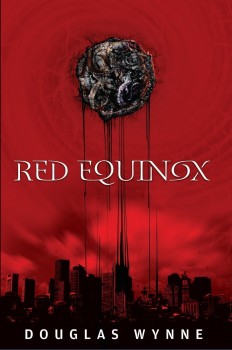
New Book Worth a Look: Red Equinox by Douglas Wynne

 Douglas Wynne broke on to the horror scene when he won JournalStone's 2012 Horror Fiction Contest with his debut novel, The Devil of Echo Lake (click here for my review).

His newest book Red Equinox came out in January. I am happy to say, Wynne is only getting better. Here is the publisher summary:
"The Red Equinox has dawned, and the old gods who have slept for aeons are stirring.  
Urban explorer and photographer Becca Philips was raised in the shadow of Miskatonic University, steeped in the mysteries of her late grandmother’s work in occult studies. But what she thought was myth becomes all too real when cultists unleash terror on the city of Boston. Now she’s caught between a shadowy government agency called SPECTRA and the followers of an apocalyptic faith bent on awakening an ancient evil. 
As urban warfare breaks out between eldritch monsters and an emerging police state, she must uncover the secrets of a family heirloom known as the Fire of Cairo to banish the rising tide of darkness before the balance tips irrevocably at the Red Equinox."
 Wynne's newest novel also got a write up in the March Issue of the International Thriller Writers Big Thrill online magazine.  Click through for a review and interview with Wynne.

Friday, November 30, 2012

Review: Devil of Echo Lake

During this year's 31 Days of horror, Douglass Wynne, the 2012 1st Place winner of Journal Stone's Horror Fiction contest joined me here on the blog.

I did not have time to post my review of his debut novel, The Devil of Echo Lake until now, but I assure you all, it will be worth the wait.

Billy has had 2 successful records and is about to record his third, the one that will make him go from popular, to legendary, but he is not sure how he got there. Using the well known Robert Johnston selling his soul at the crossroads to become a blues legend myth as a starting point, Wynne has Billy question whether or not he has unwittingly sold his soul to the Devil by hooking up with his record producer Trevor Rail. Or is he just too strung out to know the difference between what is really happening and what his brain is being paranoid about?
Trevor is dark and menacing. He could easily be the Devil here on Earth in the 21st Century, but he could also just be very good at his cut throat job.

Right now though, Billy has more pressing problems.  Trevor has booked him to spend the next 2 months recording at Echo Lake in an old church turned studio in a secluded part of upstate, NY (Sleepy Hollow flashbacks anyone?).  The bulk of the novel takes place during these 2 terrifying months as the record is recorded but people are also mysterious dying in violent, tragic, "accidents."

Point of view jumps around frequently.  This is a common tactic in horror these days.  It really enhances the anxiety and dread as the reader is sent around to see everyone's feelings, thoughts, and motives.  It helps to sustain the unsettling atmosphere even in moments of seeming calm.

There are some great lines here too, like this one from the middle of the book:
"What Kevin Brickhouse saw next, he would not understand for the rest of his life, which was now the length of a song." (94-95 of the ARC)
Talk about menacing.  But it is also succinct.  This is some very good horror writing, and in a debut novel.  Good things will come from Wynne in the future. I am excited to see what his dark mind dreams up next.

One of the other strong points of the writing here is how Wynne plays off of the isolated church and the forest it is surrounded by.  There are shadows everywhere.  Some are just natural, but others are definitely not of this world. He draws out the fine line between reality and supernatural perfectly, stringing both the reader and Billy Moon along until neither of us knows which way is up.
This is a story where things go from bad to worse to terrifying. The situation in Echo Lake has a resolved ending, but the fate of Billy Moon himself is left open. Some reviewers have mentioned that the ending is not really horror, more fantasy, but I disagree. I did not feel as if it is as resolved as these people seem to think especially since the entire book has been created to make us question whether what we see is the whole truth.  You can decide for yourself though.

This is a very good horror novel with a demonic possession theme.  The characters are well developed, but it is the sense of dread and unease that hangs over the novel from the first line ["Billy Moon didn't know exactly when he had sold his soul."] to the last lines.  If you are also a  fan of devil themed horror, ancient evil horror, or the extreme isolated setting, you should read this novel.  It is a solid example of those subgenres.
On a side appeal note, there is a lot of detail about being in a band, writing songs, and making a record here.  People who are in bands or just love rock music will find much to enjoy here.

Three Words That Describe This Book: dread, musicians, selling soul to devil

Readalikes:  The first book I though of when reading The Devil of Echo Lake was Heart-Shaped Box by Joe Hill, but mostly for the rock musician angle.

In terms of the writing style (shifting narrators), oppressive sense of dread, the east-coast rural wooded setting [with the evils lurking in the woods], and well developed characters Wynne's novel is reminiscent of another amazing debut, Ghost-Road Blues by Jonathan Maberry.  Click here for a full review.

Finally, the entire what is real, what is not tug of war described above reminded me of another book I really enjoyed, Ghost Radio by Leopoldo Gout.  I really enjoyed that book, especially in audio.

**Full disclosure, I received a free ARC of this novel for review
Monday, October 26, 2015

31 Days of Horror: Day 26-- Gods of Lovecraft Douglas Wynne Interview

Welcome to The Gods of Lovecraft blog-a-thon within a blog-a-thon.  From the first post:
Over 9 of the next 10 days I will be featuring 10 of the 12 authors in this collection. Each has answered a series of questions from me about their God, why they picked it, what their favorite scary books are, and more.  It’s very similar to the posts I have been running by authors all month, just with a Lovercraftian spin. Expect each day’s post to bring you a handful of new authors and titles to add to your arsenal of books you can suggest to patrons. 
Next up, Douglas Wynne. [Click here for reviews of other books by Wynne and his previous guest post on the blog.]

Please remember you can also enter for a chance to win one of two copies of The Gods of H.P. Lovecraft by emailing me at zombiegrl75 [at] gmail [dot] com by 10/29 at 11:59pm.

--------------------------------------------------------

Who are you?
I’ve been trying to figure that one out for a while now. According to Buddha I'm a continuity of consciousness arising from an endless chain of causes and conditions. I’m also Douglas Wynne: writer, musician, husband and father, and a guy who likes loud guitars, cake, and microbrew beer. 

Who is your favorite horror author [besides Lovecraft]? 
It's hard to pick only one, but if I must: Clive Barker.

Why do you like to write horror?
Horror is more of an emotional tone than a genre, so it feels more wide open to me than the other labels you can put on a book. Under the banner of horror I can dabble in fantasy, SF, crime and suspense with as much or as little supernatural and sexual content as is fitting for the story at hand. It can also be a very literary genre. Horror is generally gritty and realistic and preoccupied with questions of the nature of reality and an urgent sense of mortality. Where else can you get all that? 

Which “God” did you focus on in the Anthology? What features of this god do you find most interesting?
Yig, the Father of Serpents. I like the folkloric aspect of the curse of Yig, but there are a lot of stories you could tell from that jumping off point. A reader at a signing event  recently told me that she thought theme anthologies were the work of the devil because  writing is art and you should be able to write whatever you want. I fully agree with the  importance of striving for originality and trying to make genre elements our own. But  thinking about it after the fact, I wished I had told her that the execution is far more  important than the premise, and you can always make a story uniquely your own in the  execution. I tried to do that with "Rattled". Sure, it's a horror story about a snake god,  but it's really about the distance a boy feels when his best friend is growing up faster  than he is. It's about coming of age and finding your tribe.

Please share some of the authors you are reading and enjoying now.
I loved Paul Tremblay's A Head Full of Ghosts. I'm also currently reading Charles  Stross's Laundry Files books and revisiting Ray Bradbury and Shirley Jackson.

What other works do you have out now?
My latest book is Red Equinox, a Lovecraftian urban thriller. My other novels are The  Devil of Echo Lake and Steel Breeze. 
 
What are you working on currently? 
I've finally cleared my calendar of all other deadlines and am starting work on the next book in the SPECTRA series, the sequel to Red Equinox. I'm going for a quieter, creepier tone with this one. Should be fun.  

Saturday, October 27, 2012

31 Days of Horror: Day 27-- Guest Post by Author Douglas Wynne

Today's guest post is by Douglas Wynne, who is experiencing a dream come true this month as he just saw the publication of his first novel, The Devil of Echo Lake.  Wynne is a writer and a reader of dark fiction.  Read on to see his perspective.

*******************************************************************

Why Horror?

By Douglas Wynne

Why dark fiction?  Why write that stuff? Why read it? Isn’t there enough horror in the real world without creating more of it for entertainment?

I think those are valid questions, and I’ll try to answer them first as a reader and then as a writer.  The simplest and truest answer is probably that’s just the way I’m wired.  I like dark books for the same reasons I’m drawn to the dark music of Pink Floyd and Tool. Fascination with the shadow side of things is simply woven into the fabric of who I am as a person.  But it’s also just part of being human, I think, if you’re not in denial.  Still, there are some rational reasons for the attraction.

Reading is an exercise in empathy, and if the character through whose eyes I’m experiencing the world is in horrible trouble, then my emotional investment in the story is greater.  As a reader, I’m drawn to dark fiction because right there on the cover of a horror story is the promise of trouble.  Someone is going to have to deal with some bad shit.  And in life, well, as Jim Morrison said, “No one here gets out alive.” 

In reading a horror novel you get to vicariously experience the things you fear. You get to drag them out from under the bed where they’ve been chattering away on the periphery of consciousness, raising your stress and anxiety, and you get to examine how you might react to the unknown, the disturbing and the terrifying, all within the safe confines of a fiction in which the danger can be dismissed as implausible if it gets to be too much for you.  It’s kind of therapeutic. 

But the threats in a good horror story are sometimes quite plausible, and the characters should always be plausible. There is something exhilarating about watching an author take an ordinary flawed character who inhabits the same mundane world you and I spend most of our time in, and then slowly open up windows from that world into a nightmare.  If the ordinary world and characters are drawn with the same authenticity, detail, and emotional depth found in good literary fiction, then the fantastical or macabre elements become that much more credible, and far more disturbing.  It can be a thrilling plunge to take after feeling the rollercoaster car you’re strapped into click clacking up the incline against the gravity of your disbelief.

I enjoy writing dark fiction for many of the same reasons that I enjoy reading it, but I don’t sit down with genre labels in mind when I start writing a book.  Every novel has its own needs, and in the course of discovering the voice and shape of a story and the necessary consequences of a plot premise, I would never make a deliberate effort to add horror that isn’t natural to the tale I’m telling.  That said, when I survey the playground of publishing, horror does seem to be the biggest sandbox because once you pin that disreputable badge on… anything goes.  There are no taboos. 

Why horror? Because in literary fiction magic is taboo, and in fantasy fiction sex is taboo.  

In horror you can have all the sex, violence and magic you want, but all three are often metaphorical.  You can also get into those sticky questions of religion and the afterlife.  In politics the hot button question may be where does life begin? but in horror it’s where does life end? And then what? And is there more at stake sometimes than your mere life? 

I write to explore those kinds of questions, if not to answer them.

Sex and death are the bookends of our existence, the polar forces of the human condition, the desire and fear that drive our lives.  Any big story that tries to sweep them into the margins is impoverished by the omission.  As for magic?  I write fiction because it’s imaginative by definition.  So why not dream big? It’s not like you don’t have a big enough canvas or an adequate effects budget when you pick up a pen to write.  

On the dedication page of his horror magnum opus, IT, Stephen King wrote, “Fiction is the truth inside the lie.” I’ve always wanted to read and write books that tell some truth about the bad hand we’re all dealt when we come into this world, the fact that sooner or later, everyone is promised a death.  Horror doesn’t deny that fact; it casts our ordinary lives in stark relief by reminding us of it. On the same page, King also wrote, “The magic exists.”  And I believe that the healing, revelatory power of a good story, the illuminating power of a dark story, discovered ages ago by shamans crouching beside the first campfires, is the most tangible magic in the world.


Tuesday, October 30, 2012

31 Days of Horror: Day 30-- Horror Publisher JournalStone Takes Over the Blog With Giveaways

Today, on Halloween Eve, I have a mega guest post and three book giveaway planned to take us to the finish line.

As I have mentioned on the blog recently, the publisher JournalStone is working very hard to keep horror in paperback, distributing through traditional bookstores, and getting it into libraries.

For the last few years, the genre appeared to be retreating to specialty stores and online marketplaces, with many of the titles that you used to be able to get in paperback being moved to ebooks.

Thankfully, JournalStone has gone in the opposite direction.  You can click here to see my post about this from back in July.

But to show my personal gratitude for their commitment to horror in print, I invited the editorial staff of JournalStone to prepare guest posts about why they love horror.  So today, as we close out on the end of the month, I will have 4 guest posts coming throughout the day.

In the meantime, JournalStone is also offering a prize pack giveaway.  Email me at zombiegrl75[at]gmail[dot]com for a chance to win three horror novels including The Devil of Echo Lake by RA for All: Horror guest poster Douglas Wynne. The deadline for entries is Friday at 5pm central.

So with 4 posts to do today, let's get going on the first.

I will begin with Elizabeth Reuter.  Stuck somewhere between childhood and adolescence, Elizabeth Reuter never got tired of playing with the imaginary friends that crowd her skull. She has written published articles, edited novels, and had her first short story published in JournalStone’s 2010 Warped Words anthology, a horror tale about evil children and denial. Ryu Murakami, Natsuo Kirino, J.K. Rowling, Holly Black and Clive Barker are the major modern writers who inspire her. She lives and works in Okinawa, Japan, translating Japanese/English nonfiction papers for her office and getting plenty of material to write about in return. Demon of Renaissance Drive is her first novel, but if Annabelle has any say in the matter, it won’t be her last.

*******************************************************************


Formula and Freedom By Elizabeth Reuter


There are two kinds of mainstream horror.

The first is the type most people think of when “horror” is mentioned: monsters and torture porn. Jason, Freddie, Jigsaw. In this best-known segment of horror, monsters will chase/trap a group of people who die one by one in the most gruesome ways filmmakers can dream up. The formula is set, down to the character archetypes and victim profiles: a young, white, virginal woman will survive, while minorities and the sexually active can count the minutes until their demise.

I don’t see the appeal of this type of horror. It’s so dull, so silly; worst of all, it isn’t scary. The heroes blur together and the monsters are known only for the deaths they inflict, rather than because they are themselves disturbing. What’s interesting in a story where you know what’s going to happen? What draws a reader or viewer to characters with no character?

Then there’s the other side of horror. In this, there are no boundaries on characterization, no checklists on who must or must not die. The only rule is: find what disturbs people and shove it in their faces. Discover what’s frightening and build a world around it. Search for parts of the human heart that no one wants to look at, and force that truth into the open air. It’s this freedom and creativity that draws me to horror, as a writer and fan.

Without the human—especially male—terror of rape, we would not have Alien. Uncontrolled sexual depravity powers Clive Barker’s Hellbound Heart, better known by its movie incarnation, Hellraiser. Alcoholism and child abuse fuel the antagonists of Stephen King’s The Shining. Perfectionism haunts Nina in Black Swan. A desire for love destroys the unlovable monsters of Frankenstein and Phantom of the Opera.

Watching and reading these staples of the genre, people are forced to wonder how much of themselves they can see in the story. Some are chilled by similarities; others see so much similarity that they angrily reject the comparison. Women who want ballet to be all beauty didn’t just dislike Black Swan, they raged against it for destroying their fantasies. The violence of their reaction told me that the movie had hit right on target. Only something people are deeply afraid of can offend them in such a visceral way. And only when viewers and readers react to a story as though they’ve been personally wounded, is horror doing its job.

Run away if you like, gentle reader.

We’ll get you in the end.


Thursday, February 21, 2013

Horror Readers' Advisory Book Update: Authors

When I first started this blog, I promised to use it as an update to my print book, and while everything I post technically adds to the value of the book, today's post is an actual update to the authors listed in Chapter 3: Horror 101: A Crash Course in Today's Tales of Terror.

In that chapter I break up today's need to know authors into a few categories. One of those categories is "Pulps Kings." These are horror authors publishing original paperback fiction whose books I feel every library with a known horror readership should own. In other words, these should be your go-to pulp horror authors.

The book lists: Brian Keene, Nate Kenyon, John Everson, Gary Braunbeck, Robert Dunbar, and Jeff Strand.  To this list I am updating with the following authors and descriptions.


J. G. Faherty writes character driven horror which often has an ancient evil setting and incorporates teenaged protagonists.  He often uses a mix of supernatural occurrences and beings to ratchet up the fear and his use of gore is moderate.  Of the better known authors, I would compare him to Peter Straub. Try Cemetery Club which  begins with 4 friends awakening an ancient evil that they contain but don’t defeat and then flashes forward 20 years when the friends need to reunite for a final showdown.

Gregory Lamberson walks the line between horror and not quite horror, but there is no denying his popularity with horror fan because his Jake Helman Files series is scary as heck. Jake resigns from the NYC police force and becomes a private detective specializing, by accident, in supernatural crimes.  These are gory and terrifying novels, but reviewers are constantly commenting on how imaginative and original the stories feel.  More horror than Huston’s Joe Pitt series, but still with a strong investigative element, Lamberson is an author to keep an eye on. Try the first book in the series, Personal Demons

Law enforcement officer Joe McKinney knows a thing or two about catching bad guys, but in his terrifying Dead World series, he imagines an evil much worse than a mere human criminal.  After five hurricanes in a row slam into the Texas Gulf coast, “from the rubble, a virus has been born that is reanimating the dead--thousands of them at a time!  Quickly, the virus spreads across the entire state of Texas, as hordes of hungry zombies begin taking over.  This is a terrifying and action packed series with a realistic premise.” The first book is Dead City.

Finally, I would like to add a list of newer authors, all who have been mentioned on RA for All: Horror previously, who are making enough of an impact that you should be on the look out for new titles by them. All links go to areas on this blog where the author was discussed and/or his book reviewed.
Now that my book is a year old, look for more frequent official updates to the print here on the blog.

Monday, October 19, 2015

31 Days of Horror: Day 19-- The Gods of Lovecraft Intro, Review Tease, and GIVEAWAY!

Today I am beginning a smaller series within this 31 day horror fest.  In December, JournalStone is releasing a book that EVERY PUBLIC LIBRARY needs to buy.  


From the publisher: 
JournalStone Publishing (JSP) President, Christopher C. Payne is pleased to announce The Gods of H.P. Lovecraft, a brand new anthology that collects the twelve principal deities of the Lovecraftian Mythos and sets them loose within its pages. Featuring the biggest names in horror and dark fantasy, including many NY Times bestsellers, full of original fiction and artwork, and individual commentary on each of the deities by Donald Tyson, author of Grimoire of the Necronomicon and Alhazred. 
Lovecraft’s bestiary of gods has had a major influence on the horror scene from the time these sacred names were first evoked. Cthulhu, Azathoth, Nyarlathotep, Yog-Sothoth—this pantheon of the horrific calls to mind the very worst of cosmic nightmares and the very darkest signs of human nature. The Gods of H.P. Lovecraft brings together twelve all-new Mythos tales from: 
1. Cthulhu (Adam Nevill) 2. Yog-Sothoth (Martha Wells)3. Azathoth (Laird Barron) 4. Nyarlathotep (Bentley Little) 5. Shub-Niggurath (David Liss) 6. Tsathoggua (Brett Talley)7. The Mi-Go (Christopher Golden & James A. Moore)8. Nightgaunts (Jonathan Maberry) 9. Elder Things (Joe Lansdale)10. Great Race (Rachel Caine)11. Yig (Douglas Wynne)12. The Deep Ones (Seanan McGuire)
This book is not coming out until December but I have seen an ARC and can give you multiple reasons as to why you should pre-order this book now.

First, look at that list of authors. There are many NY Times bestselling authors there, and a few that are the biggest young names in dark fiction right now.

Second, this collection serves as an excellent introduction to the Mythos for novices. Most readers interested in horror have read about Lovecraft, but I have found many of them haven’t found a good entry point to Lovecraft’s world for themselves.  They are overwhelmed by the breadth of the fandom. let alone the original works themselves. Well, here it is.

Third, this collection is also great for Lovecraft fans. Even those who are well versed in the Mythos will enjoy seeing these Gods reinterpreted by many of the best of today’s horror writers.

And fourth, the commentaries by Donald Tyson are enlightening in and of themselves. You can learn about each god and why he or she was important to the Mythos with or without having read the story in which that God was featured.

I will have a full, more official review of the collection in a future edition of Booklist, but for now, I still have a few treats in relation to this book up my sleeve.

Over 9 of the next 10 days I will be featuring 10 of the 12 authors in this collection. Each has answered a series of questions from me about their God, why they picked it, what their favorite scary books are, and more.  It’s very similar to the posts I have been running by authors all month, just with a Lovercraftian spin. Expect each day’s post to bring you a handful of new authors and titles to add to your arsenal of books you can suggest to patrons. 

As if that wasn’t a huge gift, JournalStone is also providing 2 free copies of The Gods of H.P. Lovecraft that I will give away here, on the blog.

So between now and 11:59 pm on 10/29, you can email me, 1 entry per person, at zombiegrl75 [at] gmail [dot] com to be eligible. I will have a reminder each day and draw the winners on 10/30.

I hope this multi-day feature will not only introduce you to the world of Lovecraft, but also, allow you to see why some of today’s best horror writers love horror. And both of those things will make you better at helping your horror readers find their next good read.

Thursday, October 13, 2016

31 Days of Horror: Day 13-- Horror Publishers Update with Giveaway

Today is all about horror publishers.  I did my annual update to the Best Independent Horror Publishers For Libraries page.  Click here to see the page or scroll to the end of the post for the information.

But just updating this resource is not enough for my high standards of blog-a-thon material, so before we even get to the list, I wanted to highlight what I think is the best of the bunch-- JournalStone. Now, by my calling them “the best” that does not mean I think no one else has good books. Actually it has more to do with the overall picture of what they publish and how they distribute which makes them the best option for libraries.

Here are my reasons:
  1. JournalStone is easy to order. You can get their books through Ingram and Baker & Taylor. Orders can be placed for their titles just as you would for any major publisher. This is the largest hurdle for many libraries toward adding horror to their collections. If they cannot get it through the normal pipelines, they are discouraged [sometimes prohibited] from ordering it.
  2. JournalStone has the respect of best selling authors and horror masters, so they are able to publish original works by legitimate big name authors like Jonathan Maberry, Christopher Golden, and Gary Braunbeck. Writers whose work you already have in your collections. Writers who has fans waiting for more at your library. Click through to see the full catalog.
  3. JournalStone cares about identifying, developing and publishing the best new voices.  Case in point, Brett J. Talley and Douglass Wynne. Those links go to posts I have done with or about them over the years.
  4. Their monthly newsletter is great! It is full of useful information, it is professionally produced, and it is delivered only once a month so it will not overwhelm you. Go to the bottom right of the main page to subscribe.
  5. Finally, JournalStone cares about libraries. They understand that one of the best ways to grow new fans is to have their books in libraries. They offer paperback and hardcover versions of all of their books; this is often an issue with small presses and libraries. Some libraries only buy hardcovers because they stand up to wear better. JournalStone also offers free digital copies with most of their publications too. If your library circulates eReaders with content, you can add these for no extra cost.

Don’t just want to take my word for it? Ok. I have a five book giveaway to offer you today courtesy of JournalStone so you can see for yourself. These are not advance copies. These are brand new, finished books that you can add to your collections right now.


I should rephrase that-- these are titles you should be adding to your collections whether you get them from me for free or not!

The titles included in this giveaway are:
  • Swift to Chase by Laird Barron which I did an entire blog post about last week here.
  • Whistling Past the Graveyard by Jonathan Maberry. This is the first print collection of short fiction by this New York Times Bestselling author.
  • Limbus, Inc. Book III edited by Brett J. Talley [mentioned above] and featuring stories by Jonathan Maberry, Seanan McGuire, Laird Barron, David Liss and Keith R.A. DeCandido. Again many of them authors you know. I reviewed the first book in the Limbus, Inc series here.  The entire series is well written, suspenseful, and fun. 
  • Out of Tune, Book 2 edited by Jonathan Maberry. This again features many best selling authors, including Josh Malerman[!]. Each story uses a classic folk song or murder ballad as its inspiration. Very cool premise and easy to book talk to patrons.
  • Of Saints and Shadows by New York Times bestselling author, Christopher Golden which introduces a promising new series featuring Peter Octavian, vampire, PI. This one will have a wide audience.
For this giveaway I am accepting entries for libraries. Email me with the subject “Horror for Libraries” to zombiegrl75 at gmail dot com by Tuesday 10/18 at 5pm. I need your name and your library’s name in the body of the email. I will only accept entries from the US and Canada and I will only send the books to a library.

I want to help you connect with horror readers, and these brand new books by huge authors will start you down the right path. So please, if you win, add these to your library’s collection, put them out on display and/or book talk them and see for yourself.

*********************************************
Best Independent Horror Publishers for Libraries (updated 10.16)

There are many specialty, small presses who are dedicated to putting out as many horror publications as they can. As the editors over at Horror Fiction Review once noted, "The horror genre is one of the few genres that even HAS its own small press. Many mass market horror authors were discovered there. I believe the small press is (and actually has been for quite some time) the FUTURE of horror fiction."

I agree and I want to highlight some of the very best of these independent horror publishers. In the past, I have tried to be inclusive and include as many as possible, but I found that this resulted in a list that was too long to be useful to the average American public library as a collection development and purchasing tool. And since that is the whole reason I am here....

I have narrowed the focus of this page to include only the horror independent presses I have found to produce a consistent product worthy of being considered for your public library collections.

So please visit the pages of these publishers and consider ordering some of their books for your patrons.

Here they are in alphabetical order:
If you are a horror publisher and want to be include here, contact me.

Friday, October 16, 2020

31 Days of Horror: Day 16- #LovecraftFridays with Library Journal Continues

This year on 31 Days of Horror I am working in partnership with @ItsNiaMya from Library Journal as we host #LovecraftFridays on Twitter and here on the blog. This is part of the larger Library Journal #LJReads program. Every Friday in October we will be dissecting LOVECRAFT COUNTRY the novel by Matt Ruff and the hit HBO show. We have come up with 4 larger themes and will be taking a deep dive into them each week.

Each Friday in October around 5pm eastern, Nia will post a thread on Library Journal's Twitter to start the larger discussion on the topic. To supplement the discussion, I have prepared some more reading lists and background information to help you put it into a broader context and help your library patrons.

You can engage with the conversation anytime using the #LJReads and #LovecraftFridays hashtags. Pass it on to your patrons and encourage them to participate too.


We also have a live, free, wrap up program planned for 10/30, the final Friday and you can sign up now. by clicking here or on the graphic.


Now it is time for the discussion and this week's topic-- Shoggoth and Other Lovecraftian Creatures.


Today's discussion is focused on giving you, a non-expert audience, a chance to get a primer on the creatures and their larger symbolism in Lovecraft's Universe. These creatures are complex, and there are also a lot of them! They are not only some of Lovecraft's most influential contributions to the entire horror genre, but also, they are still used today by other authors.


As Mary SanGiovanni explained on my interview with her in this month's Library Journal here: 

"Lovecraft's monsters were often described as connected in some way to the sea, and both the sights and sounds of these creatures, as well as the evidence they left behind, were often described in terms often used in relation to the alien aspects of sea creatures."

This is the beginning of her assessment and explanation in the primer SanGiovanni offers us all on the Lovecraftian world of monsters in that piece. Honestly, that primer is all you really need to understand enough about books and/or shows like LOVECRAFT COUNTRY which use the known universe the author created as their starting point.


In today's #LJReads #LovecraftFridays thread and in this post, Nia is going to provide some more background on the monsters, and their symbolism, that appear in the show. She will include pictures and context for many monsters, but clearly, she cannot give us everything. That is where I come in.


For those of you who want or need more, this post is going to give you more context on where to find more information, but overall, I want to make it clear to you, the library worker, you do not need to be an expert on Lovecraftian monsters in order to help fans of the show, book, or even those who are huge Lovecraftians themselves. Like all reference or readers' advisory questions you just need to know where to go to learn more. That's why I am here.


Let's begin with SanGiovanni. She is the Queen of Cosmic Horror. She not only writes in the genre herself, she is a professor so she understands how to teach thee topic to a general audience. You should consider her primer in this month's Library Journal as THE start here place for you to learn about Lovecraft, his influence, and cosmic horror as it stands today. But if you are looking for more, she also hosts a podcast called Cosmic Shenanigans [click here and then click on the podcast link in the top menu]:

Cosmic Shenanigans is a podcast focusing on cosmic horror in films, television, art, games, music, fashion, pop culture, and just about anywhere else our little tentacles can reach. Host Mary SanGiovanni delves into what makes it timelessly relevant and enjoyable, and examines how it permeates so much of modern culture. Further, as a writer of cosmic horror herself, Mary looks at her and others’ roles in the subgenre and in publishing at large, and explores the female perspective toward and within works of cosmic horror.

These are quick episodes that give context to the larger points made in the primer. I enjoy listening to understand how authors apply the subgenre to their work. SanGiovanni is well prepared with detailed notes for each podcast, and she understands that her audience is not as much of an expert as her, and yet she never talks down to us. Worth a subscription and listen when you can or when the topic is something you are interested in.

In terms of books that you can use to learn more about Lovecraft's monsters, I have two very useful resources that put the universe into context and provide modern interpretations. And both have bibliographies that will lead you to more trusted titles if you are so inclined. 

First, is a general overview of the essentials, The New Annotated H.P. Lovecraft edited and annotated by Leslie Klinger with an introduction by Victor LaValle. This book is the perfect introduction to Lovecraft and his work all in one volume. It has everything: key stories, reproductions of original illustrations, and most importantly, a running commentary on everything. Klinger's annotations are insightful and easy to understand. 

Second is a title that I gave a STAR review in the December 15 issue of Booklist, The Gods of H.P. Lovecraft edited by Aaron French. Click here or see below for my review which explains why this book is an essential guide to the monsters of the Lovecraft Universe:

H.P. Lovecraft and his Mythos have seen a resurgences in popularity in the last ten years both in popular media and scholarship, but this collection stands out among the crowd. Editor French selected twelve of the key deities from Lovecraft’s universe and handed them to some of today’s best and most popular dark fiction writers, including New York Time’s Bestselling authors, Jonathan Maberry, Bentley Little, David Liss, Joe Lansdale, Christopher Golden, and Seanan McGuire, with the direction that they should craft a story from their own imagination, in their unique voice, it just needed to feature their assigned god and pay homage to that character’s origin. The result is a book that serves as an excellent introduction to the Mythos for novices who have heard of Lovecraft but may be overwhelmed looking for an entry point, while also being a must read for Lovecraft enthusiasts who will love seeing their beloved cosmic horror deities of the past being reinterpreted by some of their favorite writers of today. Even taken out of the Lovecraftian frame, all twelve stories are solid, scary, and well crafted with plenty to offer readers looking for a post-Halloween fix. Take horror up and comer Douglas Wynne’s story, “Rattled” featuring Yig as an example. At its heart, this is a terrifying story featuring the Father of Serpents, but it is also a moving coming of age tale. This volume also contains original artwork and a commentary on each deity by Lovecraft scholar, Donald Tyson. After each story, Tyson interjects important information about the featured God and its place within Lovecraft’s oeuvre. These essays are particularly compelling as readers encounter each immediately after being immersed in that God’s terrifying world. This is must add for all horror collections. 
THREE WORDS THAT DESCRIBE THIS BOOK: Lovecraft Reimagined, Enlightening, Compelling

The key to this book is that it pairs essays about each creature with a story by a current practitioner of horror, a story that places the creature in a new context, but one that also honors its origins. The essays alone are worth a read. I learned so much from those essays, and I know you will too.

That's it from me this week. Please visit the #LJReads #LovecraftFridays threads and add your voice to our discussion. And before you leave this post, get yourself signed up for our live discussion on 10/30.

Tuesday, October 3, 2017

31 Days of Horror Day 3-- Revamped and More Useful Review Index

This first week of October I am focusing the blog-a-thon on how to get the most out of me and my expertise now and all the year through.

Today I am focusing on my long standing and constantly updated Review Index which I have made even more useful. Here is the direct link to the NEW AND IMPROVED Horror Review Index, but I have also attached it below.

There is nothing more important for me to do than make sure you know about as many books as possible. Over the years I have heard from library workers, readers, and authors that my professional reviews, in official library journals, have gotten those titles on library shelves. I have seen data that shows that before I reviewed a book it was in 10 libraries nationwide and then after my review.... 50 the first month after, and hundreds more a few months out.

I am not writing this to brag, not at all. In fact, I am writing this to let you know I wish I could give you more options, but I am only 1 person and reviewing horror is only part of my job. I already do 3-6 titles a month. However, I can give you more official and professional options for reviews both to develop your collections AND to give you as many suggestion options at your fingers tips as I possibly can.

That is what I have done with the Horror Review Index. Today’s post is to remind you to use it to find suggestions and to let you know I have made it even more useful by quickly routing you to many more titles by reviewers I trust. They have the Becky seal of approval.

Now get out there and start suggesting scary reads. It’s October 3rd already. I know they are just beginning to shamble in.  Soon, the hordes will be descending. I’ve got your back though.

HORROR REVIEW INDEX:

Here is an author index to all of the reviews appearing on this blog (or before this blog began on RA for All) with the links leading you to the review itself.

But, because I am only 1 person, and I cannot possibly get to every book that could be a good fit for your patrons, I also offer the following links to Becky approved horror reviews:

  • This Is Horror’s review archive: This British based site is the best regular review source for horror. Sometimes their titles overlap with mine, but because all they do is horror, they are able to get to many more than I can.
  • Tor.Com’s Horror coverage contains many reviews and not just about books they have published. This link will also lead you to essays about horror, essays that also will give you more titles to suggest.
  • LitReactor’s Bookshots reviews are amazing, and while they are not all horror per se, they are almost all titles with an oppressive atmosphere. Most of the reviews here are horror or horror -adjacent. But these reviews are also super useful to you, the library worker because they directly address who the title is best for by using a question and answer form. You can literally read the review to your patron in 2 minutes or less and decide together if it is a good choice. Bookshots are also a great conversation starter if you don’t know how to talk to your horror patrons. Try it out for yourself.

Between this index of my reviews [below] and the links to the others [above], you have thousands of choices of excellent terrifying reads for your patrons. No more excuses that you just don’t know what to suggest. I have given you plenty of options for every type of potential reader.

And remember, it doesn’t matter how old the book is. A great title from 5 years ago is still a good read for someone. Dig through the backlist. Here’s an example.

BECKY’S REVIEWS