Summer Scares Resources

Click here to immediately access the Summer Scares Resource page so that you can add some professionally vetted horror titles into your reading suggestions and fiction collections for all age levels.
Showing posts sorted by relevance for query conlon. Sort by date Show all posts

Wednesday, July 8, 2015

Guest Post: Christopher Conlon

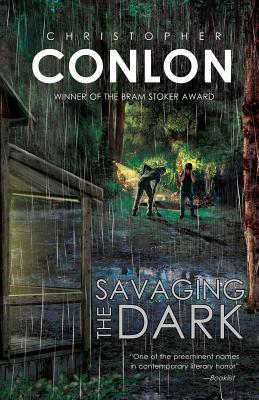
Back in May, I posted here about the Booklist Top 10 best reviewed horror of the year.  On their list was one of my favorite horror authors for public library collections-- Christopher Conlon and his most recent novel, Savaging the Dark. 
At my request, Conlon shared his thoughts on the novel for you-- my public librarian audience. 
But first, a little about Conlon. He is best known as the editor of the Bram Stoker Award-winning Richard Matheson tribute anthology He Is Legend, which was a selection of the Science Fiction Book Club and which has appeared in multiple foreign translations. He is the author of several novels, including the Stoker Award finalists Midnight on Mourn Street and A Matrix of Angels, as well as many books of stories and poems. Among his most recent titles are When They Came Back: A Horror Story, featuring photographs by Roberta Lannes-Sealey, and Wild Tracks: Uncollected Writings 1985-2014. A former Peace Corps volunteer, Conlon holds an M.A. in American Literature from the University of Maryland. Condon lives in the Washington, D.C. area. Visit him online at http://christopherconlon.com. 
A big thanks to Conlon for sharing his thoughts below. And again, I highly recommend his novels for all public library horror collections.

The Horror of Savaging the Dark
by Christopher Conlon
copyright © 2015 by Christopher Conlon
Being as vain and self-absorbed as most other writers I know—well, all other writers I know—I was naturally delighted to discover that my novel Savaging the Dark had made Booklist’s recent “Top Ten Horror: 2015” list, right up there with the likes of Stephen King and David Cronenberg. Such recognition, in this case totally unexpected, is wonderful to receive—which is why I know I run the risk of churlishness in admitting that I was also just a tad uncomfortable with this particular accolade. 
It has to do with that word “horror.”
Now, let me say at the outset that I am a lifelong lover of horror. The writer who first made me fall in love with fiction as a child was Edgar Allan Poe, whose stories of psychological turmoil and terror spoke deeply to me, growing up as I did in a chaotic atmosphere dominated by two wildly alcoholic parents. For years I was obsessed with late-night reruns of The Twilight Zone; through them I discovered the dark and frightening worlds of Richard Matheson, Charles Beaumont, and of course Rod Serling, all of whom became favorites whose books I read and collected avidly (and still do). There was also Robert Bloch, discovered through Hitchcock’s Psycho; Arch Oboler, located through audio cassettes I mail-ordered of his seminal radio show Lights Out; and many others—Ray Bradbury, H.P. Lovecraft, Harlan Ellison, the list goes on—first spotted through the many second-hand paperback anthologies I would buy two-for-a-quarter at the local thrift shop. 
Not all of this reading was strictly horror, of course—each of these writers skirted genres, and I was just as happy reading their mysteries and fantasies and science-fiction tales as I was their more straightforwardly bloodcurdling efforts. But all of them spent a great deal of time on, we might say, the darker side of the street, where I was always eager to join them.
As I got older and went to college my tastes widened and deepened considerably, but I still seemed to prefer writers of a shadowy bent. I went through a Conrad phase, enthralled by Heart of Darkness and “The Beast in the Jungle.” For a time the Southern Gothics of McCullers, Welty, Capote, and Tennessee Williams became my literary soul food. Still later, I binge-read such notably un-sunny writers as Toni Morrison and Joyce Carol Oates. 
Perhaps as a result of this, my own writing has never been known for its happy-go-lucky, Rebecca of Sunnybrook Farm qualities. My characters, invariably psychologically scarred and emotionally haunted, make their ways as best they can through worlds of death, abuse, sorrow, and misery, searching for a kind of home few of them ever really had.
Savaging the Dark is such a story. It focuses on the relationship between Mona Straw, a thirty-something middle school teacher, and her eleven-year-old pupil Connor Blue—a relationship that grows emotionally intense for both of them and, eventually, sexual. 
The depiction of such a transgressive bond is hardly unique, of course—Lolita comes immediately to mind, though Savaging the Dark is a very different kind of narrative from Nabokov’s great satirical classic. Still, my novel does seem to have touched a nerve in some readers, and not necessarily in a good way. 
What’s most interesting to me is that the protests as to the nature of this novel have come entirely from within the horror world—a world with which I have been identified for some time, not always comfortably. While the novel has received some good notices in horror publications, there have been horror reviewers, well-known and respected, who have completely refused to read the book, or, having read the first chapter or two, refused to finish it. One likened the novel to “kiddie porn”; another admitted he “just couldn’t do it.” Some horror markets which have covered previous books of mine very favorably have simply ignored their review copies of Savaging the Dark without comment.
Of course, one sympathizes with readers’ potential sensitivities; all the talk lately about placing “trigger warnings” on books sold on college campuses indicates that these can be real issues for some individuals. Still, the people I’m talking about are horror reviewers, who every day read graphic depictions of the worst kind of sadistic torture and mutilation and murder, and give it rave notices when it comes bylined by an author like, say, Richard Laymon. Indeed, there is often a gleeful quality in such writing, and in horror readers’ responses to it. Whether it’s a Tales of the Crypt comic-book story in which body parts are merrily strewn about or devoured for laughs, or a novel like Bret Easton Ellis’s American Psycho, in which a starving rat is dispatched up a woman’s vagina (among other memorable scenes), horror readers often seem to delight in the outrageous, the disgusting, the transgressive. But something about Savaging the Dark appears to have alienated some in the horror audience. Ironically, the novel has been saved largely by mainstream readers and librarians—exactly those one might imagine would be least attracted to a story like this one.
Let it be said here and now that Savaging the Dark bears the same resemblance to “kiddie porn” as Lolita, or Sally Mann’s famous photographs of her children—that is to say, exactly none. My story is about the techniques and consequences of psychological manipulation and abuse; the entire arc of the narrative is downbeat, grim, and tragic. Nothing in the book is played for laughs, and nothing is designed in any way to be titillating. It is, I hope, a disturbing story, a vivid and memorable one. That’s what I set out to write. 
And that, I have come to suspect, is exactly the problem. Too often the horror genre doesn’t take its own horror seriously. Instead the grotesque is treated in a nudge-wink fashion which may be appropriate to comic books but which surely isn’t for novels written by and for supposedly mature grown-ups. And it’s precisely this attitude, I think—this juvenile perspective, this giggly approach to psychosis, sadism, monstrousness—that causes horror as a genre to be dismissed by many as disreputable trash, which, if we are to be honest, a lot of it is. Savaging the Dark has no connection to such material, a fact which mainstream readers seem to realize—hence the gratifying accolades from non-horror outlets. 
So is Savaging the Dark a horror novel? Perhaps. It’s certainly fine with me if Booklist believes so, especially since they think so highly of it. 
What it is not, however, is a product of the horror genre. 
I find it sad that such a distinction has to be made, but there it is. 

In the end, Savaging the Dark is simply, I think, a novel, as Heart of Darkness is a novel, or indeed Lolita. Readers sensitive to the issues it presents should probably not pick it up. But self-described horror fans who find themselves resistant to the book, or too afraid to read it, may want to reflect on just what they believe the word “horror” really means.

Wednesday, October 14, 2015

31 Days of Horror: Day 14-- Christopher Conlon on August Derleth

Past contributor to the blog, and award winning horror author Christopher Conlon, took his assignment from me very seriously. He asked if it was okay to talk about the complicated history of author August Derleth. I loved the idea and told him to go for it.  

Read below for yourself, but Conlon is arguing for reinstating Derleth’s excellent horror works into our libraries on the merit of the prose. He does not deny or apologize for Derleth’s actions and misdeeds as Lovecraft’s literary executor, but he does want us to remember and appreciate the author’s work as a master of horror.

Definitely a must read for all horror fans and librarians today.

Dweller in a Different Darkness: 
Reconsidering August Derleth 
by Christopher Conlon 

Copyright © 2015 by Christopher Conlon 

Once upon a time August Derleth wasn’t particularly controversial. Growing up in the 1970s, I remember getting his paperback genre anthologies from the library—Beyond Time and Space, The Other Side of the Moon, Dark Things—and at some point my mind made the connection between the editor of those books and the name that occasionally popped up in the “Based on a Story by” credits of the horror-show reruns I liked. I vaguely realized that Derleth was the author of the “Solar Pons” Sherlock Holmes pastiches that appeared in mystery magazines here and there, and that he was somehow associated with H.P. Lovecraft as well. That was about all—just a lesser light in my mental collection of People Whose Names Appeared on the Covers of Books.  

Prolific and protean, Derleth—who died in 1971—was quite a significant figure in the American literary scene of his time. Author of something like 150 titles, Derleth wrote everything from mainstream fiction set in his native Wisconsin to nature journals to well-regarded poetry to biographies of Emerson and Thoreau to horror stories set in Lovecraft’s “Cthulhu Mythos” (a term he coined, by the way).  

Today, however, Derleth’s name is mud, at least in terms of the horror fiction by which he is best remembered. All aspects of his association with Lovecraft (commonly called “HPL”), for whom he served as a de facto literary executor after the latter’s death in 1937, have been thrown into question—his handling of Lovecraft’s manuscripts, his copyrights, his very literary legacy. Though Derleth founded Arkham House with Donald Wandrei in 1939 for the specific purpose of keeping Lovecraft’s work in print, Derleth’s editions of Lovecraft’s stories were discovered to have been riddled with all kinds of errors. A fervent band of Lovecraft aficionados has spent the last couple of decades setting things right and publishing new, corrected editions of the Master’s works. That’s certainly a good thing. 

What has not been so good, however, is the trashing August Derleth’s reputation has undergone as a result. Although it’s indisputable that he had more to do with Lovecraft’s remaining in print and available to the reading public than anyone else in the first several decades after the author’s death, many of today’s Lovecraftians actively despise Derleth, referring to him in their books and monographs (to say nothing of Internet postings) in the most savagely splenetic terms.  

To be sure, some of Derleth’s behavior surrounding HPL’s estate was ethically dubious. Perhaps the main bone of contention has been Derleth’s “posthumous collaborations” with Lovecraft, stories ostensibly based on HPL’s notes and outlines and published with a collaborative byline but discovered long afterward to have been mostly—often solely—the work of August Derleth. This is unfortunate, and impossible to defend. 

But the truth is that Lovecraft was never more than a minor part of August Derleth’s extraordinary publishing career. Despite his regard for Lovecraft the man, whom he knew through correspondence, he never took the Cthulhu Mythos very seriously, claiming that HPL wrote the stories only “as pure entertainment, no more” and seemingly taking the same attitude when writing his own tales set within the Lovecraft universe (some published as collaborations, others under Derleth’s solo byline). He was far busier writing huge numbers of important novels in his Sac Prairie Saga along with deep meditations on nature and community in his small corner of Wisconsin—books he considered his major work. Despite the importance of Arkham House to him (he sometimes kept it afloat with his own money), writing Lovecraftian fiction was never more than a lucrative sideline for August Derleth. 

Yet today, more than four decades after his death, the attacks on Derleth from within the Lovecraft community are constant and unending. He resides in a kind of Index Expurgatorius at least as fearsome and forbidden as the Necronomicon—one reads that Derleth was “a hack,” “talentless,” “a very bad writer,” “incompetent,” and many much less temperately expressed things.  

In truth, a number of his Lovecraftian tales are excellent—the novella “The Dweller in Darkness” comes immediately to mind. But the unsuspecting reader would never know it when one of the best-known and most respected of Lovecraft scholars dismisses all of these widely-read, much-reprinted stories with magisterial disdain as “a mass of sub-literary rubbish.” 

It’s time for the unique and important writer who was August Derleth to be rediscovered. Much of his work is now commercially out of print, but a lot of it is available exclusively through the August Derleth Society, which publishes its own handsome editions obtainable directly through their website (derleth.org).  

Here then are three titles that an enterprising librarian might choose to begin building an August Derleth collection. 

The Watchers Out of Time and Other Stories (Del Rey), credited to H.P. Lovecraft and August Derleth, is the main compilation of the so-called posthumous collaborations, and it is surely the place to start. All of these tales are worthwhile, and some are excellent. “The Fisherman at Falcon Point” is surprisingly lyrical, “The Dark Brotherhood” great fun (multiple Edgar Allan Poes invade a small town!), and “The Shuttered Room”—often reprinted, twice filmed—surely qualifies as one of the most famous pieces ever to appear with Lovecraft’s byline attached. Whatever their provenance, these tales are guaranteed to be of interest to the Lovecraft fan who has already read everything published under the Master’s solo byline and is ready to branch out into other aspects of the Cthulhu Mythos. 

For the reader who enjoys The Watchers Out of Time and is curious to find more horror works by August Derleth, the obvious choice is Who Shall I Say Is Calling? and Other Stories edited by Robert Weinberg and Stefan Dziemianowicz (Batteted Silicon Dispatch Box, available through the Derleth Society). This wonderful collection was put together specifically by the editors in order to provide an easy one-volume “best of” for Derleth’s weird fiction, and many of these stories deserve the name “classic”; they represent great old-fashioned spooky storytelling at its finest. As a bonus, fans of the vintage TV shows Night Gallery and Thriller will enjoy finding the originals of several episodes here, including Gallery’s “The Dark Boy” and “Logoda’s Heads” and Thriller’s “The Return of Andrew Bentley,” “A Wig for Miss Devore,” and the wonderfully pulpy “Colonel Markesan.”  

Yet to give a proper representation of Derleth, something in addition to the weird tale is needed. To that end, the creative librarian should consider adding one more title, Village Year (Derleth Society), to the collection. Village Year consists of several years’ worth of journal entries (along with the occasional poem) by Derleth, mostly on the subjects of nature and small-town life in his beloved Sac Prairie, Wisconsin. Here is the opening paragraph: 

“Walking through a gentle fall of snow tonight to grandfather Derleth’s, and knowing grandmother to be dying, I could not help thinking of change, and all the aspects of change eternally taking place, some clearly obvious, and so many secret, but no less eventually plain to the eye and heart: the eternal flux—and I thought: It is more than just birth and death, more than a tree gone, a house risen: the slow, inexorable changing of a way of life, the difference between youth and age, in final analysis always the gulf between generations. Snow came down with a faint whispering, and in the melancholy of my occupation with grandmother’s slow dying, I thought of these flakes as voices all around me in the still, windless air, the voices of those people and things long gone, the remote pulse of life gone by.”  

Village Year is a beautiful book, one ripe for re-discovery—a journal that deserves to be ranked alongside Walden for its use of evocative detail to conjure a now vanished world, in this case a pre-World War II rural America.  

Such writing proves that those who dismiss August Derleth as “talentless” and “a hack” have never read much August Derleth. But because of the decades of hostility and abuse aimed at him by overzealous fans of H.P. Lovecraft, Derleth has become, to appropriate the title of one of his best stories, a kind of “dweller in darkness” himself—a different kind of darkness. Too many readers don’t bother to try his work because of what they’ve heard, and since so many people claim it so loudly, it must be true—mustn’t it?  

It isn’t. The literary worlds of the brilliant August Derleth are well worth exploring, and returning his books to the nation’s library shelves would be a great place to start. 

----------------------------------------------------
Christopher Conlon is best known as the editor of the Bram Stoker Award-winning Richard Matheson tribute anthology He Is Legend, a selection of the Science Fiction Book Club which has appeared in multiple foreign translations. He is the author of several novels, including the Stoker Award finalists Midnight on Mourn Street and A Matrix of Angels, as well as collections of stories and poems. His most recent book is The Tell-Tale Soul: Two Novellas, recently published by Surinam Turtle Press. A former Peace Corps volunteer, Conlon holds an M.A. in American Literature from the University of Maryland and lives in the Washington, D.C. area. Visit him online at http://christopherconlon.com.  


Thursday, May 14, 2015

Booklist’s Top 10 Horror

Click here for the list of the Top 10 Horror titles as reviewed in Booklist from May 1, 2014 to May 15, 2015.

What is great about this list particular list from my vantage point is that since it is from Booklist, these are ALL books you should have in a general, public library horror collection. These are the best horror books from a journal that specifically reviewed them for a public library audience.

So, go check you shelves and order these up for your patrons. And I second Bill’s Christopher Conlon love [see below].

I have also reposted the list for the lazy among you below:


Top 10 Horror: 2015.


Ott, Bill (author).

 
FEATURE.  First published May 15, 2015 (Booklist).

This list of the best horror fiction reviewed between May 15, 2014, and May 1, 2015, covers the gamut, from an old-fashioned horror novel, tasting of blood and dust, to a zombie plague (what would a top 10 list be without one?) to a grisly, darkly comedic road trip.

  ConsumedConsumed. By David Cronenberg. 2014. Scribner, $26 (9781416596134).
For cineasts raised on Cronenberg’s twisted videos, his first novel will seem like a homecoming: a character who snips off pieces of her flesh and eats them, for example. His dense, aristocratic prose is saturated with details of technology, sex, and disease—all forms of cannibalism, he suggests—and every salacious bit is elevated to a thing of perverse beauty.

Fall of Night. By Jonathan Maberry. 2014. St. Martin’s/Griffin, $15.99 (9781250034946).
Picking up at the very moment Dead of Night ended, this sequel throws the reader headlong into a zombie plague. Maberry, no slouch at action and suspense, does some of his most visceral and terrifying writing ever here.

The House of Small Shadows. By Adam Nevill. 2014. St. Martin’s, $25.99 (9781250041272).
From the opening line’s echo of Manderley (“As if by a dream Catherine came to the Red House”), readers will find themselves in the sickly sweet, rotted-silk grip of a decaying gothic nightmare. A haunted-house tale like no other, this is one of those rare horror novels that’s upsetting enough to make the reader want to take the damn thing out back and bury it.

  Lock InLock In. By John Scalzi. 2014. Tor, $24.99 (9780765375865).
This tightly plotted, highly imaginative tale takes place about 25 years after a virus called Haden’s syndrome left a small percentage of the world’s population locked inside their own bodies, conscious but unable to interact in any way. A genre-blending triumph that combines horror, mystery, and science fiction.

A Love like Blood. By Marcus Sedgwick. 2015. Pegasus, $24.95 (9781605986838).
In the aftermath of D-Day, an American soldier tours a Paris museum and comes upon a sight that will forever change (and damn) him: a man seemingly drinking a woman’s blood. Here’s a novel that tastes of blood and dust, just as a fine old-fashioned horror novel should.

Motherless Child. By Glen Hirshberg. 2014. Tor, $24.99 (9780765337450).
Hirshberg takes readers on a grisly yet darkly comedic road trip in this outstanding southern horror tale about two single moms and their unfortunate encounter with a shadowy and irresistible singer known as the Whistler. This one is a spine-tingler with smart dialogue, a thickly atmospheric setting, and plenty of visceral violence.

Positive. By David Wellington. 2015. Harper/Voyager, $26.99 (9780062315373).
Wellington uses the zombie apocalypse as a backdrop for a gripping story about the shattering of human society—the real villains here aren’t the zombies but, rather, the road pirates, looters, religious cultists, and other groups that have sprung up in the 20 years since the “crisis.” A masterful, epic-scale fantasy.

Revival. By Stephen King. 2014. Scribner, $30 (9781476770383).
In the kind of loose, garrulous voice that has marked his last decade, King spins the yarn of Jamie Morton and Reverend Charles Jacobs, whose lives wretchedly intertwine for 50 years. This is one of King’s most harrowing, most fatalistic works, and it’s right in his horror wheelhouse.

  Savaging the Dark
Savaging the Dark. 

By Christopher Conlon. 2014. Evil Jester, $11.99 (9780615936772).
How’s this for a horror-novel opening: a terrified 11-year-old boy is gagged and handcuffed to a bed while our narrator, sixth-grade English teacher Mona Straw, licks the dirt from his feet. Conlon writes with literary depth and commercial aplomb; his days of too-little recognition seem numbered.

The String Diaries. By Stephen Lloyd Jones. 2014. Little, Brown/Mulholland, $26 (9780316254465),
In this ambitious, memorable debut novel, Hannah is on the run, her young daughter and her grievously wounded husband depending on her for their own survival. Her destination: a remote farmhouse in Wales; but, rather than a safe haven, the farmhouse could be her last stand against an evil that has pursued her family for nearly 200 years.

Friday, July 2, 2010

Horror 2009


Here is a reposting of my 2009 year in review which was used on a Halloween display at the BPL. These annotations each include at least 2 readalike options.
 
Conlon, Christopher, ed.  He is Legend: An Anthology Celebrating Richard Matheson
In this collection great horror writers like Stephen King, Joe Hill, Gary Braunbeck, and Whitley Strieber use stories by legendary genre-bending author Matheson as a springboard to create 16 new stories that both pay homage to a master and are satisfyingly scary on their own. Also try Matheson’s I am Legend or Poe’s Children edited by Peter Straub.

Farris, John.  High Bloods
A werewolf virus plague is spreading across the world and the International Lycan Control (ILC) has been set up to keep the infected from terrorizing the uninfected during the full moon.  However, a California agent of the ILC notices that the controls may no longer be working. Also try Charlie Huston’s Joe Pitt Series or Sharp Teeth by Tony Barlow

Keene, Brian.  Castaways
A television crew and contestants in a Survivor-esque reality show are literally caught in a fight for their lives-- the island they have been left on is populated by an indigenous tribe of bloodthirsty monsters!  Castaways is a grisly page-turner. Also try The Ruins by Scott Smith or anything by Richard Laymon.

Kenyon, Nate.  The Bone Factory
David Pierce moves his wife and daughter, in the dead of winter, to an isolated area in Quebec. Jessie is clairvoyant, but she is not responsible for the paranormal activity in their new town.  People go missing, things look strange, and the Pierce family is in a fight for their lives. This is atmospheric horror at its best, written by a rising star in the genre. Also try The Shining by Stephen King.
Kiernan, Caitlín R.  The Red Tree
Sarah moves to rural Rhode Island and finds fragments of a mysterious manuscript written by her new home’s former resident, a parapsychologist who was obsessed with an oak tree on the property’s periphery.  Sarah becomes entangled in the manuscript and risks her life to find out what the tree is hiding. Also try The Thirteenth Tale by Diane Setterfield or anything by H.P. Lovecraft.

Maberry, Jonathan.  Patient Zero
Terrorists have created a virus which turns people into zombies, and they plan to release it soon. Joe Ledger leads the team that is out to stop them.  This is a fast paced, techno-thriller, with shifting points of view and lots of twists and turns. Look for Bram Stoker winner, Maberry to bring Ledger back for more. Also try Creepers by David Morrell

Masello, Robert.  Blood and Ice
In 1856, two lovers fall into the frigid waters off Antarctica.  In the present, writer Michael Wilde accepts an assignment to write about a scientific lab in Antarctica. When he arrives, Wilde discovers the frozen bodies of the lovers who, once rescued, come back to life.  How and why?  Read Blood and Ice to find out. Also try The Brief History of the Dead by Kevin Brockmeier or Amazonia by James Rollins.

Masterton, Graham.  Basilisk
Medical researcher Nathan Underhill is trying to genetically engineer a mythological creature to help cure chronically ill people. Although his trials fail, it appears someone else has succeeded and there is now an actual basilisk on the loose, killing everyone who stands in its way. Can Nathan stop the evil creature in time?  Also try Creature by John Saul.

Sokoloff, Alexandra.  The Unseen
In the 1960s, researchers and students from the Duke University Parapsychology Lab went to study poltergeists in a haunted house.  No one returned unscathed. Today, Professor Laurel MacDonald and three others return to the haunted home in the hopes of getting some answers, but are they prepared for what they will find? Also try The House of Lost Souls by F. G. Cottam.

Stratford, Sarah Jane.  The Midnight Guardian
What happens when 1,000 year old vampires try to stop the Nazi army?  Stratford poses this question in her promising debut which is part historical fiction, part vampire story and part romance.  Also try Charlaine Harris’s Sookie Stackhouse series or The Keep by F. Paul Wilson.

Tuesday, January 24, 2012

Bram Stoker Preliminary Ballot Announced

Here is the link.  Details below.

For each category (Novel, First Novel, etc) there are potentially TWO ballots: one for the works that proceed from the recommendations (‘Recs’) ballot and one for the works that proceed from the Jury ballot.
A short explanation of the system for determining for the Bram Stoker Awards™ ballots appears at: http://www.horror.org/stokers.htm. As the preliminary ballot is designed to produce three works for the final ballot in a category from each of the “Recs” and “Jury” ballots, if there are three or less works qualified in a category, they proceed directly to the final ballot.
If you see four, five or six works in a “Rec” or “Jury” ballot below, that ballot will proceed to be voted on by Active and Lifetime Members and they are marked ‘Ballot Required’.

NOVEL:

    RECS:

    Ballot Required
    • Lamberson, Greg — Cosmic Forces
    • Longfellow, Ki — Houdini Heart
    • Malfi, Ronald — Floating Staircase
    • O’Neill, Gene — Not Fade Away
    • Warner, Matthew — Blood Born

    JURY:

    Ballot Required
    • Conlon, Christopher — A Matrix Of Angels
    • Dunbar, Robert — Willy
    • McKinney, Joe — Flesh Eaters
    • Oliver, Reggie — The Dracula Papers, Book 1: The Scholar’s Tale
    • Thomas, Lee — The German

FIRST NOVEL:

    RECS:

    Ballot Required
    • Bird, Allyson — Isis Unbound
    • Lee, Frazer — The Lamplighters
    • Reynolds, Graeme — High Moor
    • Talley, Brett J. — That Which Should Not Be
    • Wagner, Jeremy — The Armageddon Chord

    JURY:

    No ballot required, the following works will proceed directly to the Final Ballot. Please note these works may not be described as Nominees until the Final Ballot is formally announced.
    • Jacobs, John, Horner — Southern Gods
    • Roche, Thomas — The Panama Laugh

YA NOVEL:

    RECS:

    Ballot Required
    • Faherty, J. G. — Ghosts of Coronado Bay, A Maya Blair Mystery
    • Holder, Nancy — The Screaming Season
    • Maberry, Jonathan — Dust & Decay
    • Matthews, Araminta Star — Blind Hunger

    JURY:

    Ballot Required
    • Blake, Kendare — Anna Dressed in Blood
    • Kraus, Daniel — Rotters
    • Ness, Patrick — A Monster Calls
    • Oppel, Kenneth — This Dark Endeavor: The Apprenticeship of Victor Frankenstein
    • Roth, Veronica — Divergent

GRAPHIC NOVEL:

    RECS:

    Ballot Required
    • Hill, Joe — Locke & Key, Volume 4
    • Maberry, Jonathan — Marvel Universe vs. The Punisher
    • Maberry, Jonathan — Marvel Universe vs. Wolverine
    • Mignola, Mike and Golden, Christopher — The Plague Ships
    • O’Reilly, Sean; Nassise, Joe; Weick, Halston — Candice Crow

    JURY:

    Ballot Required
    • Brosgol, Vera — Anya’s Ghost
    • Fialkov, Joshua Hale — Echoes
    • Jensen, Jeff — Green River Killer
    • Moore, Alan — Neonomicon
    • Smith, John — Cradlegrave

LONG FICTION:

    RECS:

    Ballot Required
    • Breaux, Kevin James — Dark Water: Beaming Smile
    • Calvillo, Michael Louis — 7Brains
    • Little, John R. — Ursa Major
    • O’Neill, Gene — Rusting Chickens
    • Schwamberger, Ty — The Fields

    JURY:

    Ballot Required
    • Hodge, Brian — Roots and All
    • Kiernan, Caitlin — The Colliers’ Venus (1893)
    • Lindqvist, John Ajvide — The Music of Bengt Karlsson, Murderer
    • Shearman, Robert — Alice Through A Plastic Sheet
    • Straub, Peter — The Ballad of Ballard and Sandrine

SHORT FICTION:

    RECS:

    Ballot Required
    • Bailey, Michael — “It Tears Away” (The Shadow of the Unknown)
    • Lillie-Paetz, Ken — “Hypergraphia” (The Uninvited, Issue 1)
    • O’Neill, Gene — “Graffiti Sonata” (Dark Discoveries)
    • Palisano, John — “X is for Xyx” (M is for Monster)
    • Warren, Kaaron — “All You Can Do Is Breathe” (Blood and Other Cravings)

    JURY:

    Ballot Required
    • Ausubel, Ramona — “Atria” (The New Yorker Magazine, April 4, 2011)
    • Ballingrud, Nathan — “Sunbleached” (Teeth: Vampire Tales)
    • Castro, Adam Troy — “Her Husband’s Hands” (Lightspeed Magazine)
    • King, Stephen — “Herman Wouk Is Still Alive” (The Atlantic Magazine, May 2011)
    • Saunders, George — “Home” (The New Yorker Magazine, June 13, 2011)

SCREENPLAY:

    RECS:

    No ballot required, the following works will proceed directly to the Final Ballot. Please note these works may not be described as Nominees until the Final Ballot is formally announced.
    • Ball, Alan — True Blood: Spellbound (Episode #44)
    • Goodman, Cory — Priest
    • Nolfi, George — The Adjustment Bureau

    JURY:

    Ballot Required
    • Gimple, Scott M. — The Walking Dead, episode 13: “Pretty Much Dead Already”
    • Gimple, Scott M. — The Walking Dead, episode 9: “Save the Last One”
    • Noxon, Marti — Fright Night
    • Ovrehahl, Andre and Havard S. Johansen — Troll Hunter
    • Sharzer, Jessica — American Horror Story, episode 12: “Afterbirth”

ANTHOLOGY:

    RECS:

    No ballot required, the following works will proceed directly to the Final Ballot. Please note these works may not be described as Nominees until the Final Ballot is formally announced.
    • Carbone, Tracy L. — NEHW Presents: Epitaphs
    • Hutton, Frank J. — Tattered Souls 2
    • Skipp, John — Demons: Encounters with the Devil and His Minions, Fallen Angels, and the Possessed

    JURY:

    Ballot Required
    • Dann, Jack and Nick Gevers — Ghosts By Gaslight
    • Datlow, Ellen — Blood And Other Cravings
    • Datlow, Ellen — Supernatural Noir
    • Datlow, Ellen and Terri Windling — Teeth
    • VanderMeer, Jeff and Ann — The Thackery T. Lambshead Cabinet of Curiosities

COLLECTION:

    RECS:

    Ballot Required
    • Burke, Chesya — Let’s Play White
    • Connolly, Lawrence C. — Voices: Tales of Horror
    • Gresh, Lois — Eldritch Evolutions
    • Haines, Paul — The Last Days of Kali Yuga
    • Morton, Lisa — Monsters of L.A.
    • Ochse, Weston — Multiplex Fandango

    JURY:

    Ballot Required
    • Fowler, Christopher — Red Gloves: The London Horrors
    • Kiernan, Caitlin R. — Two Worlds and In-Between
    • Llewellyn, Livia — Engines of Desire
    • Oates, Joyce Carol — The Corn Maiden and Other Nightmares
    • Oliver, Reggie — Mrs. Midnight and Other Stories

NON-FICTION:

    RECS:

    No ballot required, the following works will proceed directly to the Final Ballot. Please note these works may not be described as Nominees until the Final Ballot is formally announced.
    • Bannatyne, Lesley Pratt — Halloween Nation: Behind the Scenes of America’s Fright Night
    • Mamatas, Nick — Starve Better
    • Mogk, Matt — Everything You Ever Wanted to Know About Zombies

    JURY:

    Ballot Required
    • Crawford, Gary William, Jim Rockhill, and Brian J. Showers, Eds. — Reflections in a Glass Darkly
    • Rupe, Shade — Dark Stars Rising
    • Shultz, David E. and S.T. Joshi, Ed. — Letters to James F. Morton
    • Tibbetts, John C. — The Gothic Imagination
    • Wood, Rocky — Stephen King: A Literary Companion

POETRY:

    RECS:

    Ballot Required
    • Alexander, Maria — At Louche Ends: Poetry for the Decadent,the Damned & the Absinthe-Minded
    • Clark, G.O — Shroud of Night
    • Borski, Robert — Blood Wallah and Other Poems
    • Simon, Marge — The Mad Hattery
    • Ward, Kyla Lee — The Land of Bad Dreams

    JURY:

    Ballot Required
    • Addison, Linda — How to Recognize a Demon Has Become Your Friend
    • Boston, Bruce — Surrealities
    • Marshall, Helen — Skeleton Leaves
    • Schwader, Ann K. — Twisted in Dream
    • Simon, Marge — Unearthly Delights

Saturday, February 18, 2012

Bram Stoker Finalists

Hot off the presses. Congrats to all the nominees.  I am especially happy to see many of the authors I championed in the new book showing up here.  Also, remember that this is a great list for collection development at your library.  This is the consensus list of the best of the best in horror from 2011.  You should at least consider carrying these titles if you have horror readers.

So thanks to my membership in the HWA, here is the official press release:


Contact Lisa Morton, HWA Bram Stoker Awards Event Organizer
lisa@lisamorton.com

Horror Writers Association announces
2011 Bram Stoker Award™ Nominees

Each year, the Horror Writers Association presents the Bram Stoker
Awards™ for Superior Achievement in the field of horror writing, named in
honor of Bram Stoker, author of the seminal horror work Dracula. Since
1987, the approximately 700 members of the HWA have recommended, nominated
and voted on the greatest works of horror and dark fantasy of the previous
calendar year, making the Bram Stoker Awards the most prestigious award in
the field of horror literature. For the first time in 2011, half the
nominees were chosen by juries.

The awards are presented in eleven categories: Novel, First Novel, Young
Adult Novel, Graphic Novel, Long Fiction, Short Fiction, Screenplay,
Fiction Collection, Anthology, Non-fiction, and Poetry Collection. The
organization's Active and Lifetime members will select the winners from
this list of nominees; and the Awards will be presented at a gala banquet
on Saturday evening, March 31, at the World Horror Convention in Salt Lake
City, Utah.

This year’s nominees in each category are:

SUPERIOR ACHIEVEMENT IN A NOVEL

A Matrix Of Angels by Christopher Conlon (Creative Guy Publishing)
Cosmic Forces by Greg Lamberson (Medallion Press)
Floating Staircase by Ronald Malfi (Medallion Press / Thunderstorm Books)
Flesh Eaters by Joe McKinney (Pinnacle Books)
Not Fade Away by Gene O’Neill (Bad Moon Books)
The German by Lee Thomas (Lethe Press)

SUPERIOR ACHIEVEMENT IN A FIRST NOVEL

Isis Unbound by Allyson Bird (Dark Regions Press)
Southern Gods by John Hornor Jacobs (Night Shade Books)
The Lamplighters by Frazer Lee (Samhain Horror)
The Panama Laugh by Thomas Roche (Night Shade Books)
That Which Should Not Be by Brett J. Talley (JournalStone)

SUPERIOR ACHIEVEMENT IN A YOUNG ADULT NOVEL

Ghosts of Coronado Bay, A Maya Blair Mystery by J. G. Faherty
(JournalStone)
The Screaming Season by Nancy Holder (Razorbill)
Rotters by Daniel Kraus (Delacorte Books for Young Readers)
Dust and Decay by Jonathan Maberry (Simon & Schuster Books for Young
Readers)
A Monster Calls by Patrick Ness (Candlewick / Walker)
This Dark Endeavor: The Apprenticeship of Victor
Frankenstein by Kenneth Oppel (Simon & Schuster / David Fickling Books)

SUPERIOR ACHIEVEMENT IN A GRAPHIC NOVEL

Anya’s Ghost by Vera Brosgol (First Second)
Locke & Key Volume 4 by Joe Hill (IDW Publishing)
Green River Killer by Jeff Jensen (Dark Horse)
Marvel Universe vs. Wolverine by Jonathan Maberry (Marvel)
Baltimore Volume I: The Plague Ships by Mike Mignola and Christopher Golden
(Dark Horse)
Neonomicon by Alan Moore (Avatar Press)

SUPERIOR ACHIEVEMENT IN LONG FICTION

7 Brains by Michael Louis Calvillo (Burning Effigy Press)
“Roots and All” by Brian Hodge (A Book of Horrors)
“The Colliers’ Venus (1893)” by Caitlin R. Kiernan (Naked City: New
Tales of Urban Fantasy)
Ursa Major by John R. Little (Bad Moon Books)
Rusting Chickens by Gene O’Neill (Dark Regions Press)
“The Ballad of Ballard and Sandrine” by Peter Straub (Conjunctions: 56)

SUPERIOR ACHIEVEMENT IN SHORT FICTION

“Her Husband’s Hands” by Adam-Troy Castro (Lightspeed Magazine,
October 2011)
“Herman Wouk Is Still Alive” by Stephen King (The Atlantic Magazine,
May
2011)
“Graffiti Sonata” by Gene O’Neill (Dark Discoveries #18)
“X is for Xyx” by John Palisano (M is for Monster)
“Home” by George Saunders (The New Yorker Magazine, June 13, 2011)
“All You Can Do Is Breathe” by Kaaron Warren (Blood and Other Cravings)

SUPERIOR ACHIEVEMENT IN A SCREENPLAY

True Blood, episode #44: “Spellbound” by Alan Ball (HBO)
The Walking Dead, episode #13: “Pretty Much Dead Already” by Scott M.
Gimple (AMC)
The Walking Dead, episode #9: “Save the Last One” by Scott M. Gimple
(AMC)
Priest by Cory Goodman (Screen Gems)
The Adjustment Bureau by George Nolfi (Universal Pictures)
American Horror Story, episode #12: “Afterbirth” by Jessica Sharzer
(20th Century Fox Television)


SUPERIOR ACHIEVEMENT IN A FICTION COLLECTION

Voices: Tales of Horror by Lawrence C. Connolly (Fantasist Enterprises)
Red Gloves by Christopher Fowler (PS Publishing)
Two Worlds and In Between: The Best of Caitlin R. Kiernan (Volume One) by
Caitlin R. Kiernan (Subterranean)
Monsters of L.A. by Lisa Morton (Bad Moon Books)
The Corn Maiden and Other Nightmares by Joyce Carol Oates (Mysterious
Press)
Multiplex Fandango by Weston Ochse (Dark Regions Press)

SUPERIOR ACHIEVEMENT IN AN ANTHOLOGY (EDITING)

NEHW Presents: Epitaphs edited by Tracy L. Carbone (NEHW)
Ghosts By Gaslight edited by Jack Dann and Nick Gevers (Harper Voyager)
Blood And Other Cravings edited by Ellen Datlow (Tor Books)
Supernatural Noir edited by Ellen Datlow (Dark Horse)
Tattered Souls 2 edited by Frank J. Hutton (Cutting Block Press)
Demons: Encounters with the Devil and his Minions, Fallen
Angels and the Possessed edited by John Skipp (Black Dog and Leventhal)

SUPERIOR ACHIEVEMENT IN NON-FICTION

Halloween Nation: Behind the Scenes of America’s
Fright Night by Lesley Pratt Bannatyne (Pelican Publishing)
Reflections in a Glass Darkly: Essays on J. Sheridan Le Fanu edited by Gary
William Crawford, Jim Rockhill and Brian J. Showers (Hippocampus Press)
Starve Better by Nick Mamatas (Apex Publications)
Everything You Ever Wanted to Know About Zombies by Matt Mogk (Gallery
Books)
The Gothic Imagination by John C. Tibbetts (Palgrave Macmillan)
Stephen King: A Literary Companion by Rocky Wood (McFarland & Company,
Inc., Publishers)

SUPERIOR ACHIEVEMENT IN A POETRY COLLECTION

How to Recognize a Demon Has Become Your Friend by Linda Addison (Necon
Ebooks)
At Louche Ends: Poetry for the Decadent, the Damned & the
Absinthe-Minded by Maria Alexander (Burning Effigy Press)
Surrealities by Bruce Boston (Dark Regions Press)
Shroud of Night by G. O. Clark (Dark Regions Press)
The Mad Hattery by Marge Simon (Elektrik Milk Bath Press)
Unearthly Delights by Marge Simon (Sam's Dot)


###


More information on the Horror Writers Association is at www.horror.org.
More information on the 25th Anniversary presentation of the Bram Stoker
Awards is at http://www.stokers2012.org