Summer Scares Resources

Click here to immediately access the Summer Scares Resource page so that you can add some professionally vetted horror titles into your reading suggestions and fiction collections for all age levels.
Showing posts sorted by relevance for query maberry. Sort by date Show all posts

Tuesday, February 28, 2012

Who is Jonathan Maberry?

As I have been mentioning everywhere, I will be interviewing Jonathan Maberry on both RA for All blogs on Sunday, but I also realized that some of you may be unfamiliar with him and his work.  Thankfully, letting people know about new authors is what I am paid to do.

Maberry features prominently in the new book, but specifically he has an entire section in Chapter 3 which chronicles the current state of horror I have an entire section on Maberry.  I have posted most of it here.  Please note, it also includes possible readalike options:
Maberry is a busy, award-winning author. He writes traditional horror novels, a best-selling, speculative thrillers series, a zombie young adult series, comics, movie novelizations, and nonfiction about horror, specifically the science and history behind the supernatural. 
However, it is with Ghost Road Blues, the Bram Stoker award-winning first novel in his classic, small town horror Pine Deep Trilogy that Maberry began his march toward horror master status.  Ghost Road Blues tells the story of the residents of Pine Deep, PA, who thirty years ago killed a serial killer known as “The Reaper.”  Since then, the town has seen peace and fame as the Halloween capital of America.  But as the novel opens on the Halloween season, a new supernatural evil lurks on the outskirts of town, waiting to finish what The Reaper began.  
Since Ghost Road Blues, Maberry has established a go-to style that readers can count on and seem to crave.  His books all have chilling situations, menacing atmospheres, relentlessly fast-paced action, humor, and lots of gore. These are not books for the squeamish. Maberry liberally uses visual, aural, and scent inducing adjectives that describe how the monsters, zombies, and humans (both heroes and villains) in his books fight for their lives. 
Maberry also frewurntly makes use of flawed male protagonists. In Maberry’s case most of the heroes come from troubled pasts, pasts in which they have erred and must make things right. These heroes are in the thriller mode, meaning that their hearts are always in the right place despite their troubled pasts. They grapple with supremely evil villains, from supernatural monsters to terrorists.  Maberry leaves no doubt as to who is on the side of justice in his books. 
Maberry’s books are also slightly faster paced than others in the horror genre. The action starts off fast and only increases.  Besides using many fight scenes, Maberry employs multiple points of view, showing us the villain’s plans, allowing readers to stay a step ahead of the hero, which therefore, increases both the pace and the reader’s already heightened sense of dread.   These high stakes, intense cat and mouse games do lead to violent conclusions in which the hero triumphs, but the level of violence is not above and beyond what is typical to either the horror or thriller genre.  
Readers new to Jonathan Maberry should start with his Pine Deep Trilogy which begins with Ghost Road Blues. 
Fans of Maberry may also enjoy Joe Hill, Brian Keene, and Gary Braunbeck since they all write character-centered horror with flawed but good-hearted protagonists.  Also, like Maberry, Keene and Braunbeck create a mythology linking their novels.  The influence of established horror writers like F. Paul Wilson, Richard Matheson, and Graham Masterton is reflected in Maberry’s use of a menacing atmosphere and a speculative threat that is both evil and smart.  The creepy thrillers of David Morrell will also attract Maberry readers who love menacing atmospheres, fast-paced action, and plot twists galore, while the dark, supernatural adventure novels of James Rollins will also draw Maberry readers who like the action based plots, military details, and inclusion of scientific details.
So now you know a little more about the author.   Look for more posts and a review of Dead of Night coming later this week.

Thursday, September 2, 2010

Author Interview: Jonathan Maberry

Jonathan Maberry 
Click here for an author interview with Jonathan Maberry for the International Thriller Writers Association. The interview is to talk about his new YA zombie series of novels, but he also talks abou this work in general.

Maberry is a great example of how the horror genre has been evolving over the last 5 years.  When I wrote the first edition of The Horror Readers' Advisory in 2002-2003, Maberry was barley on the scene. Since that time he has become one of the biggest and most respected names in horror writing.

Maberry is best known for his Bram Stoker winning, classic small town horror Pine Deep trilogy, his numerous nonfiction books about supernatural creatures, and his widely popular Joe Ledger supernatural thriller series, among other titles. And I haven't even mentioned his writing for Marvel.

Now with this new YA Zombie series on the way, Maberry is an author that demands attention outside of the horror community. I recently wrote an author profile of him for NoveList and have been going out of my way to insert him as a readalike option so that NoveList searchers who are looking for a certain type of horror title or thriller will see his novels as an option. Until I began adding this Maberry content, NoveList had nothing on him besides entries for some of his books. If you have access to NoveList through your library, click here and search "Maberry."

Those of you interested in more of what Maberry has to say about the evolution of his work, should click here and look at the comments he left on my other blog. We had a nice conversation about his work.

If you simply just like good, scary storytelling, I would suggest picking up anything by Jonathan Maberry.

Friday, May 27, 2011

What I'm Reading: Rot and Ruin

Jonathan Maberry is one of my favorite horror writers.  This year he started a YA zombie series.  Back in September, before the first book in the series, Rot & Ruin came out, I posted this interview with Maberry.

Of course, the book was on my to-read list from that moment on.  To help matters along, this year's bibliography for the Adult Reading Round Table will be focused on YA titles.  All of us on the Steering Committee will be reading 1 YA title that would be good for adults, and 1 adult title that would be good for teens.  I put myself down for Rot & Ruin (teen to adult) and The Radleys by Matt Haig (Adult to teen).

So with all of that hype, how could the book have lived up.  I will tell you I thoroughly enjoyed reading Rot & Ruin, but I should warn readers, it is very typically and YA novel.  If you are not used to reading YA I should let you know what to expect: absent parents, teenaged protagonist, tough moral choices, huge coming-of-age theme.  Also, while many reviews claim this novel has more violence and gore than most YA horror, if you read Maberry's adult novels, this one is tame in comparison.

Here is the basic plot.  Benny Imura was a baby when the zombie apocalypse came.  He was saved by his half brother Tom, but their parents were victims.  It is now 14 years later and Benny and Tom live in a town in CA surrounded by fences.  The rules are, 6 months after your 15th Birthday all residents need to pick a career and help out.  Benny is up against the deadline and reluctantly agrees to join the family business.  Tom is a bounty hunter who kills zombies outside the walls of town in what is known as "The Rot and Ruin."  But, he is a gentle and good bounty killer.

Once Benny accompanies Tom on his rounds outside the safety of town, Benny's entire life is turned upside down.  He must confront his own preconceived notions about the world and address his personal feelings about his brother, his friends, and his former heroes.  In short, he must reevaluate everything he has ever known.

This is a powerfully moving story.  The world Maberry has set up is one of the best post-apocalyptic zombie settings I have ever read; and believe me, I have read many.  The descriptions of how the zombies rose, why they took over, and how society now functions is detailed and interesting.  Anyone interested in post-apocalyptic tales of any kind will like this novel.

The characters are well drawn, complex, and interesting, and not just the main characters.  Also, one of Maberry's specialties is creating really evil human villains.  He is on top of his game here.  The zombies are well described, the fight scenes compelling and scary, and the over all tone is anxious and frightening.  The end is resolved and touching  but with the hint of more adventures to come.

The pace is classic horror:  begins with a foreboding scene, then backs up to fill us in on details, and beings to build steadily until the end, when it picks up and races to the finish.  Like all good horror, the story is only taking a breather at the novel's end.  We know there will be more bad guys and zombies to come.

Readers will fall in love with Maberry's storytelling style.  It is compelling, action packed, full of great characters, and awesomely evil villains.  The man rarely gets a bad review from the professionals or readers.  In my new book, Maberry is grouped with Joe Hill as the "New Kings of Horror."  If you like horror at all, read something by Jonathan Maberry.

Rot & Ruin was on the 2011 YALSA list of Best Fiction for Young Adults.  August sees the release of part 2, Dust & Decay.  Great covers by the way.

Three Words That Describe This Book: post-apocalyptic, coming-of-age, difficult choices

Readalikes:  Zombies are everywhere these days, and I love every minute of them.  But in this case, a readalike would need to be okay for a YA audience too.

Many readers cite The Forest of Hands and Teeth by Carrie Ryan (also a series) as a great readalike.  Apparently, Ryan's novel is a also less graphic.

People who enjoyed Feed by Mira Grant or The Reapers are the Angels by Alden Bell will also enjoy this novel.  Click here for my joint review of these two novels.

Charlie Higson's Enemy series or Patrick Ness' Chaos Walking series are also great suggestions here.

Another good post-apocalyptic novel without zombies, but with a similar feel and a high quality of writing for a YA book, is How I Live Now by Meg Rosoff.

Also, Benny has a lot in common with Katniss from the Hunger Games trilogy.

I could go on forever with suggested readalike options, but I will stop with this one: The Zombie Survival Guide: Complete Protection from the Living Dead by Max Brooks.  Read up and be prepared...
Friday, March 2, 2012

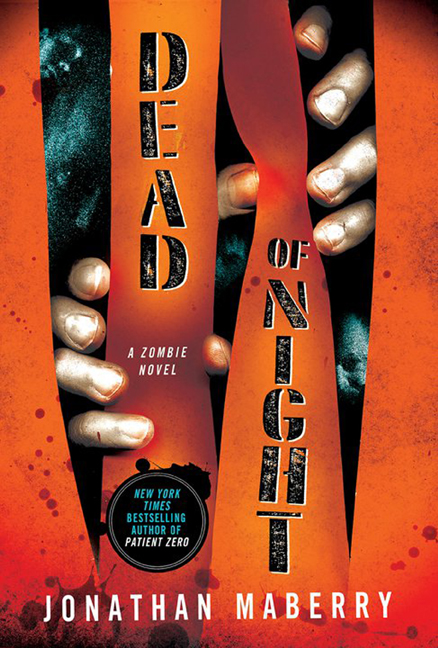
What I'm Reading: Dead of Night

This is a cross post with RA for All


We are 2 days away from Jonathan Maberry's visit to RA for All on his blog tour to promote Dead of Night.  Full disclosure: Maberry's publicist sent me a free copy of this book for review.  But, I also had already purchased a copy for the BPL before receiving my free copy.

In preparation for the interview, which does include specific questions about Dead of Night, here is my review of the book.

Dead of Night is a zombie novel (as the subtitle tells us), but it is different than the bulk of today's zombie novels, even different than Maberry's critically acclaimed YA zombie series which begins with Rot and Ruin (link goes to my review of that novel).  Why?  This can be answered by Maberry himself in Chapter One which reads, in its entirety: "This is how the world ends."

That being said, I should say, this is a horror zombie novel, not a literary fiction one like Zone One, or a humorous one like Breathers, or even a political thriller one like Feed.  Dead of Night  is for horror fans who want to feel the dread and anxiety, who know bad things are going to happen and are turning the pages expecting them.  Remember, as the first line tells us, "This is how the world ends." Do not pick up this book and expect a happy ending.  Personally, I love that, but some readers may not.

But if you are looking for a serious horror treatment of the popular zombie craze that is well written and  great fun to read.  This is the book for you.

While most of today's zombie novels take a critical look at the world as it stands after the zombie apocalypse (click here for numerous reviews of some of the best of these books), Dead of Night is the detailed, action-packed story of how the apocalypse begins.  Here we get a step-by-step account from all sides of how 1 infected person can mean the beginning of the end for human civilization.  There is no "after" picture here.  We get the details of the apocalypse as it begins from every angle, and we are left just as it is about to escalate.

As the novel opens we are in rural Western PA and a storm is quickly approaching (a double whammy of the popular isolated setting for horror).  Local law enforcement are called to a possible break-in at the local funeral home.  The body that was just delivered secretly (and unexpectedly) to that funeral home is of a notorious serial killer, Homer Gibbon.  But before he was executed in prison, Gibbon was given an injection by Dr. Volker containing a formula designed to keep him conscious and awake while his body rots in the grave.  Before he can be buried, Gibbon wakes up.  He is conscious and fully aware, but is also very hungry...

The story is told in what has become Maberry's go-to winning style.  He blends elements of traditional horror -- an unearthly monster, a troubled hero, an atmosphere of extreme unease, an isolated setting, and  a relentless provocation of terror-- with the emerging genre of the supernatural thriller-- detailed investigative elements, a human villain out to kill, fast paced action, and shifting points of view from heroes to killer.

Like all Maberry novels there are many characters, some who only get a moment or two's turn at telling the story from their perspective.  Some reader's may not like the jumping around, but anyone who has read one of Maberry's best selling Joe Ledger novels will be familiar with this story telling technique.  Personally, I love it, especially when we get just a moment from the perspective of someone as they are being attacked.  This technique adds to the unease of the story, and this anxious state of unease and terror is the main reason why someone reads and enjoys a horror novel in the first place.  Maberry has a compelling dread filled story already, but the switching point of view across many characters ratchets it up to a whole new level.

That being said, there are a few main characters here.  Our 2 heroes are Dez, a female, ex-vet, now cop who has had a troubled life and her ex-boyfriend "Trout," a journalist best known for his sensational pieces.  Our villains are Dr Volker and serial killer Gibbon mentioned.  There is one other pov that I found very moving and absolutely loved as it came out periodically throughout the novel, that of the funeral home director, Doc Hartnup.  In fact, without giving anything away, Doc's pov was a fresh addition to the zombie novel tradition.

The shifting points of view, also speed up the pacing here.  As a reader, you are seeing all sides to the issue.  We know a zombie plague has begun to be spread even before the police on the ground do.  We see the government preparing a response.  We see Homer running around the county.  We are afraid, but we keep turning the pages because we are rooting for Dez and Trout to figure it all out in time to save the day. You also keep reading because as a horror fan, you love this stuff.

I have to say I also enjoyed following the spreading infection in such a detailed fashion.  The short chapters and shifting action mimicked the confusion and panic that was spreading with the plague.

One of my general complaints about novels today is that many of them have "third act issues."  You are reading a great book and then the author runs out of steam, and it ends flatly.  Geraldine Brooks Dead of Night which delivers right through the last page.  The story line following Trout and Dez has its resolution, but we also have a great, twist at the end.

If you think traditional, strongly written horror is in decline, read this book.  The only unpleasant side effect you may have is that it will make much of the other books you are reading look bad.

Three Words That Describe This Book: dread, compelling, multiple points of view

Readalikes:  I have had much to say about zombie novels here.  And, yes they are my favorite horror subgenre, so I am biased.  I would suggest you read these posts to see my favorites, but I would like to highlight a few which I feel are fairly similar:

  • The type of zombie here are reminiscent of those in Nate Kenyon's Sparrow Rock.
  • The Rising by Brian Keene is the novel that is widely credited with beginning the 21st Century zombie craze.
  • Joe McKinney's excellent zombie series which begins with Dead City is a great all around readalike option here.  In McKinney's series we also follow a policeman as a zombie plague rising out of the destruction caused by a series of hurricanes slowly takes over an isolated town.  Fans of Dead of Night who are craving more should check out McKinney right away.

Although The Ruins by Scott Smith does not contain a single zombie, these two books are very similar in tone, story telling technique, and in how they are ended.  Readers of my blog know my love for The Ruins already though.

I also offered author readalikes to Maberry a few days ago here.

Come back on March 4th to see more about Dead of Night from Jonathan Maberry himself.

Thursday, October 29, 2015

31 Days of Horror: Day 29-- God of Lovecraft Jonathan Maberry Interview

Welcome to The Gods of Lovecraft blog-a-thon within a blog-a-thon.  From the first post:
Over 9 of the next 10 days I will be featuring 10 of the 12 authors in this collection. Each has answered a series of questions from me about their God, why they picked it, what their favorite scary books are, and more.  It’s very similar to the posts I have been running by authors all month, just with a Lovercraftian spin. Expect each day’s post to bring you a handful of new authors and titles to add to your arsenal of books you can suggest to patrons. 
Our final author is Jonathan Maberry. Readers of this blog know that I proclaimed Maberry [along with Joe Hill] as the King of 21st Century horror back in 2012 in my book. I went out on a limb by writing that; in fact, I had to defend it to my editors. Thankfully, I was not the only one to see his potential as all he has done every single day since is prove me right. From winning awards, to becoming a full fledged NYT bestselling author, to landing on the cover of Publisher’s Weekly earlier this year, if you do not know Maberry, you do not know horror. Click here to see the many, many times I have written about Maberry and/or reviewed his work.

Please remember you can also enter for a chance to win one of two copies of The Gods of H.P. Lovecraft by emailing me at zombiegrl75 [at] gmail [dot] com by today at 11:59pm.

Tomorrow I will be back to begin the final 2 day wrap up of this year’s 31 Days of Horror.

------------------------------------------------------------------------
Who are you?
I’m Jonathan Maberry, a New York Times bestselling author, comic book writer and anthology editor. I write for a living, having tried other less charming professions like actor in musical theater (as it turns out, you need ‘talent’), bodyguard (got stabbed, chopped with a meat cleaver and run over), bouncer in a strip club (it’s not at all like they show in the movies), and college teacher (grading papers sucks!). I’ve written a couple of dozen novels, a slew of nonfiction books on subjects ranging from women’s self-defense to the folklore of supernatural predators. I’ve also sold poetry, greeting cards, and a couple of experimental plays.

Who is your favorite horror author [besides Lovecraft]?
I’ve been a fan of horror, in all of its many variations, since I was a kid. I started out reading the old EC comics my brother left when he went off to Viet Nam, and then moved into the Warren books, EERIE, CREEPY and VAMPIRELLA. Around the same time I began devouring everything by Richard Matheson, Robert Bloch, and Shirley Jackson. A bit later I got hooked on Stephen King, Graham Masterton, James Herbert, and William Peter Blatty.

I actually got to know a bunch of the top horror writers of the late sixties/early seventies thanks to my middle school librarian, who was secretary for a couple of clubs of pro writers. I met Ray Bradbury and Richard Matheson –and they mentored me for three years. I also met Harlan Ellison, James Blish, L. Sprague De Camp, and a bunch of others. Most of those guys, knowing that I wanted to be a writer, made a point of bringing me shopping bags filled with books –science fiction, fantasy and horror. And it was through L. Sprague De Camp that I first learned of H.P. Lovecraft.

Why do you like to write horror?
Horror allows us to explore the complexities of our minds. We are fearful creatures by nature. We come into the world totally helpless, and much of out life is spent trying to understand life’s mysteries, protect against its threats, and build walls of personal security. Even a guy like me –six-four, built like Bigfoot, and an 8th degree black belt—feels fear of one kind or another every day. Anyone who says they are totally fearless is either lying or delusional.

So in fiction we get to take our fears and examine them, deconstruct them, play with them, understand them, and even have some fun with them. We get to pose ‘what if’ questions about threats large and small. And we can write that story all the way to a point of closure –and the real world doesn’t always allow that.

This is not to say that horror should always have a tidy ending or a happy resolution. Not at all, but in the process of writing the story we take ownership of it. We control the fearful elements and direct those forces elsewhere.

And, also, let’s face it, we all like to stretch out hand out to the fire or lean a little too close to the tiger’s cage. Fear is also a great stimulant. I didn’t start skydiving because I liked the geographical perspective. I was in it for the adrenaline rush. The thrill. The fear.

Which “God” did you focus on in the Anthology? What features of this god do you find most interesting?
I wrote about the Night Gaunts. They’re sly and creepy, and Lovecraft never really let us climb inside their heads. They are guardian spirits, but they’re also monsters and like most Lovecraftian cosmic beings, not at all to be trusted. Also, one of the first Lovecraft drawings I ever did was of a Night Gaunt. Wish I still had it, but I gave it to a girl a long time ago. I’m sure the fact that she broke up with me a few weeks later had nothing at all to do with it.

Please share some of the authors you are reading and enjoying now.
These days most of my friends are horror or suspense writers, so it’s hard to pick favorites. At the top of my must-have lists are Christopher Golden, Tim Lebbon, Joe McKinney, Weston Ochse, Joe Lansdale, and a slew of others. Horror makes up a huge chunk of my reading list, and any slate of favorites I name will be woefully incomplete.

What other works do you have out now?
Prior to 2006 I was a nonfiction writer, doing a ton of magazine features, columns, reviews, how-to manuals, college textbooks, and mass market nonfic books. My first novel, GHOST ROAD BLUES, debuted in 2006 and was followed by two sequels, DEAD MAN’S SONG and BAD MOON RISING. They were straight horror set in a small Pennsylvania town. Since then I’ve jumped around through different genres. I like the fast-lane and I have a very energetic agent. I write the Joe Ledger thrillers, of which PATIENT ZERO was the first and the recent PREDATOR ONE is the 7th. I just finished the 8th and am doing research on the 9th; and we’re in development for a feature film. I wrote five books of the ROT & RUIN post-apocalyptic zombie series for teens (also slated to be a feature film); two adult zombie novels –DEAD OF NIGHT and FALL OF NIGHT; the novelization of the remake of THE WOLFMAN; and a standalone Steampunk alt-history supernatural western, GHOSTWALKERS, based on the Deadlands role-playing game. I created the V-Wars shared world vampire series, which is in prose and comic book form and is in development for TV. My most recent anthology was THE X-FILES: TRUST NO ONE.

What are you working on currently?

I’m in the busiest phase of my career right now. I’m writing a space travel novel for older teens, and stacked up behind that are several projects including DOGS OF WAR (Joe Ledger #9); a teen bodyguard thriller, WATCH OVER ME; and GLIMPSE, a standalone horror-suspense novel for the mainstream audience. I’m editing several anthologies, including OUT OF TUNE Vol II (stories inspired by classic folk ballads), SCARY OUT THERE (teen horror), V-WARS volumes 4 and 5; and two more volumes of THE X-FILES short stories. I also have several comic book projects in early development. And a board game version of V-WARS debuts this Christmas.

Thursday, October 13, 2016

31 Days of Horror: Day 13-- Horror Publishers Update with Giveaway

Today is all about horror publishers.  I did my annual update to the Best Independent Horror Publishers For Libraries page.  Click here to see the page or scroll to the end of the post for the information.

But just updating this resource is not enough for my high standards of blog-a-thon material, so before we even get to the list, I wanted to highlight what I think is the best of the bunch-- JournalStone. Now, by my calling them “the best” that does not mean I think no one else has good books. Actually it has more to do with the overall picture of what they publish and how they distribute which makes them the best option for libraries.

Here are my reasons:
  1. JournalStone is easy to order. You can get their books through Ingram and Baker & Taylor. Orders can be placed for their titles just as you would for any major publisher. This is the largest hurdle for many libraries toward adding horror to their collections. If they cannot get it through the normal pipelines, they are discouraged [sometimes prohibited] from ordering it.
  2. JournalStone has the respect of best selling authors and horror masters, so they are able to publish original works by legitimate big name authors like Jonathan Maberry, Christopher Golden, and Gary Braunbeck. Writers whose work you already have in your collections. Writers who has fans waiting for more at your library. Click through to see the full catalog.
  3. JournalStone cares about identifying, developing and publishing the best new voices.  Case in point, Brett J. Talley and Douglass Wynne. Those links go to posts I have done with or about them over the years.
  4. Their monthly newsletter is great! It is full of useful information, it is professionally produced, and it is delivered only once a month so it will not overwhelm you. Go to the bottom right of the main page to subscribe.
  5. Finally, JournalStone cares about libraries. They understand that one of the best ways to grow new fans is to have their books in libraries. They offer paperback and hardcover versions of all of their books; this is often an issue with small presses and libraries. Some libraries only buy hardcovers because they stand up to wear better. JournalStone also offers free digital copies with most of their publications too. If your library circulates eReaders with content, you can add these for no extra cost.

Don’t just want to take my word for it? Ok. I have a five book giveaway to offer you today courtesy of JournalStone so you can see for yourself. These are not advance copies. These are brand new, finished books that you can add to your collections right now.


I should rephrase that-- these are titles you should be adding to your collections whether you get them from me for free or not!

The titles included in this giveaway are:
  • Swift to Chase by Laird Barron which I did an entire blog post about last week here.
  • Whistling Past the Graveyard by Jonathan Maberry. This is the first print collection of short fiction by this New York Times Bestselling author.
  • Limbus, Inc. Book III edited by Brett J. Talley [mentioned above] and featuring stories by Jonathan Maberry, Seanan McGuire, Laird Barron, David Liss and Keith R.A. DeCandido. Again many of them authors you know. I reviewed the first book in the Limbus, Inc series here.  The entire series is well written, suspenseful, and fun. 
  • Out of Tune, Book 2 edited by Jonathan Maberry. This again features many best selling authors, including Josh Malerman[!]. Each story uses a classic folk song or murder ballad as its inspiration. Very cool premise and easy to book talk to patrons.
  • Of Saints and Shadows by New York Times bestselling author, Christopher Golden which introduces a promising new series featuring Peter Octavian, vampire, PI. This one will have a wide audience.
For this giveaway I am accepting entries for libraries. Email me with the subject “Horror for Libraries” to zombiegrl75 at gmail dot com by Tuesday 10/18 at 5pm. I need your name and your library’s name in the body of the email. I will only accept entries from the US and Canada and I will only send the books to a library.

I want to help you connect with horror readers, and these brand new books by huge authors will start you down the right path. So please, if you win, add these to your library’s collection, put them out on display and/or book talk them and see for yourself.

*********************************************
Best Independent Horror Publishers for Libraries (updated 10.16)

There are many specialty, small presses who are dedicated to putting out as many horror publications as they can. As the editors over at Horror Fiction Review once noted, "The horror genre is one of the few genres that even HAS its own small press. Many mass market horror authors were discovered there. I believe the small press is (and actually has been for quite some time) the FUTURE of horror fiction."

I agree and I want to highlight some of the very best of these independent horror publishers. In the past, I have tried to be inclusive and include as many as possible, but I found that this resulted in a list that was too long to be useful to the average American public library as a collection development and purchasing tool. And since that is the whole reason I am here....

I have narrowed the focus of this page to include only the horror independent presses I have found to produce a consistent product worthy of being considered for your public library collections.

So please visit the pages of these publishers and consider ordering some of their books for your patrons.

Here they are in alphabetical order:
If you are a horror publisher and want to be include here, contact me.

Tuesday, October 3, 2017

31 Days of Horror Day 3-- Revamped and More Useful Review Index

This first week of October I am focusing the blog-a-thon on how to get the most out of me and my expertise now and all the year through.

Today I am focusing on my long standing and constantly updated Review Index which I have made even more useful. Here is the direct link to the NEW AND IMPROVED Horror Review Index, but I have also attached it below.

There is nothing more important for me to do than make sure you know about as many books as possible. Over the years I have heard from library workers, readers, and authors that my professional reviews, in official library journals, have gotten those titles on library shelves. I have seen data that shows that before I reviewed a book it was in 10 libraries nationwide and then after my review.... 50 the first month after, and hundreds more a few months out.

I am not writing this to brag, not at all. In fact, I am writing this to let you know I wish I could give you more options, but I am only 1 person and reviewing horror is only part of my job. I already do 3-6 titles a month. However, I can give you more official and professional options for reviews both to develop your collections AND to give you as many suggestion options at your fingers tips as I possibly can.

That is what I have done with the Horror Review Index. Today’s post is to remind you to use it to find suggestions and to let you know I have made it even more useful by quickly routing you to many more titles by reviewers I trust. They have the Becky seal of approval.

Now get out there and start suggesting scary reads. It’s October 3rd already. I know they are just beginning to shamble in.  Soon, the hordes will be descending. I’ve got your back though.

HORROR REVIEW INDEX:

Here is an author index to all of the reviews appearing on this blog (or before this blog began on RA for All) with the links leading you to the review itself.

But, because I am only 1 person, and I cannot possibly get to every book that could be a good fit for your patrons, I also offer the following links to Becky approved horror reviews:

  • This Is Horror’s review archive: This British based site is the best regular review source for horror. Sometimes their titles overlap with mine, but because all they do is horror, they are able to get to many more than I can.
  • Tor.Com’s Horror coverage contains many reviews and not just about books they have published. This link will also lead you to essays about horror, essays that also will give you more titles to suggest.
  • LitReactor’s Bookshots reviews are amazing, and while they are not all horror per se, they are almost all titles with an oppressive atmosphere. Most of the reviews here are horror or horror -adjacent. But these reviews are also super useful to you, the library worker because they directly address who the title is best for by using a question and answer form. You can literally read the review to your patron in 2 minutes or less and decide together if it is a good choice. Bookshots are also a great conversation starter if you don’t know how to talk to your horror patrons. Try it out for yourself.

Between this index of my reviews [below] and the links to the others [above], you have thousands of choices of excellent terrifying reads for your patrons. No more excuses that you just don’t know what to suggest. I have given you plenty of options for every type of potential reader.

And remember, it doesn’t matter how old the book is. A great title from 5 years ago is still a good read for someone. Dig through the backlist. Here’s an example.

BECKY’S REVIEWS

Wednesday, October 8, 2014

31 Days of Horror-- Day 8: Best Horror Movie Novelizations

Today I have asked my friend, fellow librarian, AND  published horror author Jack Phoenix to contribute to the conversation this month with a post on the very best horror movie novelizations. The post originally appeared on his tumblr here, but I have also reposted it with his permission.

And if you are looking for a satisfyingly terrifying read that also supports a good cause, click here to learn more about Jack's novel, The Tormentors.  I really enjoyed it.

++++++++++++++++++++++++++++++++++++++++++++++


Scene Stealers: Horror Movie Novelizations Worth a Read


image
If you work in a public library, you know someone who reads them. Mayhap you even bite your thumb at them, and don’t consider them real books. Or maybe you have fond memories of them from your childhood. You may not think much about them, but every now and then something happens to remind librarians of the existence of movie novelizations (like, say…the recent Godzilla novelization becoming a New York Times Best-Seller) and their long and rich history.
Though their publication has slowed a bit, mostly coinciding with PG-13, tent pole, sci-fi and fantasy fare, novelizations still happen for the horror fans. Be careful not to overlook these books, because what you may have on your mass paperback rack is a readers’ advisory goldmine. That lady over there, obsessed with all things horror? Offer her the novelization of that scary Blu-ray she’s checking out. That dude who is a pure cinephile? Explain to him that novelizations are often crafted from early versions of screenplays and challenge him to see what could have been from what actually made it to the screen. Package the movies and the novelizations together on a display and watch them fly out your door!
Here are my recommendations for horror movie novelizations that are worth some attention. Heck, some are even better than their movies! I chose these because they are fairly recent and therefore easily attainable…but also good, of course! And fret not, there be no spoilers here.
image
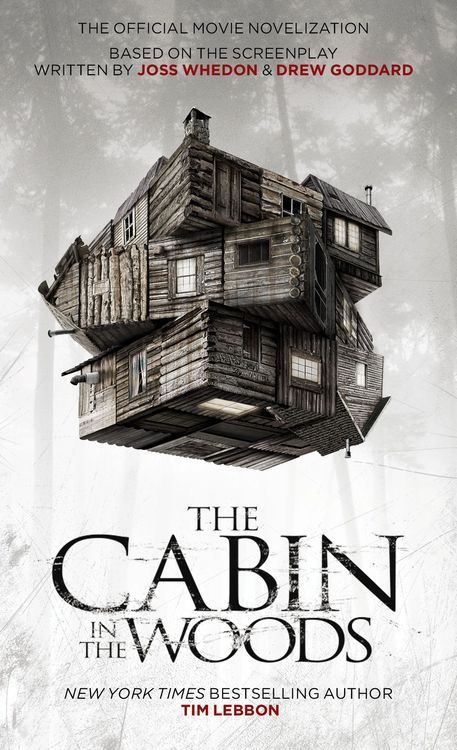
The Cabin in the Woods by Tim Lebbon
The Skinny: Based on the critically-praised, Joss Whedon-attached screenplay, this is the story of five college kids who venture to an abandoned cabin in the woods (OMG so THAT’S why they call it that!) only to find their worst nightmares come to life. Subverting and inverting the horror genre and its clichés, this story is simply a must for horror fans in either format.
What It Brings to the Table: Though the humor doesn’t translate quite as well in this novelization as it does in the film, this version of the story is surprisingly darker. A more horror-and-sci-fi-centric blend, we are treated to more elaborate details of how and why a certain organization conducts their business. It’s a well-paced read for those who are looking for something quick and enjoyable. (Note: the eBook version suffers from some editing errors, such as some confusing dialogue format issues).
image
The Lords of Salem by Rob Zombie and B.K. Evenson
The Skinny: One day Heidi, a radio DJ and recovering addict, receives a mysterious package. The package contains a record from an unknown band who call themselves “The Lords”. After playing the record and its strange music on the air, horror awakens and centers itself on Heidi and other women of Salem.
What It Brings to the Table: This novelization is unique to our list because it and its screenplay share an author, Rob Zombie (with help from Evenson, of course). To be frank, the film is a bit of a head-scratcher. Many who saw it appreciated its style, but the story itself left many of us saying, “Yeahbuhwhat?” Well, here is the novelization to save your experience! I would recommend this be read before seeing the movie, since this book fills in a lot of gaps and answers many questions. Why are only women affected by the song? Who are those witches and what is Heidi’s connection to them? What exactly is happening in those flashbacks? WHAT, you call that an ending??? All the answers are within these pages. You’re welcome.
image
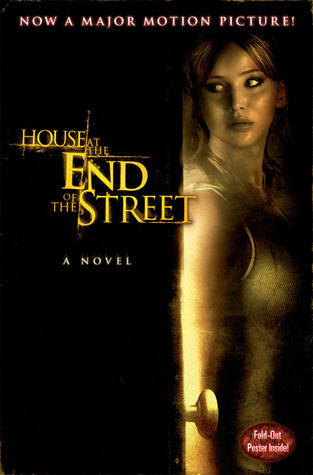
House at the End of the Street by Lily Blake
The Skinny: Elissa and her mother have moved to an upscale, isolated neighborhood. Adjusting well, Elissa learns a terrible secret that the town tries to keep quiet; the house next door to her was once the scene of a brutal murder. A young girl massacred her family (sound familiar?), sparing only her brother Ryan, and then disappeared. As Elissa begins forging a friendship with Ryan, she finds herself being drawn into something sinister, and her dream home may become a house of nightmares.
What It Brings to the Table: This book brings the suspense and twists that the Jennifer Lawrence-starring film doesn’t. Mind you, many of the twists will only be, uh, twisty if you don’t watch the movie first. But this is a better executed tale than its film counterpart, and an easy read that is sure to please young adult readers because Katniss is on the cover. It also has lots of unspoken, awkward sexual tension and longing glances which are so popular with the teenage crowd nowadays.
image
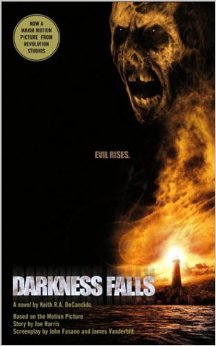
Darkness Falls by Keith R.A. DeCandido
The Skinny: Matilda Dixon, though horribly scarred, was a kindly old soul who used to gift the children of Darkness Falls with coins in exchange for their baby teeth, and the townspeople dubbed her the “Tooth Fairy”. Wearing a mask to hide her disfigurement, she was accused of a crime of which she was innocent, and executed without trial. Vowing revenge, she cursed the town, and decreed that all children who should look upon her would be taken. Now in present day, children go missing from Darkness Falls every year, and a young man named Kyle Walsh knows why…
What It Brings to the Table: Okay, for this one, you may want to just read the book and skip the movie altogether. The novelization takes what was merely lazy opening credits narration, and turns it into a whimsical ghost story with a classic feel. In the more contemporary settings of the story, the action and the characters are better developed, and the reader feels far more sympathy for the hero and the monster. There is some imagery in this writing that may make you hide your face from that shadow in your bedroom. Just maybe.
image
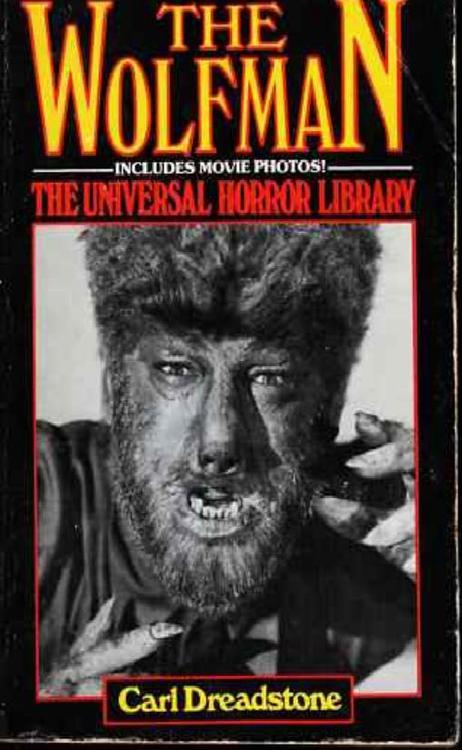
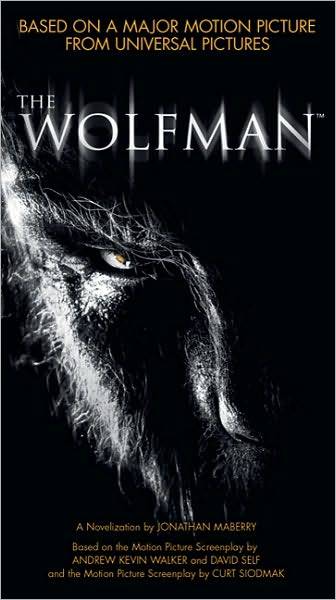
The Wolfman by Jonathan Maberry
The Skinny: While visiting his family home, Lawrence Talbot is bitten by a mysterious, wolfish creature and cursed to become a wolf when the “wolf’s bane blooms” and why am I telling you this, surely you know this story! This book is fun because it’s the novelization of a remake of a classic which has its own novelization (up top). That’s four different versions of one awesome story, people! Take your pick!
What It Brings to the Table: Jonathan Maberry. It brings Jonathan Maberry to the table. If you don’t know who Jonathan Maberry is, I recommend you explore the RA for All: Horror blog thoroughly. All the stuff in the movie that the critics were “so-so” about, this book completely nails with full effectiveness. More intensity, a steadier and more even plot, a more thoroughly examined relationship with Talbot’s father, a more elaborate chronicle of the Wolfman’s adventure in London, this book surpasses the film, which was a noble effort on its own.
image
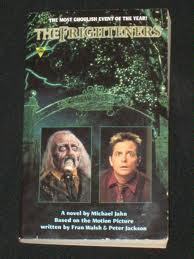
The Frighteners by Michael Jahn
The Skinny: Frank Bannister can communicate with the dead, and he uses this ability to make a profit; by enlisting ghosts to “haunt” unsuspecting victims, he is then paid to “exorcise” them. But when a dark force descends, one which has “put the fear of death in the living, and sent the dead running for their lives”, the usually selfish Frank discovers that he is the only one who can see it…and stop it.
What It Brings to the Table: Okay, so I’m lying a bit. This book is not recent, and it may not be easy to find at a library (though you can buy a copy on Amazon for a penny. No, seriously). But this is the first movie novelization that I ever read, and I simply had to share it. This book is derived from a screenplay by Fran Walsh and Peter Jackson of Lord of the Rings fame. It features more of everything; more zany ghostly hijinks, more horror and violence, more backstory, as well as some colorful characters which were cut from the film, like the cherub-like Gatekeeper. It is a spirited story (ha!) in the vein of Beetlejuice, and if you ever get the chance, grab it. It helped foster my love for horror and film!
In closing, keep your eyes and mind open for these novelizations and those like them as they pass your way through the cataloging process. Give them a try. You may find something bloody enjoyable.
For further reading, check these out:
Cheney, Jen. “What Does the Future Look Like for Movie Novelizations”. Yahoo Movies. June 18, 2014: https://www.yahoo.com/movies/movie-novelizations-keep-writing-a-new-chapter-89164640792.html
Collins, Brian. “Terror Tuesday: The Horrors of Movie Novelizations”. Badass Digest. April 5, 2011: http://badassdigest.com/2011/04/05/terror-tuesday-the-horrors-of-movie-novelizations/
Hendrix,  Grady. “The Joy of Horror Novelizations”. Lit Reactor. September 22, 2014: http://litreactor.com/columns/the-joy-of-horror-novelizations
Suskind, Alex. “Yes, People Still Read Movie Novelizations…and Write Them, Too”. Vanity Fair. August 27, 2014: http://www.vanityfair.com/vf-hollywood/2014/08/movie-novelizations-still-exist